How to plan a trip without the chaos (a simple travel planning system)
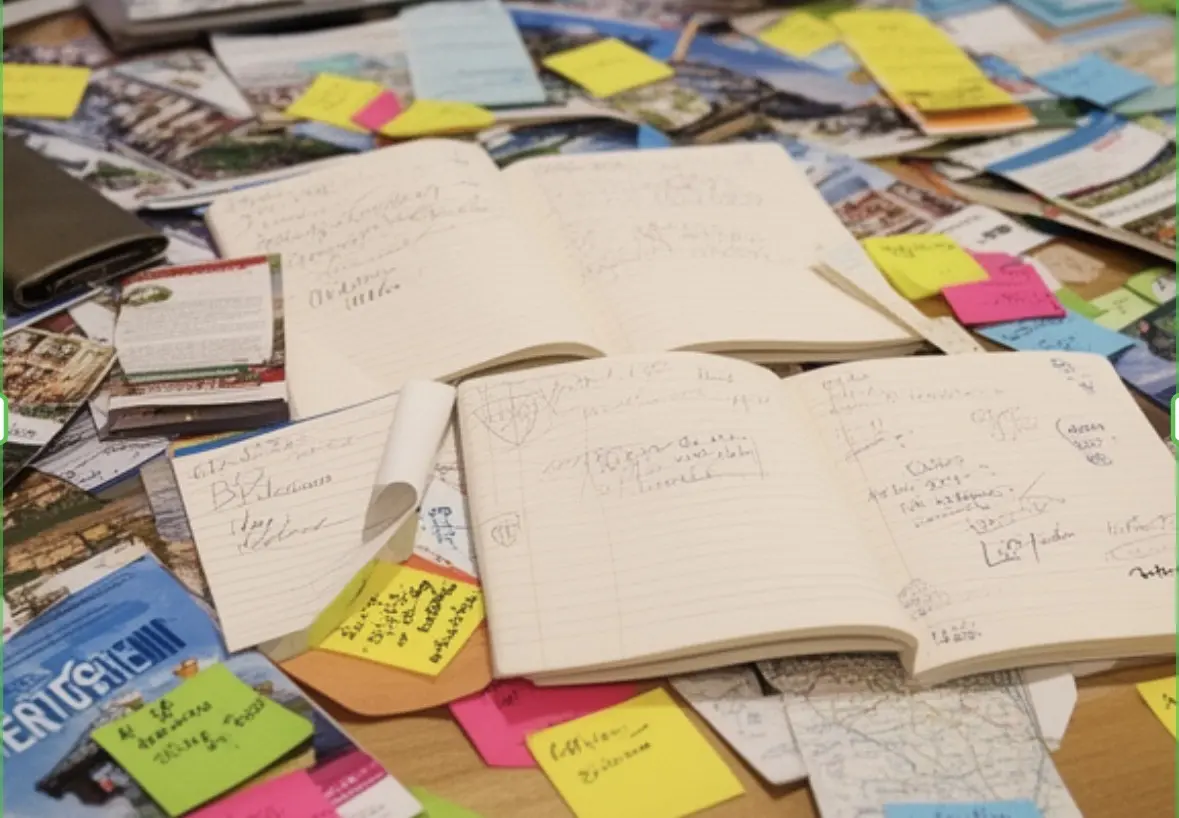
If you’ve ever found yourself with a collection of bookmarked articles, half-saved maps, and a vague sense that you wereplanning a trip at some point, you’re not alone. This is usually the stage where things start to feel less like excitement and more like low-level administrative chaos.
I’ve been there more times than I care to admit. Notes in three different places, accommodation tabs multiplying quietly in the background, and a growing suspicion that I’m about to either forget something important or book the same thing twice.
The good news is that planning a trip doesn’t have to feel like that. You don’t need a complicated system, a colour-coded spreadsheet, or a sudden transformation into a highly organised person. What you do need is a simple, repeatable way to turn scattered ideas into something you can actually book and follow.
In this guide, I’ll walk you through a straightforward travel planning process I use myself—one that keeps things clear, realistic, and manageable from start to finish.
How to plan a trip step by step (without overwhelm)
At its simplest, planning a trip comes down to a few key stages. The problem isn’t usually what to do, but the order in which you do it—and how quickly things get messy if you skip that structure.
Here’s the version that actually works in practice:
- gather ideas without overthinking them
- narrow things down to a realistic plan
- organise the details so you can book confidently
- keep everything in one place so you can actually use it later
I’ll break each of these down properly below, but if your notes currently resemble a mildly chaotic treasure hunt, this is the framework that brings them back under control.
I had a planning system, just not a very good one.
I should say that I did have a system, of sorts. I’d usually start with the big things first: book the flights, narrow down hotels, work out a rough route, and map out an itinerary to make sure I wasn’t trying to squeeze six hours of driving, a museum and a scenic hike into one afternoon.
On paper, it was sensible enough. The problem was that all the supporting details still lived in far too many places, and that’s where the cracks appeared. The more moving parts a trip had, the easier it became to lose track of the boring but essential things: visa rules, vaccine requirements, passport validity, travel insurance, check-in times, transfer days, and all the tiny details that seem unimportant until they are suddenly very important indeed. Instead of feeling organised, I often just felt mentally overloaded: as though I had done the planning, but still couldn’t quite see the whole trip clearly.
Why I don’t just use a travel agency
Now, you could argue that this is exactly the sort of situation in which a sensible person would simply use a travel agent. And you would not be entirely wrong. But the truth is, I actually enjoy planning my own trips. I like the researching, the comparing, the route-mapping and the satisfaction of working out an itinerary that is both exciting and vaguely achievable. Perhaps that is the teacher in me: give me a mess, and I will instinctively try to turn it into a system involving lists, categories and something colour-coded.
If you’re weighing up whether to hand the planning over or do it yourself, I’ve written more about that in Passport, plans and a dilemma: travel agent or DIY explorer?. But for me, the issue was never whether I wanted to plan the trip myself. It was that somewhere along the way, planning a holiday had started to require the skill set of a part-time project manager.
The travel planning system I needed all along
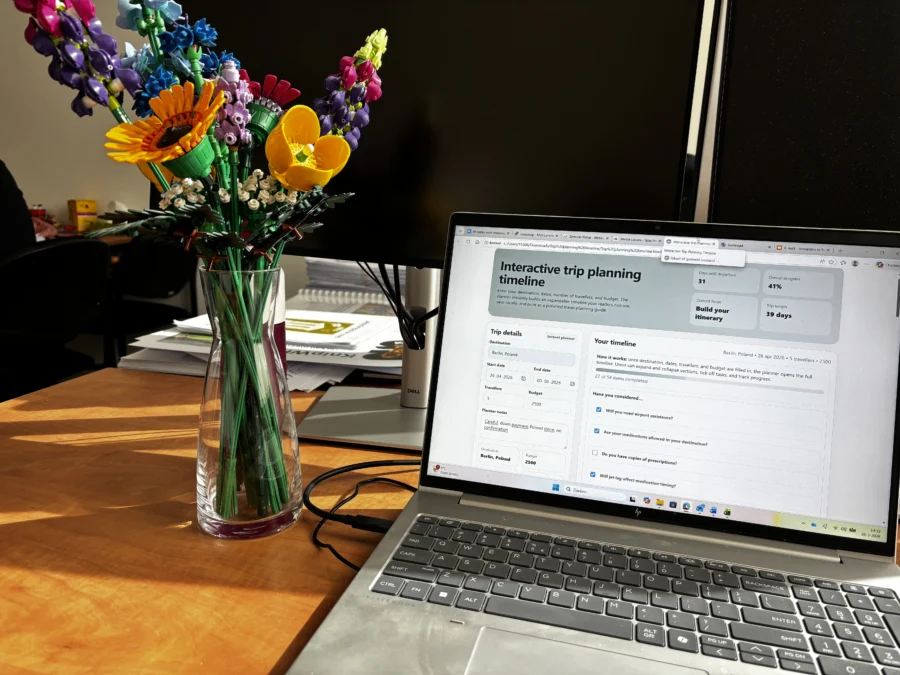
My travel planning chaos is what led me to create the system I actually needed. For shorter, simpler trips, I tend to use the paper version: enough structure to map everything out clearly, without turning a long weekend into an unnecessarily complicated project. For bigger trips with more moving parts, I use the fully interactive version instead. I’m using that for our upcoming month in Indonesia this July, because once you’re dealing with multiple stops, accommodation changes and all the practical details in between, it helps enormously to be able to shift things around without starting from scratch. It follows the same basic logic as the paper one, but with fold-out sections for different stages of the trip and an inbuilt notebook, which means there is more space to keep track of ideas, plans and all the details that seem to multiply the longer a trip gets. If you’d like to try the paper version for yourself, that one is free when you subscribe.

How my travel planning timeline works
The process itself is very simple. I start with the trip overview page and fill in the basics: where we’re going, when we’re travelling, how we’re getting there, where we’re staying and any budget notes that are already taking shape. Then I use the timeline page to map out the key dates and milestones — things like booking deadlines, route planning, passport checks, visa admin and anything else that needs doing before departure. After that, I work through the bookings and admin checklist so the important practical details are not left floating around in my head, and finish with the pre-departure checklist for all the last-minute things that are very easy to forget when you’re busy being excited about the trip. It is simple, but that is exactly the point: everything important has one place to go.
For shorter, simpler trips, the paper version is usually enough for me. For bigger ones, though, I use the interactive version instead.
A useful check on my optimism
What a timeline really helps with is protecting me from my own optimism. On one trip to Thailand, we somehow managed to fit in a floating market, a train market, the Bridge on the River Kwai, Hellfire Pass and a night on a jungle raft all in one day. At the time, this struck me as ambitious but achievable. In hindsight, it was clearly the work of someone who had done a great deal of research and not quite enough reckoning with time, distance or the basic limits of a day.
And it is not just the sightseeing side where this happens. I have also nearly missed a flight for a city break because I decided packing that morning would be perfectly adequate, only to discover that my passport had apparently vanished into another dimension. On another trip, I left sorting out vaccines so late that I came very close to not getting them in time for a journey where I would actually have needed to show proof. This is exactly why I now like seeing everything laid out properly: not because I want to schedule every second, but because it is much easier to spot where I am being wildly overoptimistic, where I have left something too late, and where Future Me might reasonably have grounds for complaint.
If this sounds familiar
If you’re the sort of person who also enjoys planning a trip right up until it turns into tab-and-post-it overload, I’ve made the paper version available free when you subscribe. It lives in my travel tools library, alongside the interactive version for bigger trips with more moving parts.
This post is part of a series of three trip planning posts with free planning tools. Read more about Creating a travel budget you’ll actually stick to, and Planning an itinerary that suits the real you.