First time Moroccan hammam: what to expect, cost and how awkward it really is.
Sooner or later, while travelling in Morocco, someone will lean across a café table and say, “You must try a hammam.” They say it the way people recommend a nice museum or a scenic walk. What they don’t immediately mention is that the experience involves steam, olive soap, a vigorous full-body scrub, and a brief but memorable re-evaluation of your modesty.
For first-time visitors (particularly those of us who have comfortably passed the fifty-five mark) the idea of a Moroccan hammam can raise a few questions. Are you supposed to be naked? Is the scrubbing painful? Will it be horribly embarrassing? And what exactly happens once you step through the door?
The reassuring truth is that the Moroccan hammam experience is far less intimidating than it sounds, and often becomes one of the most memorable parts of a trip.
What is a Moroccan hammam?
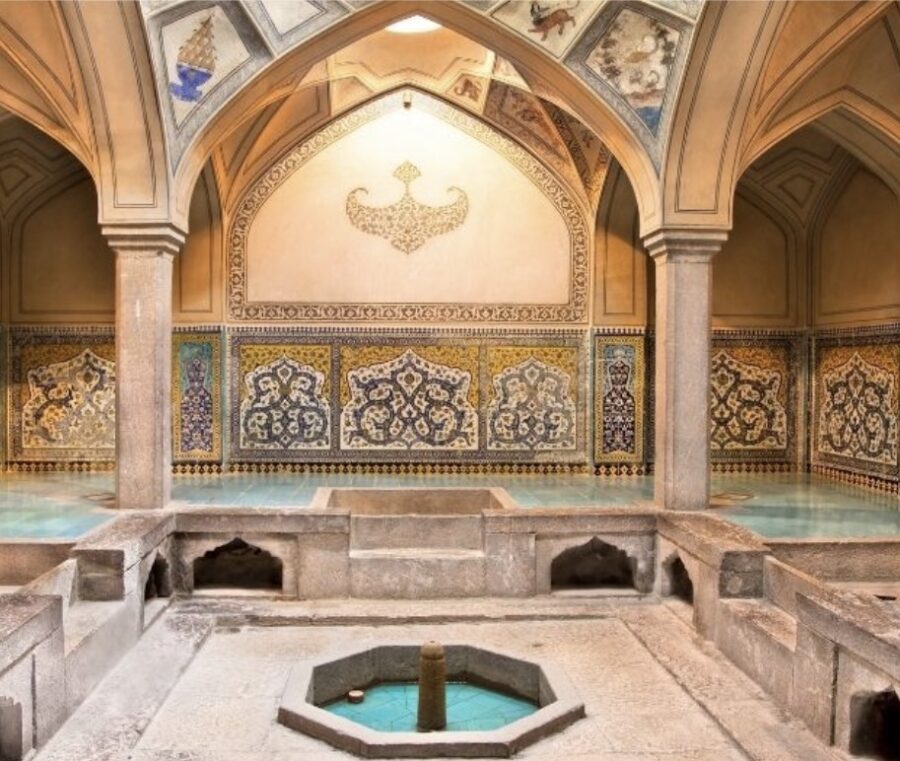
A traditional Moroccan hammam is a public steam bath where locals come to cleanse, relax and socialise. The ritual has been part of daily life in Morocco for centuries and is loosely descended from the bathing traditions of the Roman world.
Unlike modern spas, hammams were historically designed as practical places to wash and unwind. The process involves warm steam that softens the skin, followed by a thorough exfoliating scrub that removes an astonishing amount of dead skin.
Visitors will encounter two main types of hammam in cities such as Marrakech and Fes. Neighbourhood hammams are the authentic local version, used regularly by residents and wonderfully atmospheric, though occasionally confusing for newcomers. Spa hammams in riads and hotels offer a more guided version of the same ritual, with quieter surroundings and staff who explain each step. Both deliver the same essential experience. One simply does it with a little more ceremony. And a higher price tag.
What happens in a Moroccan hammam?
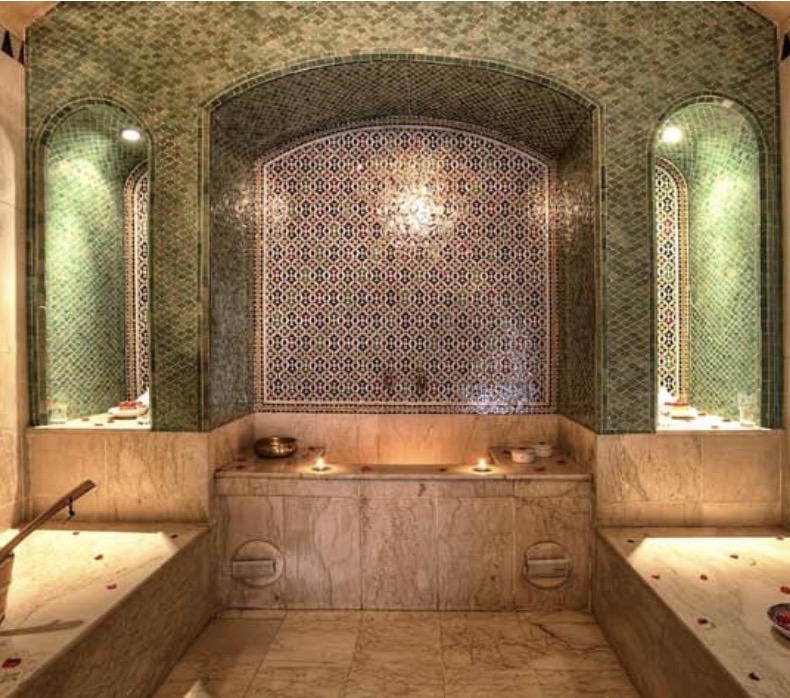
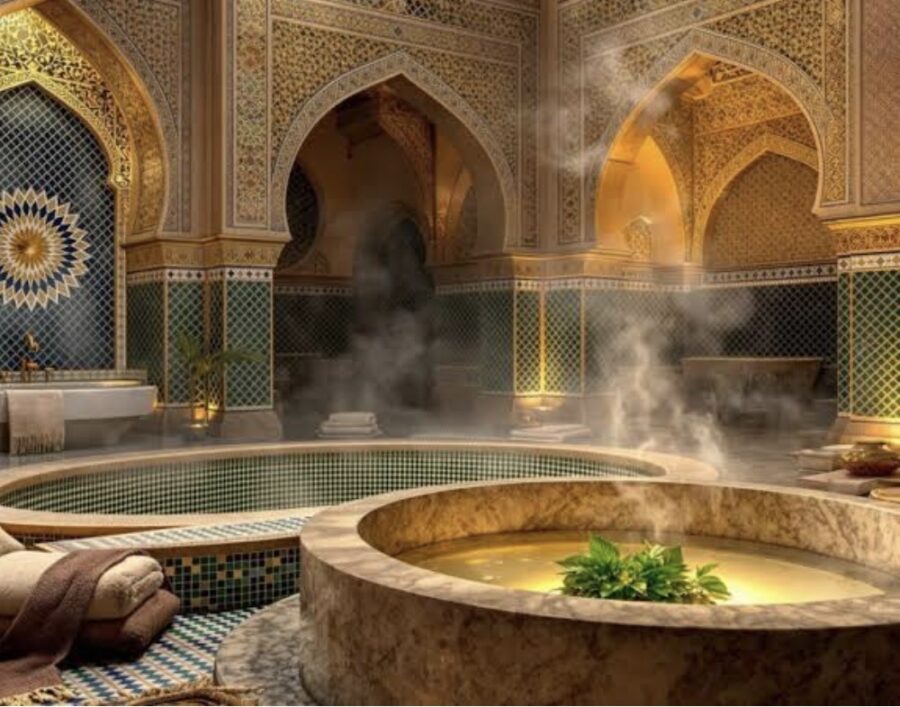
The first stage of a Moroccan hammam visit is simple: you sit in a warm steam room and allow the heat to work its magic. The room is usually tiled and softly lit, with smooth stone benches lining the walls. Steam fills the space, creating an atmosphere that feels pleasantly cocooned from the outside world. After ten or fifteen minutes, your skin begins to soften and your muscles slowly relax.
Next comes the soap, a dark olive-based paste that looks faintly alarming but smells wonderfully earthy. The soap sits on your skin while the steam continues to open your pores.
Then comes the part everyone remembers: the hammam scrub. Using a rough exfoliating glove known as a kessa, an attendant scrubs your skin with impressive determination. At this point something curious happens. Small grey rolls of dead skin begin to appear, prompting many first-time visitors to stare at their arms with a mix of fascination and slight horror.
After the scrub, warm water is poured over you in generous quantities. Depending on the hammam, the ritual may continue with shampoo, a clay mask, or a gentle massage. Eventually you move to a cooler room where mint tea often appears, restoring both hydration and dignity.
Do you have to be naked in a Moroccan hammam?
This is the question that occupies most first-time visitors. The short answer is no. Full nudity is not expected. In traditional hammams most people wear underwear or swim bottoms. In spa hammams disposable underwear is often provided, which conveniently removes the need to decide whether your travel underwear is fit for public display.
Men and women are also separated in traditional neighbourhood hammams, so the atmosphere tends to feel relaxed rather than awkward. The steam helps matters further by creating a soft haze that hides a multitude of imperfections. For me, the fact that the glasses come off helps as well: I could be sharing the hammam with a pride of lions and never notice. Within a few minutes most people realise something rather comforting: nobody is paying attention to anyone else’s body. Everyone is simply enjoying the warmth.
Is a Moroccan hammam embarrassing?
Before their first visit many travellers imagine a situation filled with awkwardness. In reality, embarrassment rarely survives beyond the first few minutes. Hammams have been part of daily life for generations, and the environment is practical rather than self-conscious. Staff members have scrubbed thousands of people and are entirely unfazed by the ordinary variety of human bodies.
The only mildly awkward moment tends to occur right at the beginning, when you realise that you are indeed sitting in a steamy tiled room preparing for a vigorous exfoliation. After that, relaxation usually takes over. Most visitors leave wondering why they worried at all. I know I did: worrying is my second nature (unfortunately) but in this case (as in many cases) it was completely unwarranted.
How much does a Moroccan hammam cost?
The cost of a Moroccan hammam varies widely depending on where you go.
Neighbourhood hammams are extremely affordable. Entry may cost only a few euros, with a small additional payment if you ask an attendant to perform the scrub. Even with a generous tip, the experience remains remarkably inexpensive.
Spa hammams in riads and hotels are naturally more expensive but still reasonable by international spa standards. Treatments often range from twenty-five to sixty euros, depending on the level of luxury involved. In destinations such as Marrakech, elaborate spa packages can cost more, though they often include massage and additional treatments.
Either way, the experience is usually far better value than many European spas.
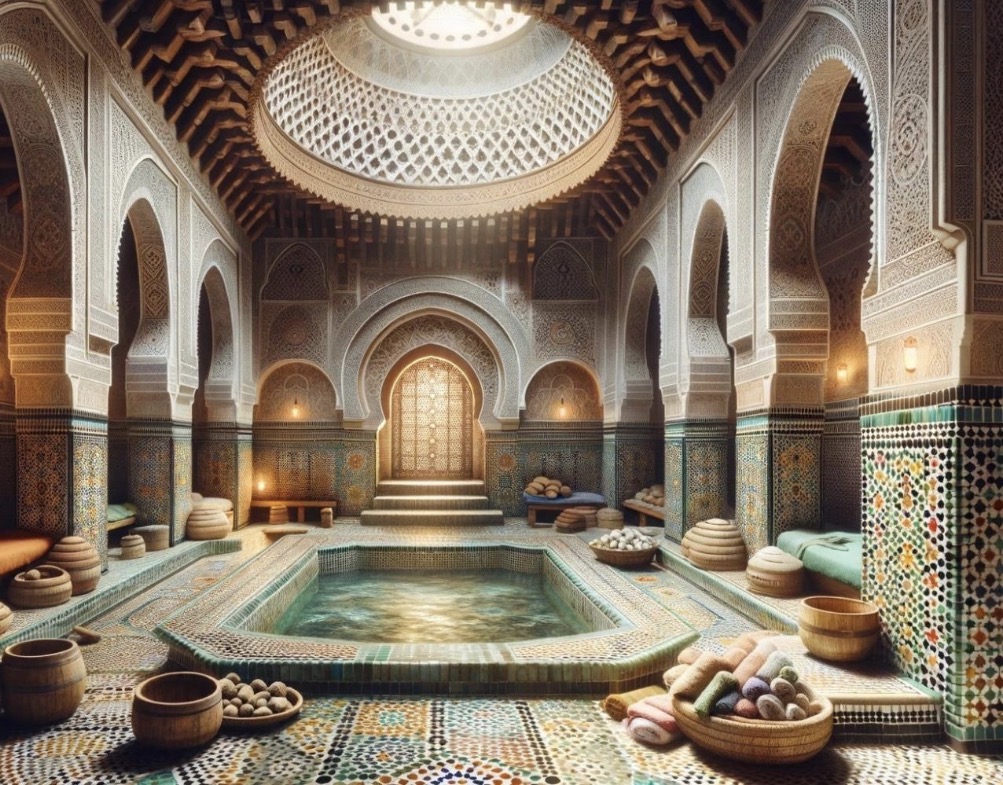
Local hammam or spa hammam
Choosing between a traditional hammam and a spa hammam depends largely on your appetite for adventure. And your budget.
Local neighbourhood hammams offer the most authentic experience. They are lively, social spaces where residents come to wash, chat and unwind. For travellers comfortable with a little cultural improvisation, they can be fascinating places to visit.
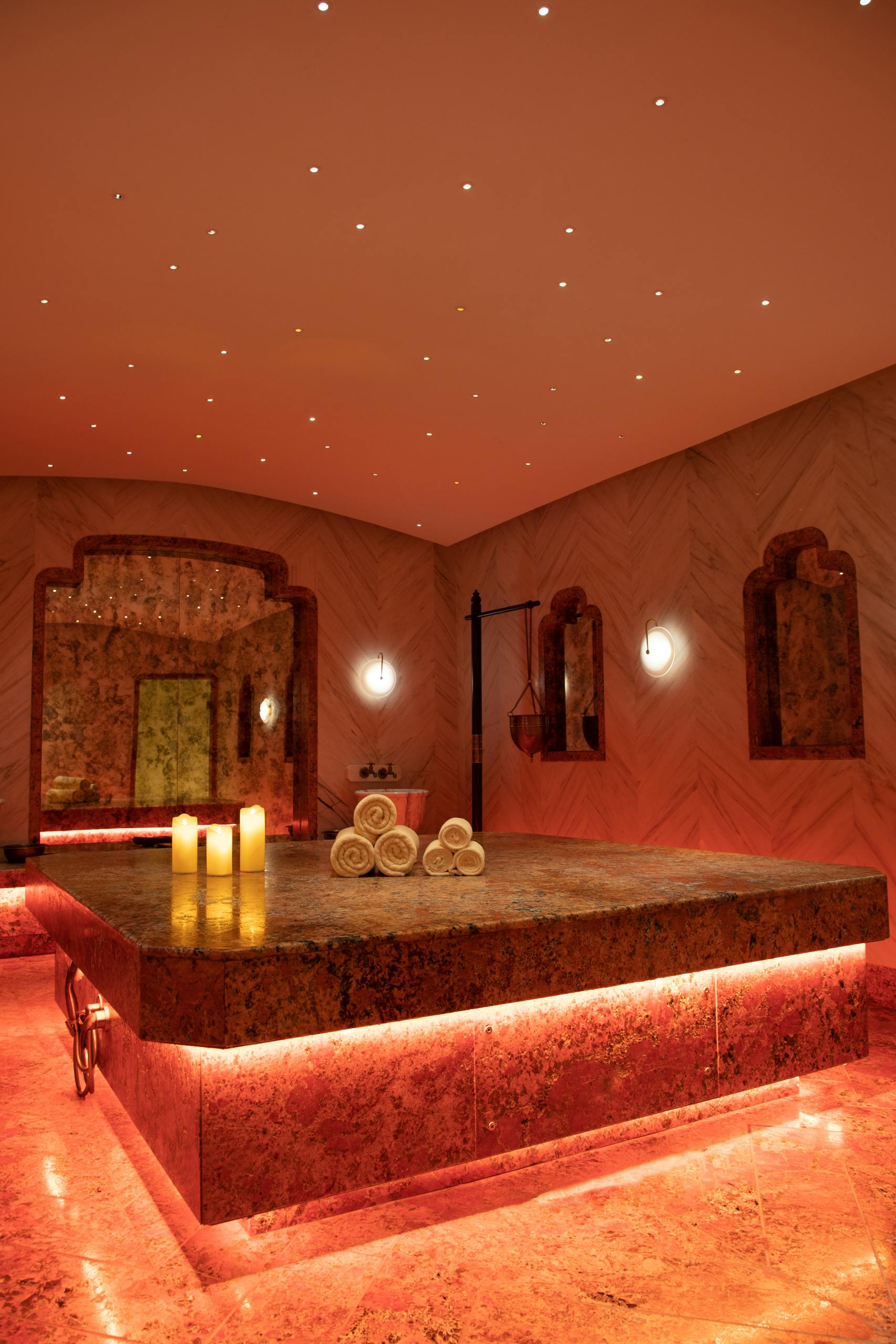
Spa hammams provide a gentler introduction. The process is explained clearly, the environment is quieter, and staff guide you through each step. For many first-time visitors, especially those who prefer a calm start to unfamiliar experiences, this can feel far more relaxing. We had the spa experience first and after that were sufficiently emboldened to try the local hammam. I enjoyed that one more, even though it really stretched the limits of my French, as people actually talked to me! Not something I’m used to in a Dutch spa, where people prefer to pretend other people are invisible.
Anyway: both versions share the same core ritual of steam, soap and scrubbing.
Things to know before visiting a Moroccan hammam
Before visiting a traditional hammam in Morocco, it helps to understand a few practical customs. Hammams are usually separated for men and women, and most visitors keep their underwear or swim bottoms on rather than bathing fully nude. The atmosphere is relaxed and social rather than silent, particularly in neighbourhood hammams where locals chat while going through the bathing ritual.
The experience is also not rushed. Many people spend an hour or more moving slowly between steam, scrubbing and rinsing, so it is best to treat the visit as a leisurely ritual rather than a quick spa treatment. In traditional hammams visitors often bring their own towel, soap and scrubbing glove, while spa hammams provide everything you need.
Tipping the attendant who performs the scrub is customary and appreciated. After all, the person responsible for exfoliating half your epidermis has almost certainly earned it.
Once you understand these small details, the Moroccan hammam becomes far less mysterious and much easier to enjoy.
Is a hammam comfortable for older travellers?
Despite what some people assume, hammams are not reserved for the young and athletic. They are used by people of all ages across Morocco, including plenty of grandmothers who would consider the entire process routine. The warm steam can be wonderfully soothing for stiff muscles, and the pace is entirely flexible. Visitors are free to sit, rest and move slowly through the experience.
For many travellers over fifty, a hammam turns out to be one of the most restorative parts of the journey. For us, it was a wonderful break from all the exploring during our two days in Marrakech.
What it feels like afterwards
Stepping outside after your first Moroccan hammam produces two immediate sensations.
The first is a deep feeling of relaxation, as though your entire body has just been thoroughly polished. The second is a slightly compulsive need to touch your own arms in disbelief at how smooth they feel.
It is a small but satisfying victory. You arrived slightly apprehensive about the experience, and you leave refreshed, comfortable and quietly pleased that you embraced one of Morocco’s oldest traditions. And before you know it, you will be the one leaning over the table saying “You simply must try a hammam!”
After all, you now know exactly what to expect from your first Moroccan hammam.
This article is part of our Morocco country guide, where you can find itineraries, information about riads, travel advice and planning tips.