Safari packing made easy: what you really need
A practical packing list for 55+ explorers
Don’t want to read the whole post? Just grab the printable packing list and be on your way!
Enter your email — after a quick confirmation, you can download it right away.
Some things to consider
When packing for three weeks in South Africa in what was winter in the Southern hemisphere, I had to consider quite a few things. It could be (and was) eight degrees and raining in the Cape Province, it could be (and was) thirty degrees and sunny around Kruger and it could be (and was) everything in between. We would walk a lot, sit in cars a lot, climb in and out of safari vehicles and would I have to run away from anything? Also, were there any laws against bringing things into the country, except the obvious? Could I take everything I could possibly need without shipping it by container? Short answer: no. Safari requires smart packing – and I’m here to give advice.
Now you don’t have to go on safari kitted out like Dr. Livingstone about to embark on an expedition. But scaring off the animals with garish shirts isn’t a great idea. Nor is spending more time batting away mosquitos than actually watching the wildlife. You don’t want to climb in and out of trucks – or go on a walking safari – in flip flops.
You’d also regret not seeing any of the wildlife because you forgot to bring binoculars and they’re all far away. Or not seeing anything at all because you forgot your sunglasses and are blinded by low sun and flying dust.
It’s unwise to bring camouflage clothing (if you would want to) because wearing it is illegal for non-military people in some countries. Zambia and Zimbabwe are among them.
Quite a few countries have laws banning disposable plastic items.
Your hairdryer and most make-up will probably stay in your suitcase. So will shampoo, body wash and conditioner if you’re staying at hotels. Why drag that stuff around?
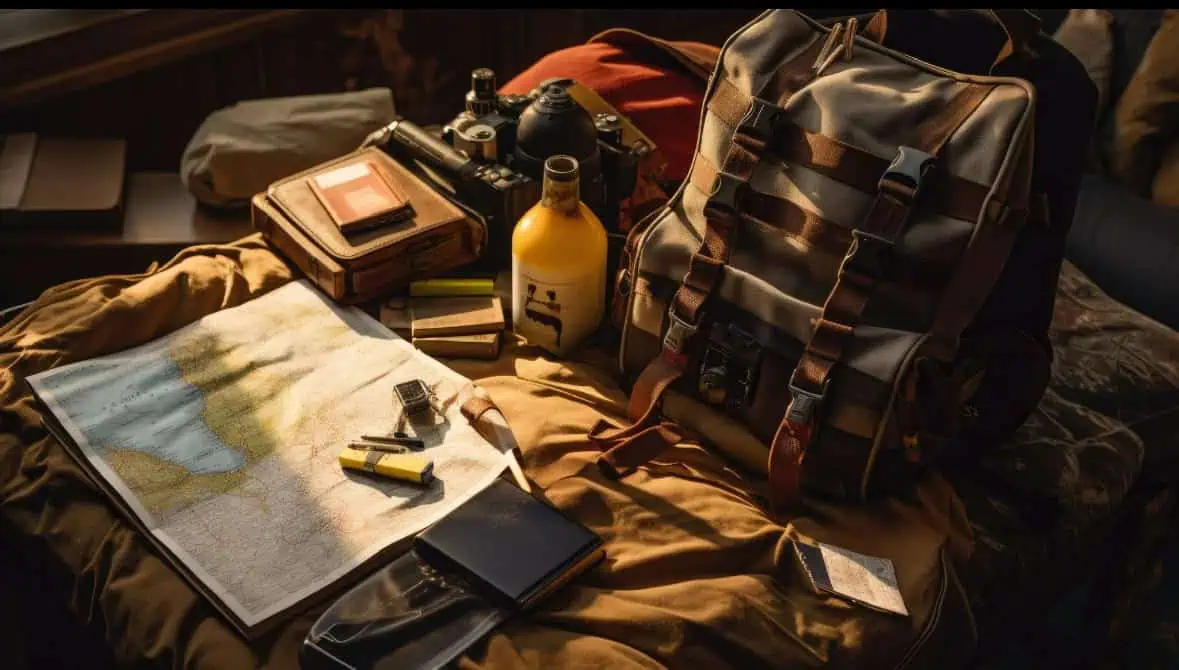
With all this to consider, here’s my advice: just pack all the items on my list “Safari packing made easy for 55+-explorers” and make sure you can find them in the half-dark of your safari camp.
What to pack?
Clothing:
- Lightweight clothes in neutral colours (Kaki, tan, green, brown) so as not to scare away the animals.
- Light long-sleeve shirts, as protection from sun and mosquitos.
- Lightweight long pants, same reason.
- Shorts or a skirt or summer dress, for midday when you’re not out on a game drive.
- A warm layer: a jacket, a sweatshirt, socks, jogging pants. Mornings and nights can get very gold, especially if you’re in South Africa in winter, like we were.
- A safari hat or, if that’s too much Dr. Livingstone for you, a ball cap.
- A packable raincoat. You never know.
- Pyjamas
- Swimwear: many lodges have pools.
- Comfortable, closed-toe walking shoes. You never know when you’ll be invited to join a safari on foot!
- Flip-flops or sandals for lodge downtime.
- Only if you’re going somewhere VERY fancy: a dress or nice pants and a jacket for dinner time.
- Socks and underwear. Quick-dry is a good idea if you’re going during rainy season.
Gear and essentials
- A small daypack for game drives
- Soft-sided duffel bag if you’re going to the type of resort where they fly you in. They generally don’t allow hard-shell suitcases.
- Binoculars, or you will miss out on a lot of the wildlife that’s not right next to your car.
- A camera, plus batteries / charger, plus memory cards. Note: an iPhone or any other modern phone takes great photos overall, but is not good at zoom. If you want to take National Geographic-worthy shots, you need a camera with large optical zoom.
- A flashlight or headlamp, so you don’t have to stumble around in the dark
- A Power bank
- A universal travel adaptor
- A reusable water bottle.
Health and personal care
- Prescription medication. Also bring a list of medications you have been prescribed.
- Glasses and sunglasses
- Sunscreen (High SPF and make sure it’s not left over from a holiday 5 years back). The sun is brutal and you don’t want sunburn.
- Insect repellent with DEET
- Mosquito bite relief
- Tooth paste and tooth brush
- Basic first aid: painkillers, band-aid, antiseptic. You don’t have to travel around with the equivalent of a field hospital like I do, but some small items can be useful.
- Hand sanitizer and wet wipes
- Make-up (if you insist)
- Moisturizer.
- Lip balm.
- Neutral-smelling deodorant
- Check whether you need malaria profylaxis before travelling.
- Ear plugs
- A sleep mask
- Generally the lodges will have shampoo, body wash, conditioner etc. Only bring those if you really want to use your own brand.
Documents and money
- Passport. For most countries it has to be valid for at least six months after entering the country. Check this on time.
- Vaccination cards. Yellow fever might be mandatory. For vaccination advice for each country, see your own doctor as it is very personal.
- Travel insurance information, plus an emergency phone number
- Emergency contact information
- Visa documents, if applicable
- Credit cards or direct debit cards
- A small amount of cash in the local currency.
Optional but useful
- Travel laundry soap
- Light gloves and a beanie hat for early morning game drives
- A note book plus pen for writing down sightings. Pro tip: Kruger Park has great guides you can buy, where you can tick off everything you’ve seen.
- Dry bags for storage. Personally, I recommend packing cubes as they make all your stuff easier to find.
- Snacks: protein bars, mixed nuts etc. Do check with your lodge though, as a lot of them don’t allow you to keep any food in your huts or tents, not even when it’s packaged.
- Compression socks, if your feet and legs tend to swell.
- Collapsible walking poles, if you worry about slipping and falling
- An e-reader with charger
What NOT to bring:
- Your Hawaii-shirt or other bright-coloured clothing. It will scare away the animals, which would not help improve the safari experience.
- Heavy perfume or deodorants. They will attract mosquitos and animals will smell you from across the savannah.
- High heels or fancy shoes. Impractical.
- Camouflage clothing. Illegal in many countries.
- Drones. Banned in many parks.
- Fresh fruit, vegetables and meat. Generally not allowed
- Plastic bags. Banned in Kenya, Tanzania and other safari destinations
- Excessive amounts of cash. Risky and unnecessary. Same goes for expensive jewelry.
Downloadable list
Instead of scrolling back through this post while packing, grab the downloadable Safari Packing List — clean, printable, and ready to check off.
Subscribe below for instant access. We don’t spam and you can unsubscribe at any time.
Just helpful travel tools. Unsubscribe anytime.
This post is part of our South Africa Travel Guide. It has tips, advice, experiences and itineraries.
Want to read more about our adventures on safari? Find it here, here and here