I wanted elephants, not performances: our visit to an ethical sanctuary in Chiang Mai
You know that moment when you’re planning a trip and think, “I’d love to see elephants, but it has to be ethical”? No riding, no bathing, no performances. Just elephants being elephants.
That was exactly where I found myself.
I’d seen plenty of elephant experiences advertised in Thailand, but something about them didn’t sit right. So I asked my travel agency to find something different: an ethical elephant experience focused on observation, not interaction.
What they came back with was Chang Chill, tucked into the mountains about an hour from Chiang Mai. And it turned out to be nothing like the typical tourist experience… and far more meaningful than I expected.
The elephants here aren’t wild; they’re rescued. And “no tricks, no rides, no baths” isn’t a slogan. It’s simply how things are done.
Which suited me perfectly. I didn’t come to Thailand to boss an elephant around. I came to watch it live its best elephant life.
How to recognise an ethical elephant sanctuary
Before I show you what this experience was like, it’s worth knowing how to recognise a truly ethical elephant sanctuary – because not all of them are.
Quick answer: how do you know if an elephant sanctuary is ethical?
A genuinely ethical elephant sanctuary in Chiang Mai should focus on rescue, rehabilitation and allowing elephants to behave naturally. Avoid experiences that involve riding, performances, tricks or forced bathing sessions for tourists.
The best sanctuaries prioritise the elephants’ welfare over entertainment, even if that means visitors interact less than they expected.
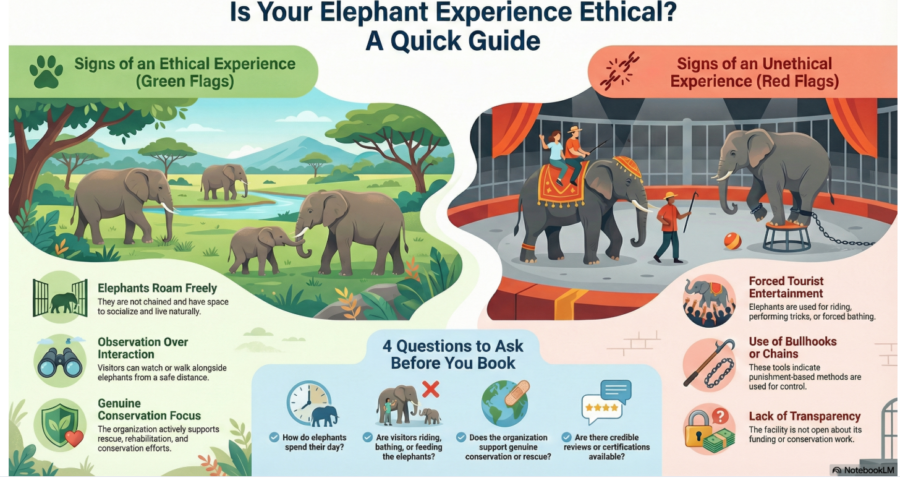
Now that you know what to look for, it’s time to see what an ethical elephant experience in Thailand actually feels like.
No tricks, just elephants: our day at Chang Chill
Checklist done, ethics confirmed, we finally got to see the elephants in action. No rides, no tricks, no awkward selfies, no bathing them; just enormous animals doing whatever elephants do best. Spoiler: it involves a lot of mud and staggering amounts of food.
First impressions: into the mountains and arriving at the sanctuary
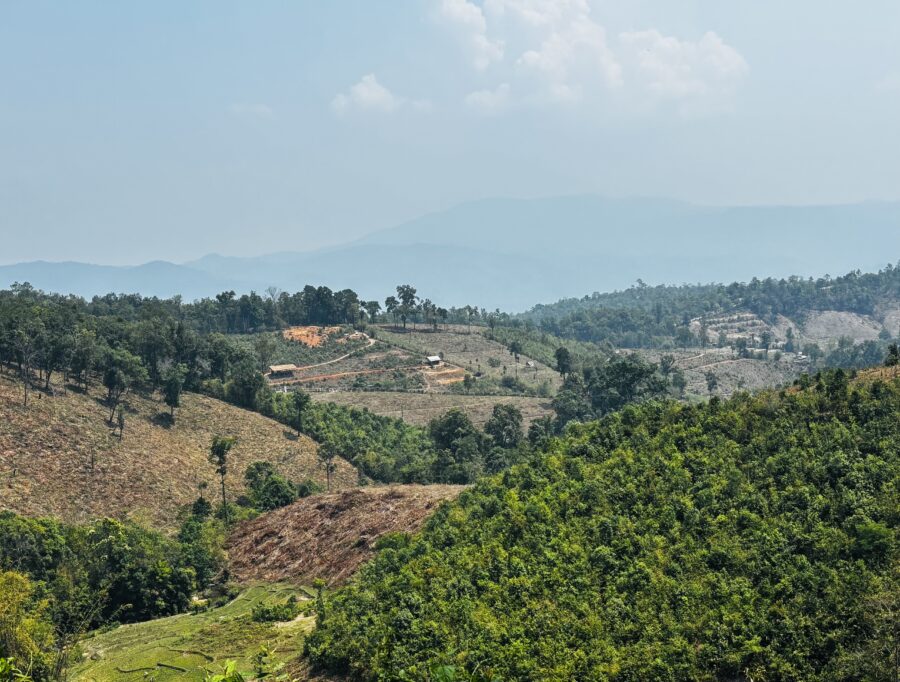
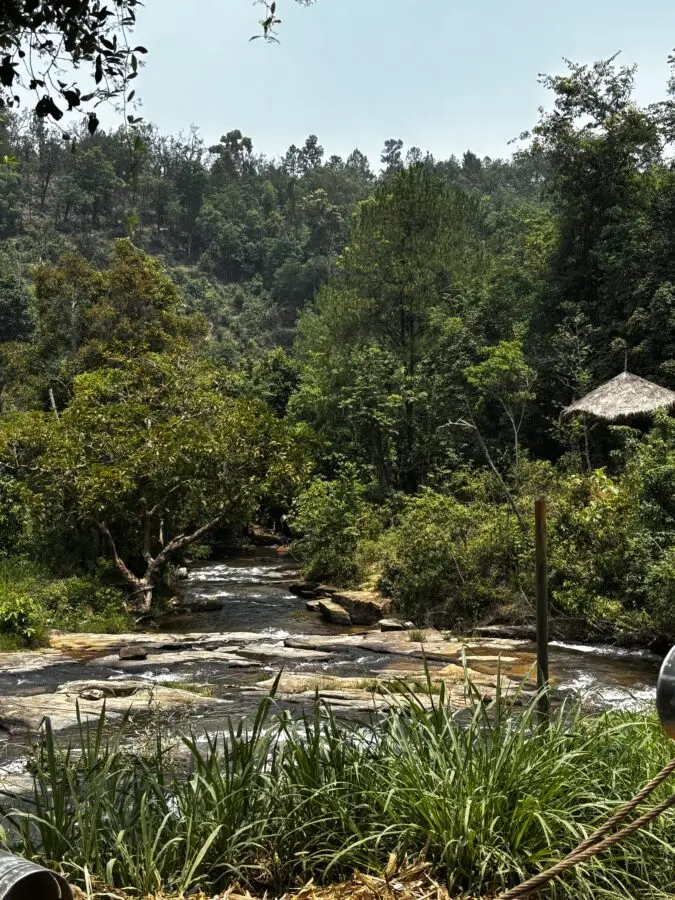
We were picked up at our hotel early and herded into the back of a minivan. Joined by a bunch of twenty-something backpackers, we drove an hour and a half out of the city. The final half hour took us up into the mountains, along hair-raising hairpins and past spectacular views. We arrived at a parking lot on a hill and walked the last stretch down through rice fields and across streams. Beautiful, but watch your step.
A guide met us at the sanctuary, showed us to a seating area, offered drinks, and told us about the sanctuary’s four Asian elephants. All had been raised in captivity: used for rides or to work on the land. But now they could roam freely, always accompanied by their mahout. A mahout is an elephant’s caretaker and guide, someone who spends years with the elephants so they know and trust them. At Chang Chill, the mahouts are the only ones allowed to interact with the elephants.
We learned the difference between Asian and African elephants, then slathered on sunscreen and insect repellent before following the guide into the jungle.
Meeting the elephants
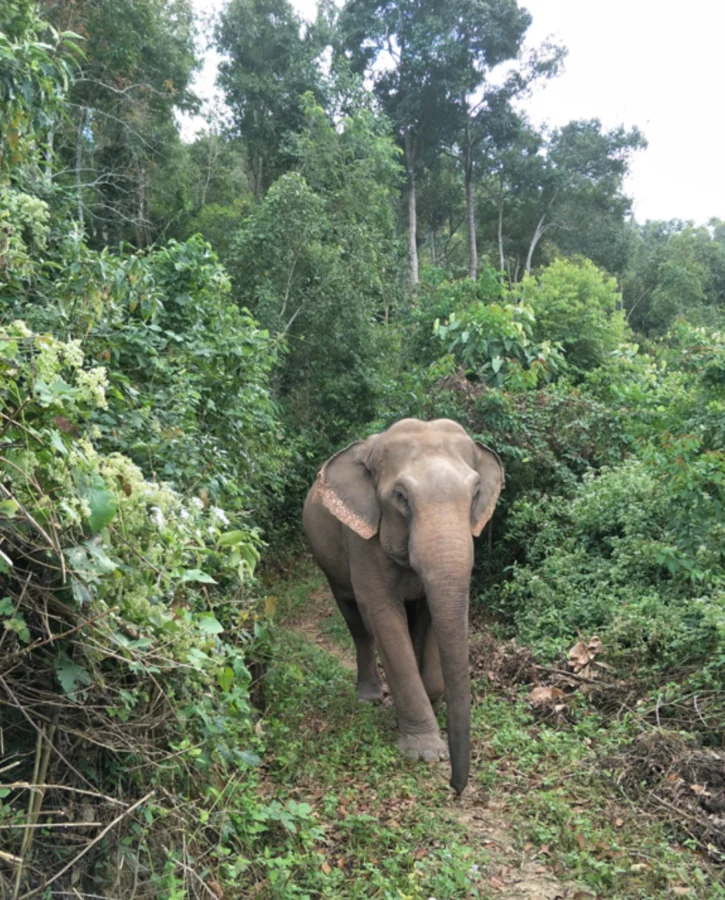
Now, maybe you remember my introduction: stuck on a muddy hill in Thailand, overtaken by annoyingly fit backpackers? That was here. The path into the jungle was steep, slippery, and rough. I took the bamboo poles provided for support, and they saved me from face-planting into the mud, or sliding down the hill more than once. Take them. Also, wear better shoes than I did. For reasons unknown to me, I tried this in sandals. Bad idea. Sturdy shoes with grip all the way.
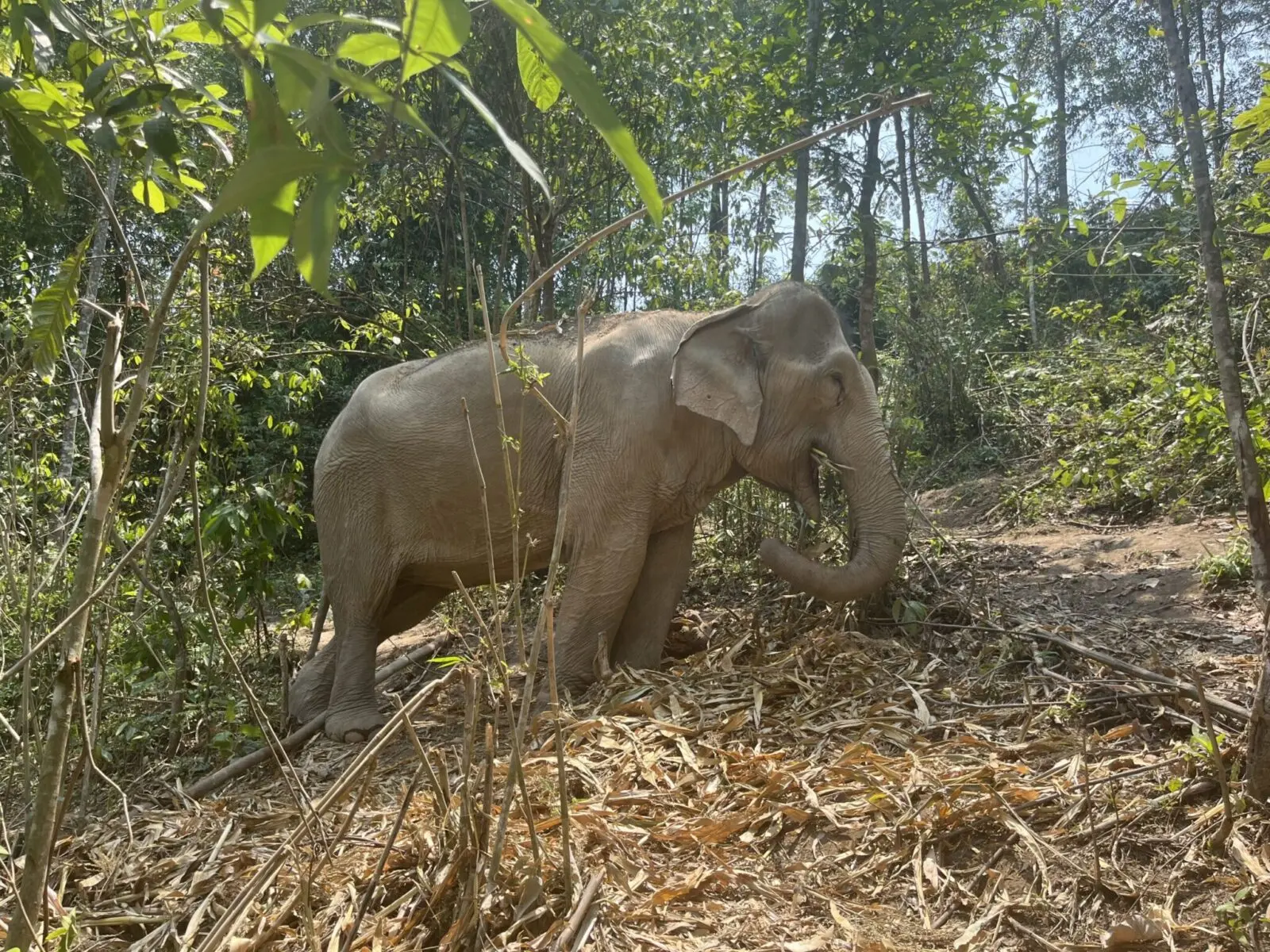
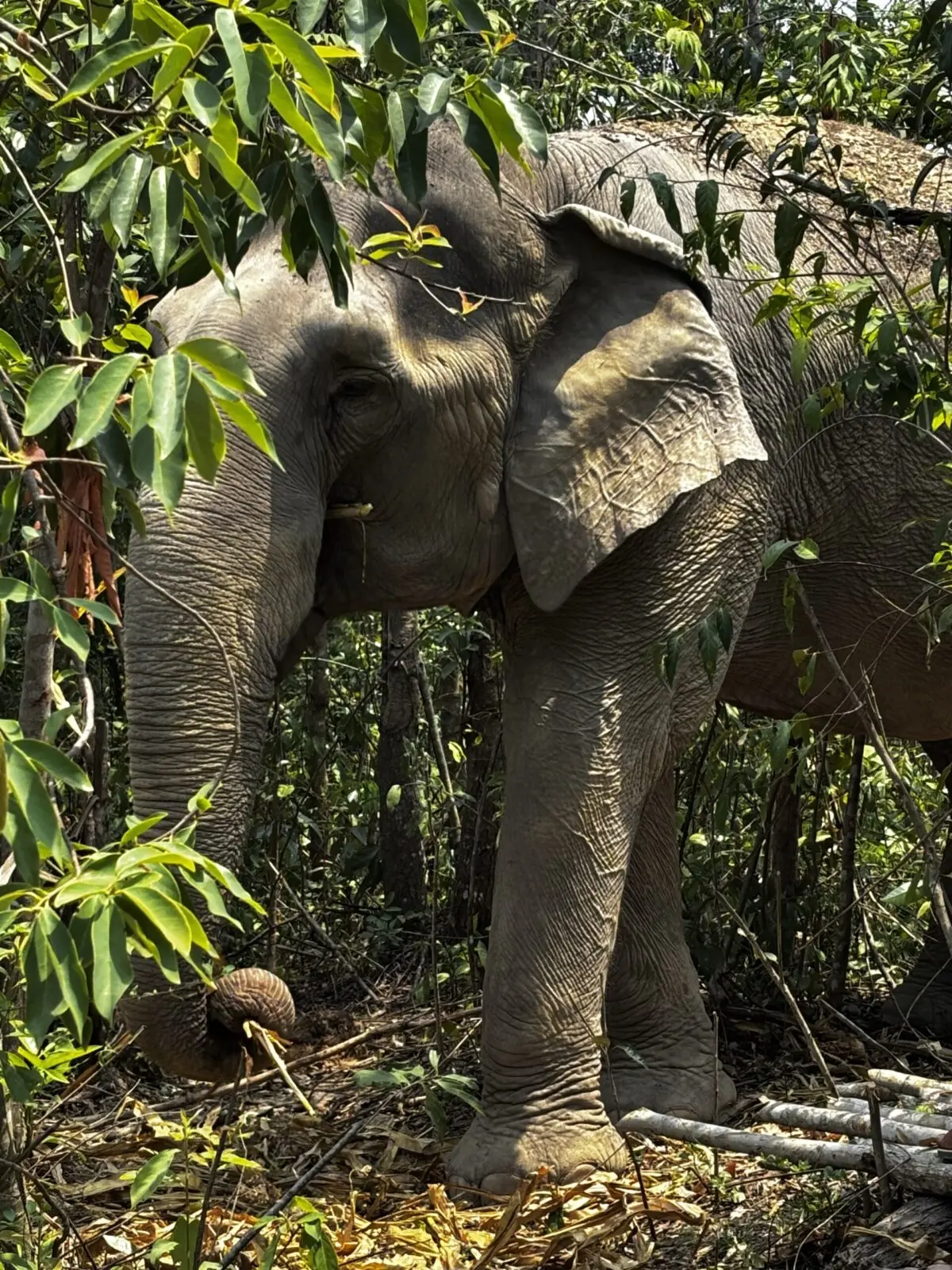
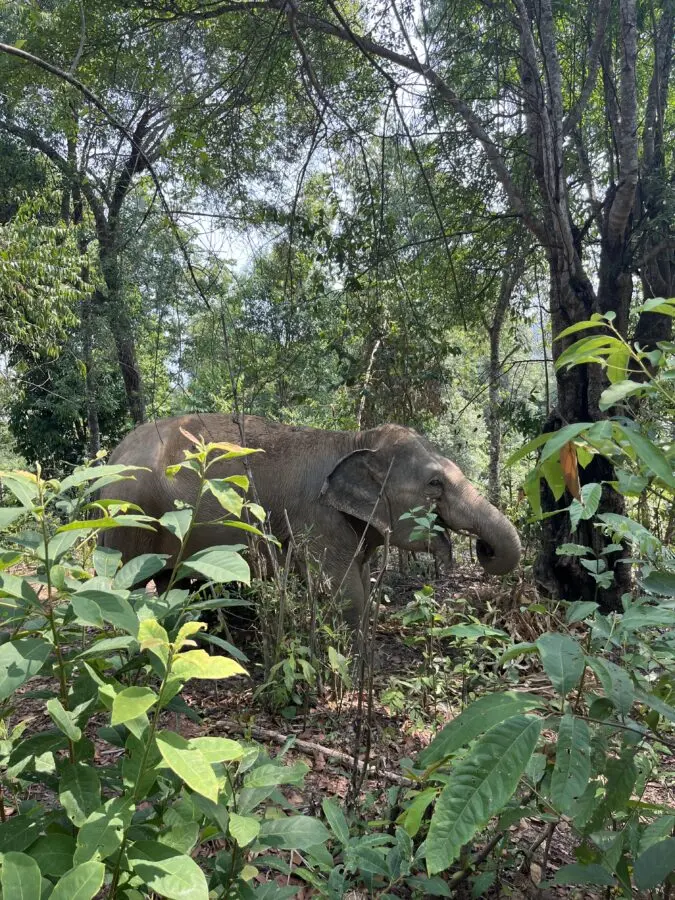
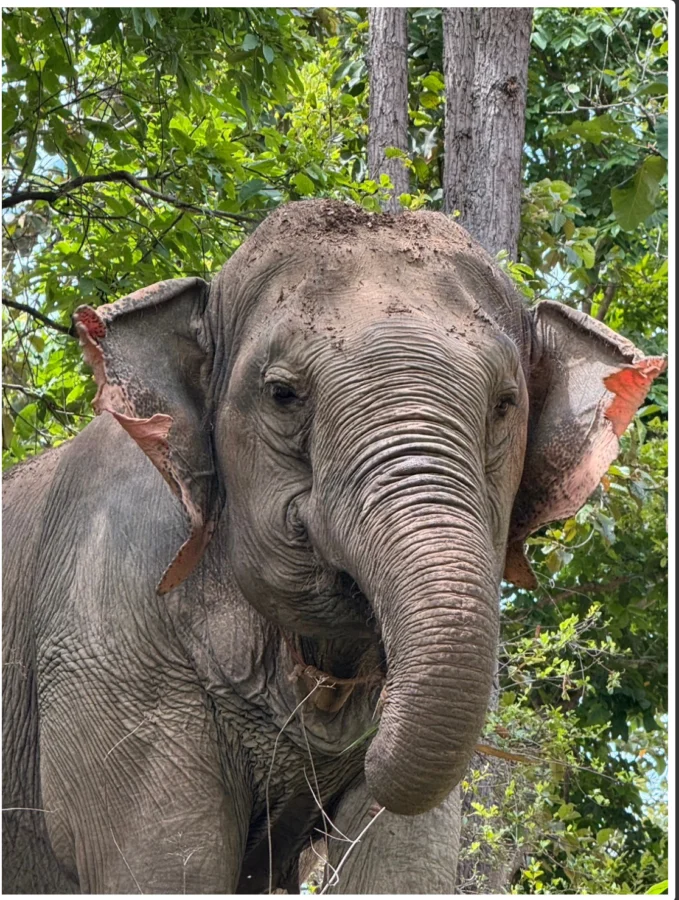
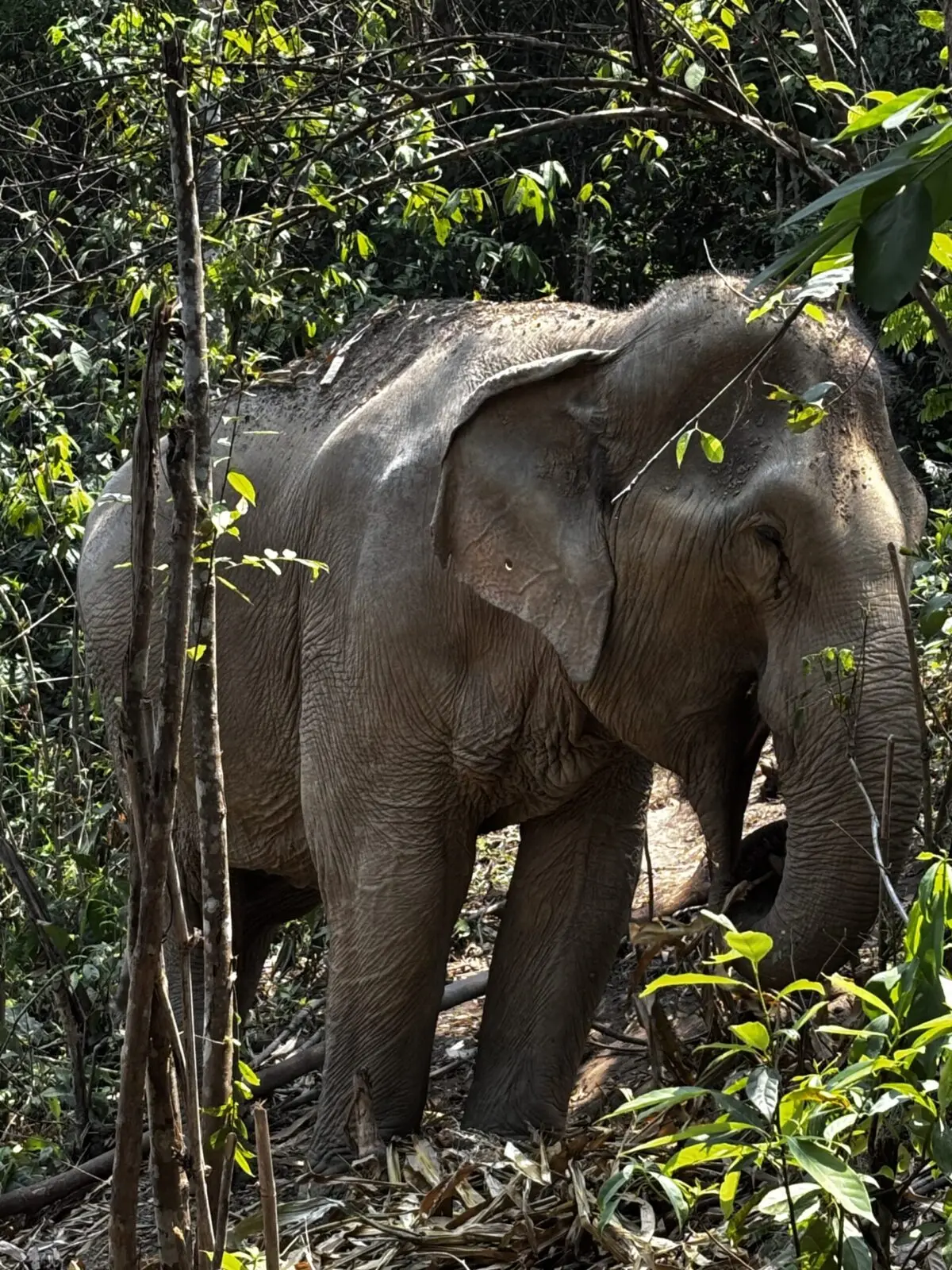
All that was forgotten once I finally reached the top, and the first elephant came into view. I was awestruck. I’d been close to elephants on safari in Africa, but being this close on foot -hearing her breathe, watching her munch – is something else entirely. We kept a respectful distance; they’re still wild(ish) animals.
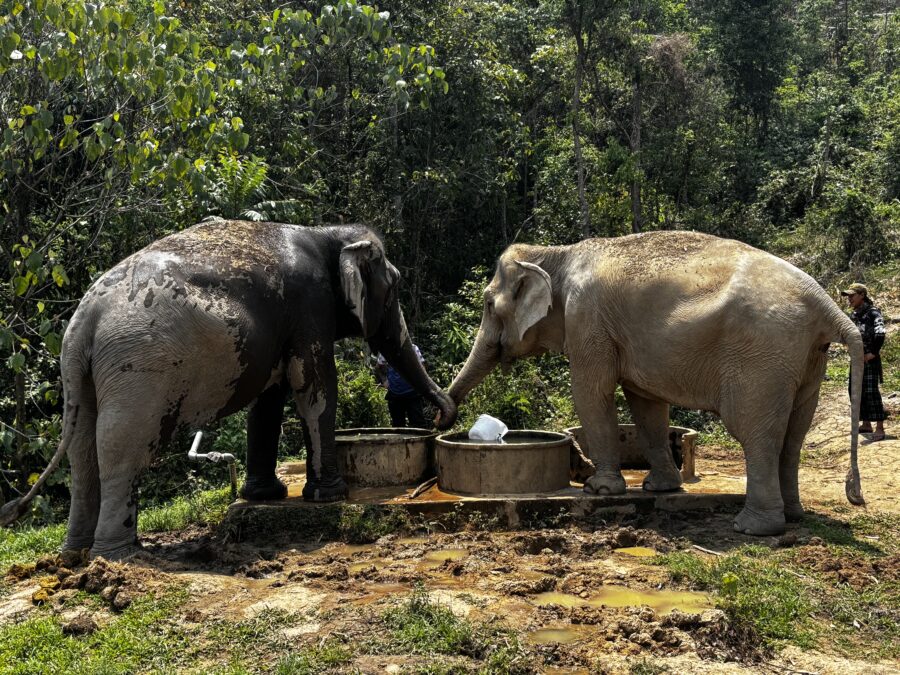
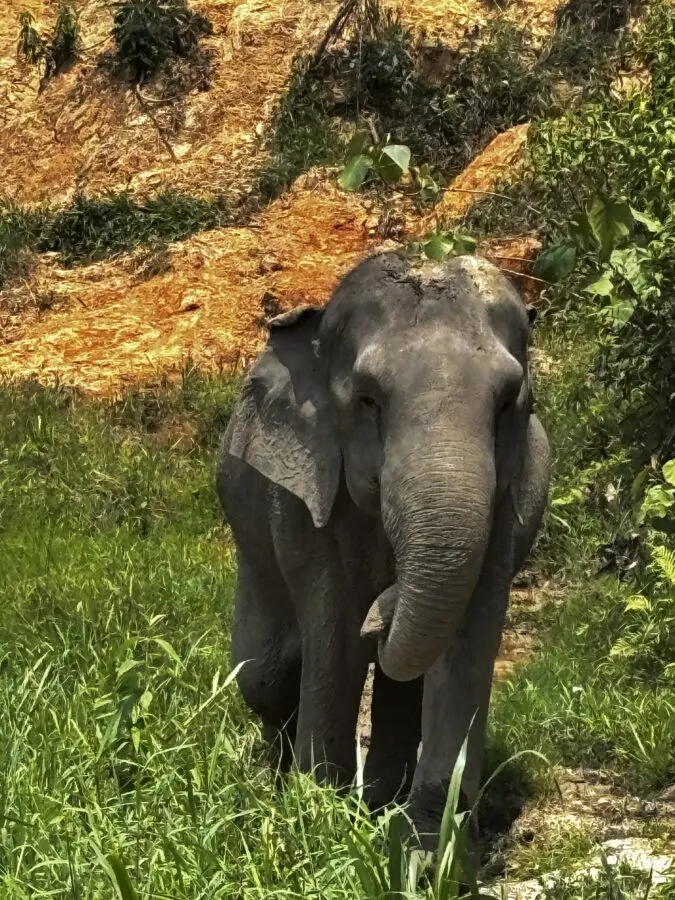
After that, we spotted the other three elephants, or, more accurately, one of the three spotted us. I was watching two of them drink and have a shower (they’ve got excellent built-in equipment) when I heard a thump behind me. Turning, I saw elephant number four walking straight at me. I quickly stepped aside. She didn’t look like she was letting a puny tourist get in the way of her drink. She was astonishingly close. And astonishingly big. After this highlight, it was time to head back to the main camp.
Snacks for the elephants, lunch for us
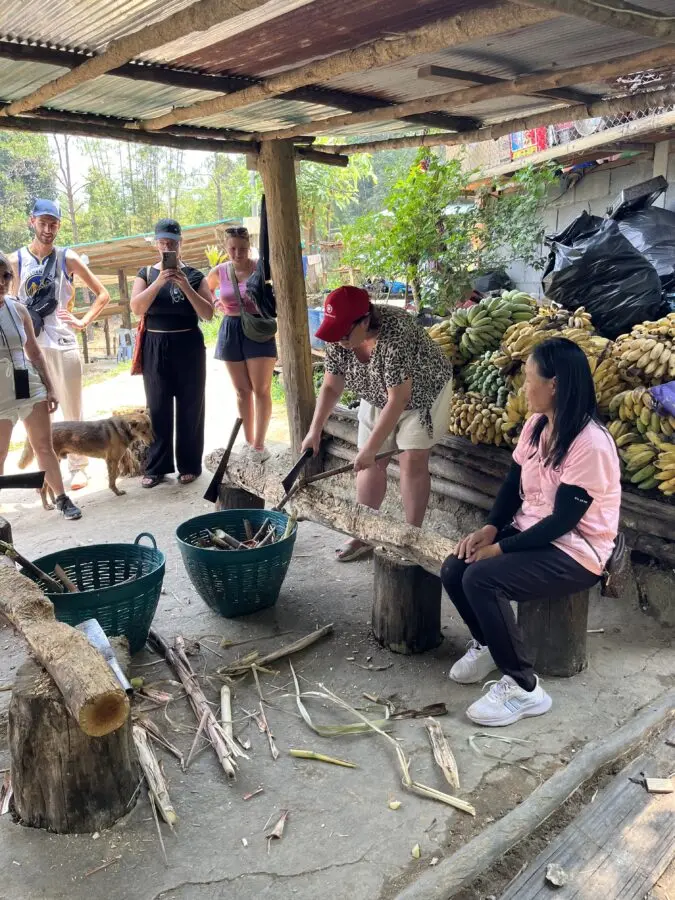
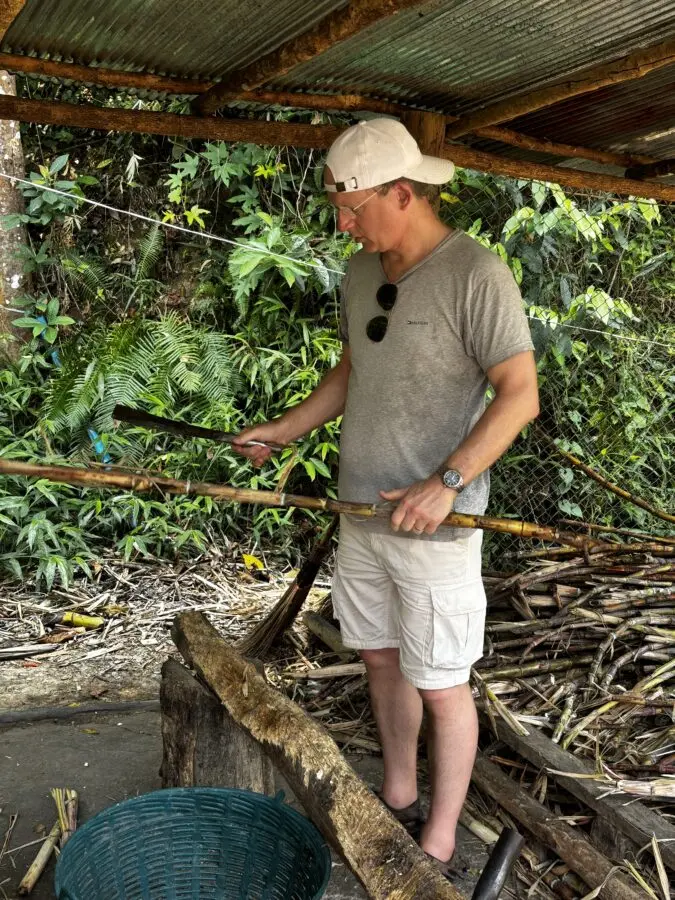
Upon returning, we were marched down the hill toward the river, handed a machete, and instructed to chop sugarcanes into pieces. Harder than it looked, but strangely therapeutic. We tossed the pieces into a basket and carried them to the feeding spot by the river, where, as if on cue, the elephants appeared. The mahouts distributed the sugarcanes, and once they were gone, the elephants vanished again. Makes you realise they know the routine better than we do.
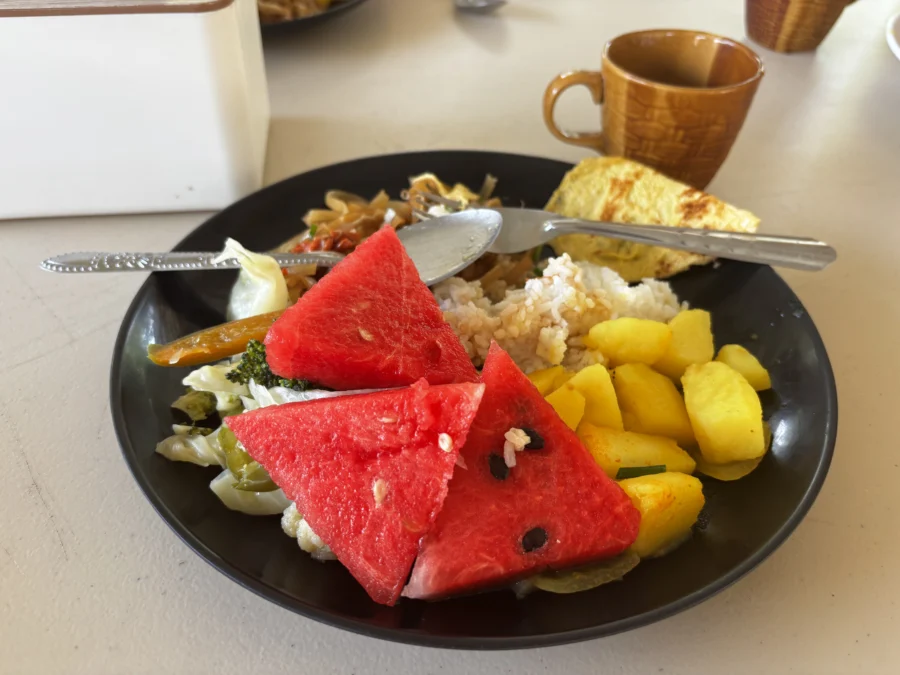
After watching the elephants enjoy their snack, it was feeding time for the humans. We had a fantastic lunch of fried rice, eggs, fresh fruit, and curry, washed down with copious amounts of water. This was necessary, because it was hot enough to fry an egg on the trail.
A cooking course: for elephants this time
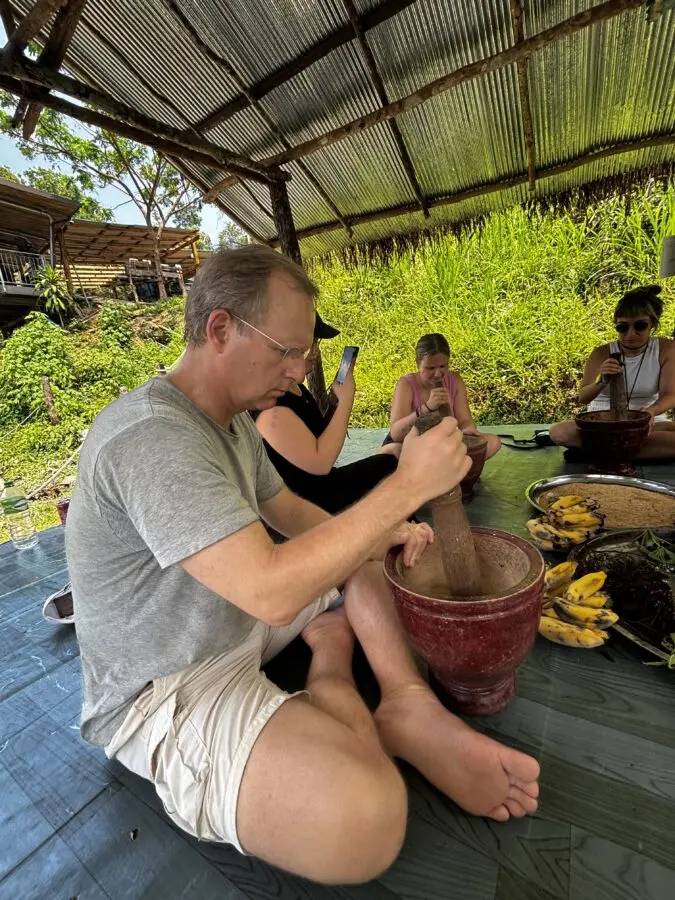
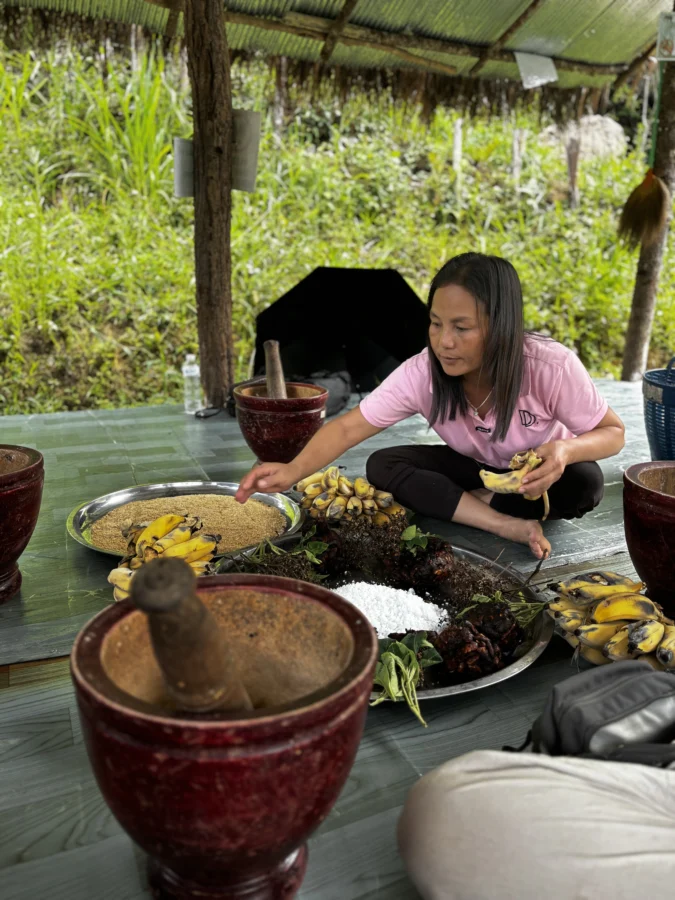
After lunch, it turned out there was another job for us. The sugarcanes we’d chopped were just a snack. Now it was time to prepare the elephants’ main course. We sat on the viewing platform near the river, our guide providing a huge mortar and pestle to each group of four. Soon we were happily (ish) mashing tamarind seeds, bananas, more sugar cane, and salt. It was surprisingly hard work, so we took turns. My turns were slightly shorter than Marc’s, if I’m being totally honest. Only later did I realise it’s actually a brilliant business strategy: let the tourists do the hard work and pay for the privilege. Nobody minded, but it did make me chuckle.
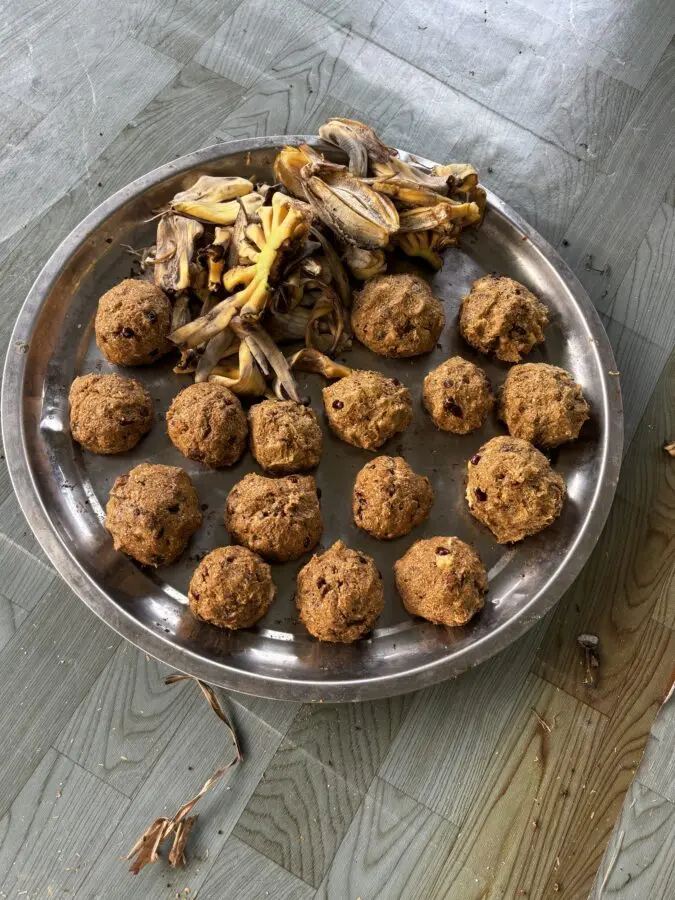
Once everything was mashed, we rolled it into rather unappetising-looking “meatballs.” The mahouts placed them in the feeding troughs, and as if summoned by magic, the elephants appeared again. They didn’t seem to think the meatballs were unappetising at all: everything was gone in minutes.
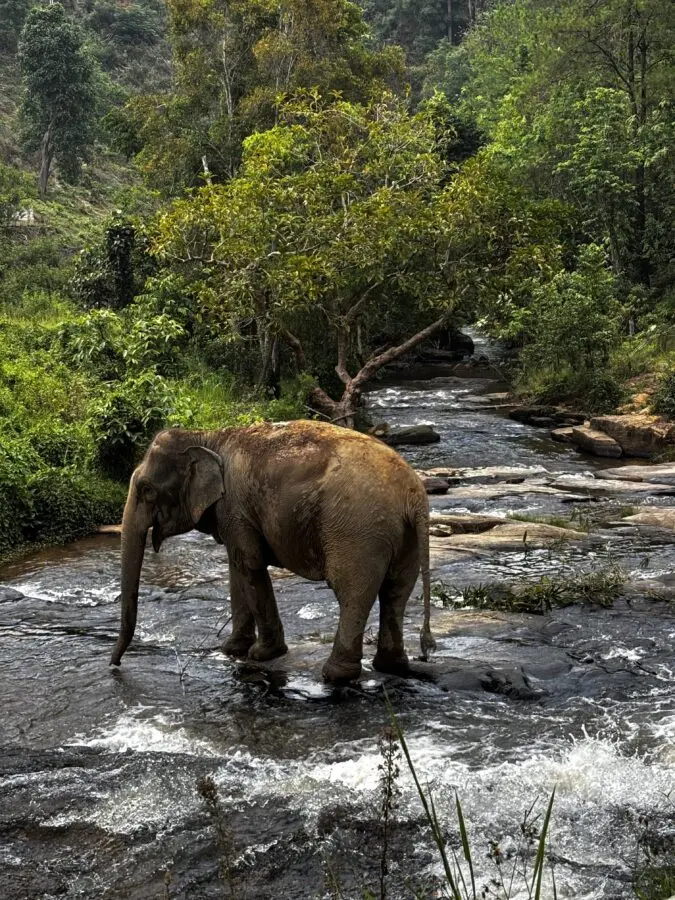
After the meal, two of the elephants stayed for a bath near the waterfall. Once they’d decided they’d regaled us with enough of their presence, they disappeared back into the bush. That was our cue to take the path back to the parking lot (uphill this time) and drive back to Chiang Mai.
Tired, muddy, and above all happy, I left Chang Chill reminded why ethical elephant experiences matter. No tricks, no rides, just elephants being elephants.
What You Really Want to Know Before Visiting
You’ll be walking on uneven, sometimes steep paths through fields, streams, and jungle trails. Bring sturdy shoes and use the bamboo poles provided: they really help. You’ll move at a gentle pace, with plenty of stops to watch the elephants. Just don’t try to keep up with the twenty-something backpackers and take time to catch your breath if you need it.
This should be obvious by now, but let me state it clearly anyway: no, absolutely not. The elephants are free to roam and only interact with their mahouts. You get to watch them up close safely. No rides, tricks, or forced selfies required.
While some trails can be steep or slippery, the sanctuary is accommodating. You may not be able to do the full jungle walk, but there are viewing areas where you can still see the elephants comfortably. I’m not quite sure if there is any way to get to the main camp by car; we walked about 15 minutes downhill (and uphill on the way back) from the car park. If you cannot do this, my advice would be to contact the sanctuary and ask if there is a way to get to the viewing areas without that walk.
I can only talk about the View Doi location, because that’s where we went. I heard that the newer Hillside location is more accessible, with easier walks. You can check that out on the website.
Sturdy shoes with grip are a must (sandals are not recommended). Don’t be like me. Light, breathable clothing, sun protection, and insect repellent will make your day much more enjoyable. If it’s rainy season, consider bringing a light rain jacket.
We were on a half-day tour. We were picked up at 08:30 and back in the hotel at about 15:00. Total time at the actual sanctuary was about 4 hours. There’s time for preparing food for the elephants, observing them, and enjoying lunch without rushing. There’s an option to book a full-day tour too. This has a medicinal herb lesson as an extra activity.
Yes! You’ll get a simple, delicious lunch with rice, curry, fruit, and drinks. Water is provided throughout, which is essential in the Thai heat.
Absolutely. The elephants are relaxed and the lighting in the jungle is fantastic—but remember to respect their space and follow mahout instructions.
If you’re planning a trip, consider spending a few days in northern Thailand—our Thailand travel page has tips, and our 2-week itinerary shows how to fit it all in.
This was cooking for elephants. We cooked for ourselves too, in a Thai cooking class.
If you love going out to see animals, you will probably enjoy our South African safari experiences. Find the all in our 55+ South Africa safari guide.