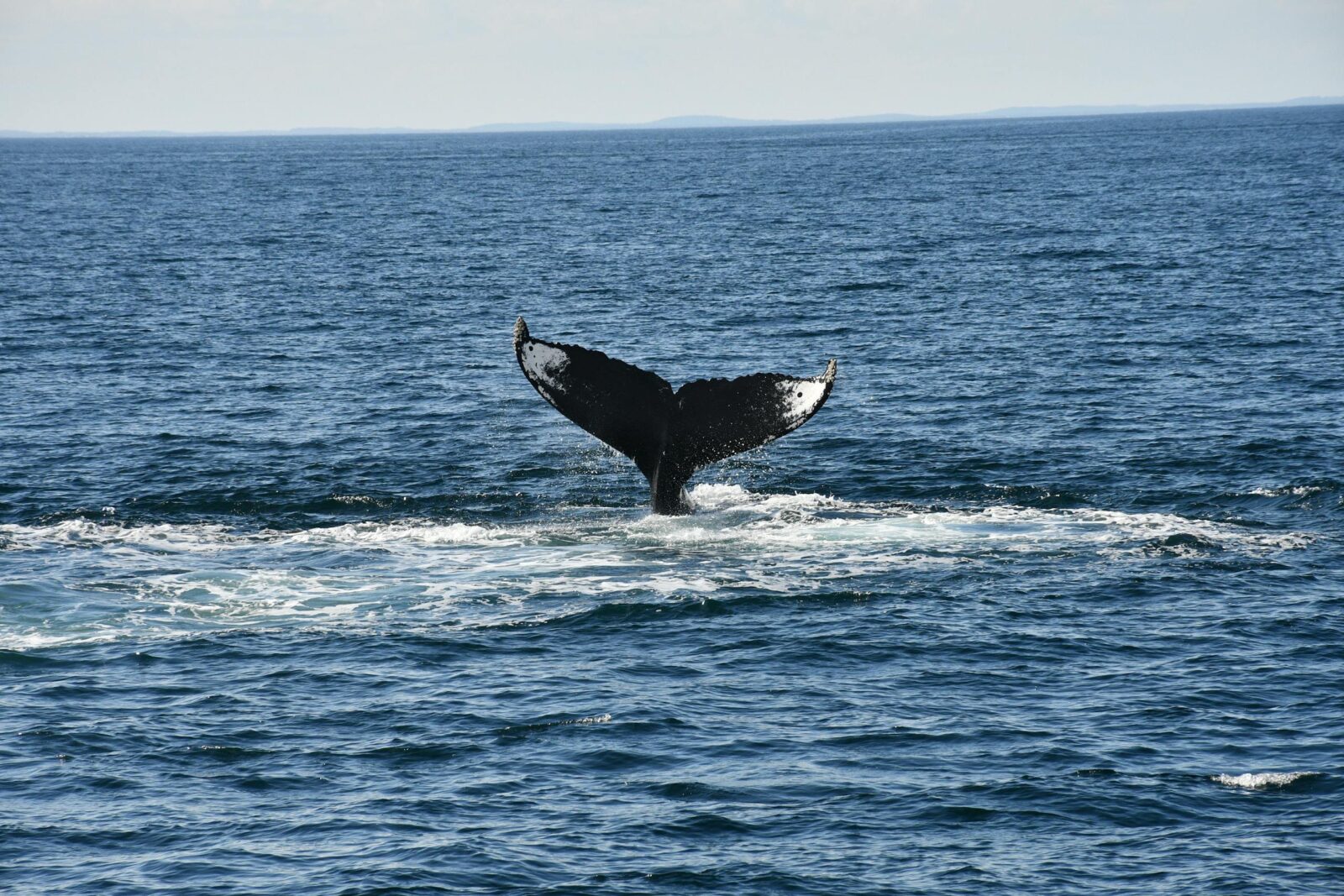
Whale watching in Hermanus without the “extreme adventure” nonsense
Just so you know: some of the links in this post are affiliate links. If you buy something through them, I may earn a small commission—at no extra cost to you!
Can I still go whale watching at 55+?
If you’ve ever thought, “Whale watching looks amazing… but can I still go whale watching at 55+?” the answer is a resounding yes; mainly because the whales are doing all the heavy lifting. You don’t need superhuman fitness, special gear, or the reflexes of a National Geographic photographer. Just show up, take in the ocean drama, and confidently announce that you definitely spotted that tail before anyone else.
At a glance
A memorable Hermanus whale-watching trip that is easier physically than you might expect, but not always as calm as the sea brochures imply
This is a relatively easy outing for most 55+ travellers, with slow cruising, lots of drifting near whales and only light boarding effort, but sea conditions can be lively and a flexible attitude helps.
How our whale watching adventure nearly didn’t happen
I woke up in our charming rooftop apartment in B&B The Potting Shed in Hermanus, South Africa to a beautiful sunrise. This was a pleasant surprise after yesterday’s dark clouds, blustery wind and drizzly rain. The second surprise was far less pleasant: a text message from the whale watching company where we’d booked that day’s trip. The trip, I was informed, had been cancelled due to “strong winds and high swells”. We could either get a refund or we could reschedule to the next day. Disappointing: this was one of the things we were looking forward the most and we only had the one day in Hermanus, so rescheduling was not an option. So there was only one possible solution to this problem: we were going to need a bigger boat.
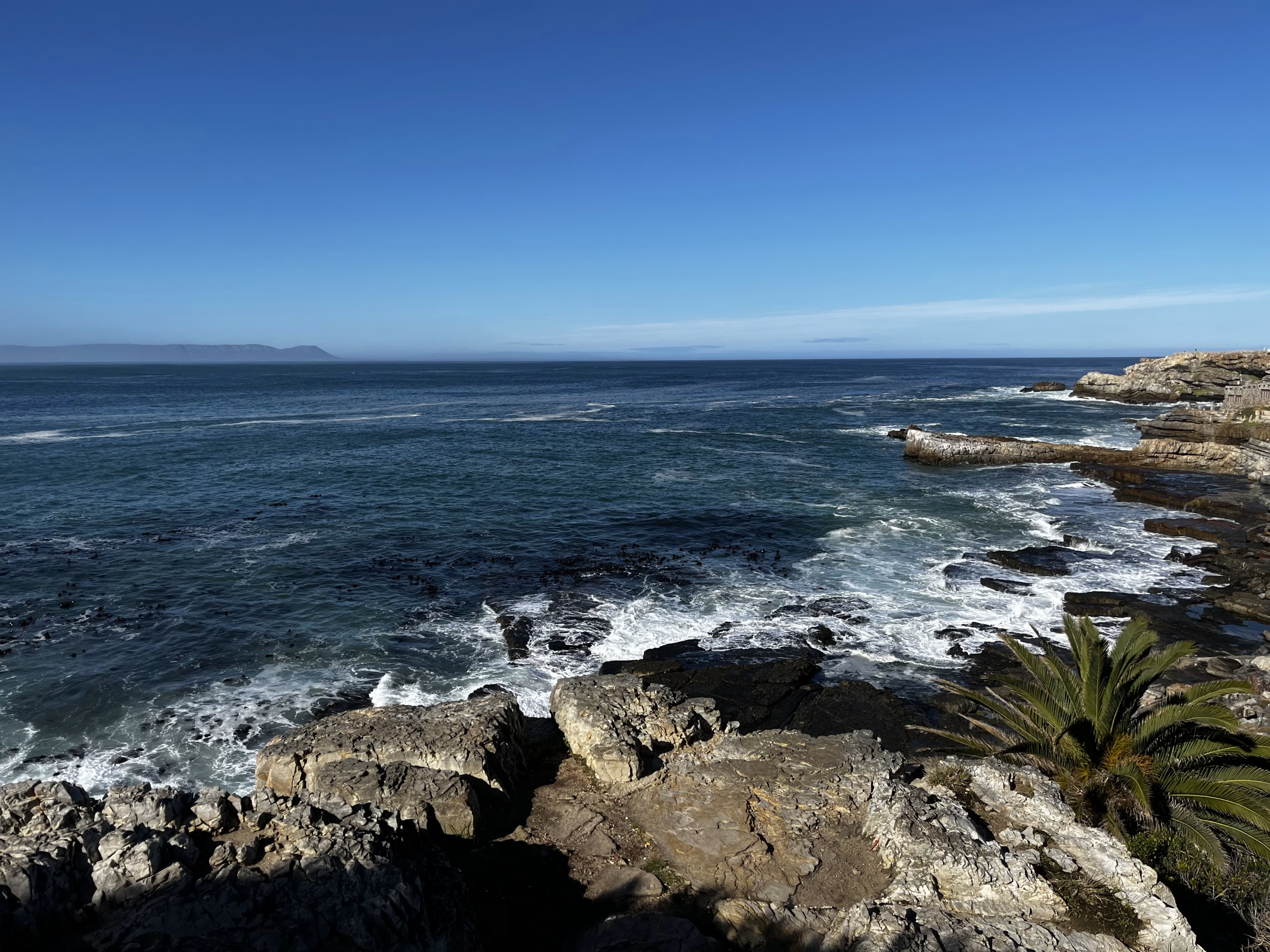
We told the landlord, Steve, our tale of woe over breakfast. He promised to help and delivered: after a few phone calls he managed to book us a trip for that afternoon, leaving at two. After breakfast we went for a walk along the coastal path, where we saw that the waves were indeed enormous. Watching them crash against the rocks, we could only conclude that this new boat was either much larger or its captain much braver.
Briefing and boarding
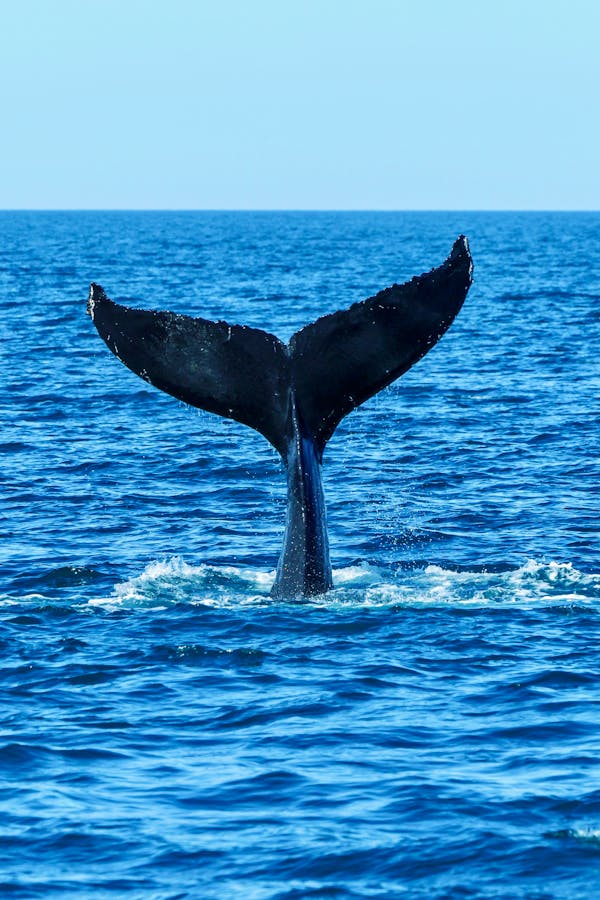
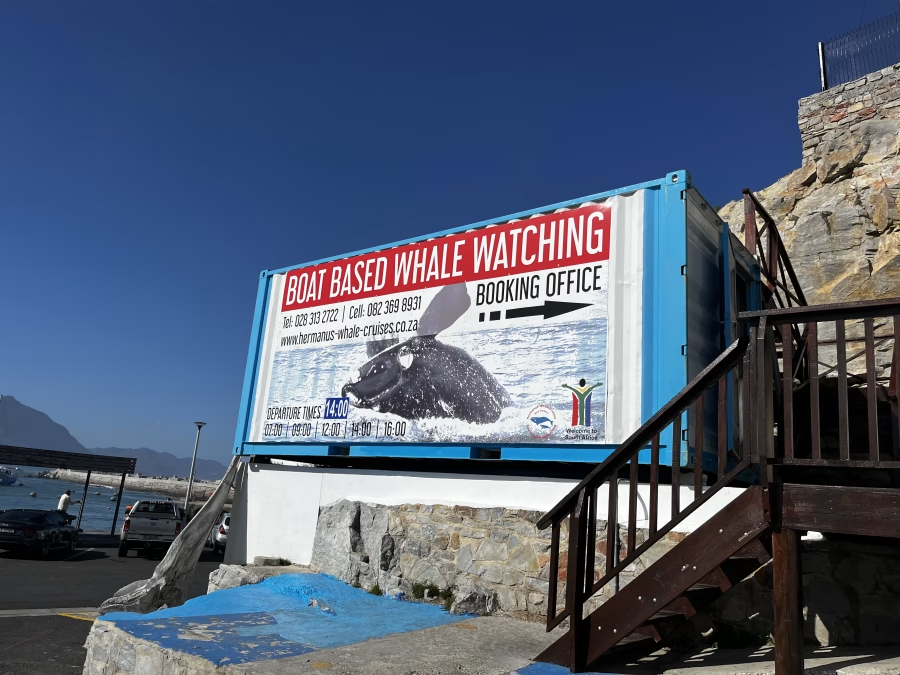
We arrived in the harbour a little before two o’ clock, checked in at the offices of Hermanus Whale Cruises (affiliate link) and had a good look at the boat. It looked sturdy enough. We got briefed on the type of whales that we could hope to see and their habits. What we didn’t get was a safety instruction, but, in my experience, in a lot of countries safety instructions basically amount to “Don’t be reckless”.
Once the briefing was done, we boarded. A member of staff handed out lifejackets, but didn’t push the issue. The thing is, we’re Dutch, and two things generally hold true for us: we don’t wear bike helmets if we can avoid it, and we don’t wear lifejackets. Maybe we put a little too much faith in our biking and swimming abilities. Anyway, we said no to the lifejackets and we hadn’t taken any motion sickness medicine either. Living on the edge! Marc and I found a spot downstairs along the side of the boat, the children braved the staircase and climbed to the top deck and off we went: off to see some whales!
Whales! Whales everywhere!
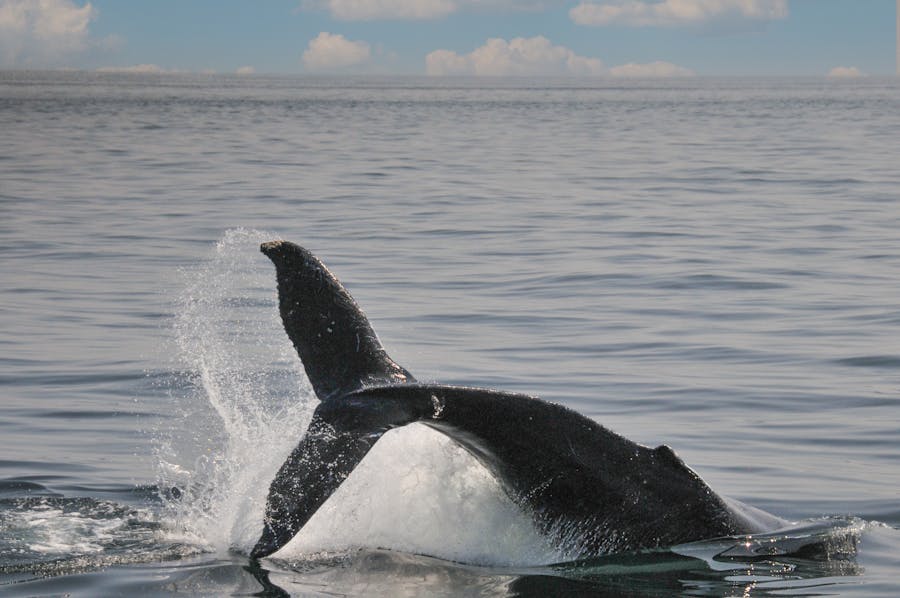
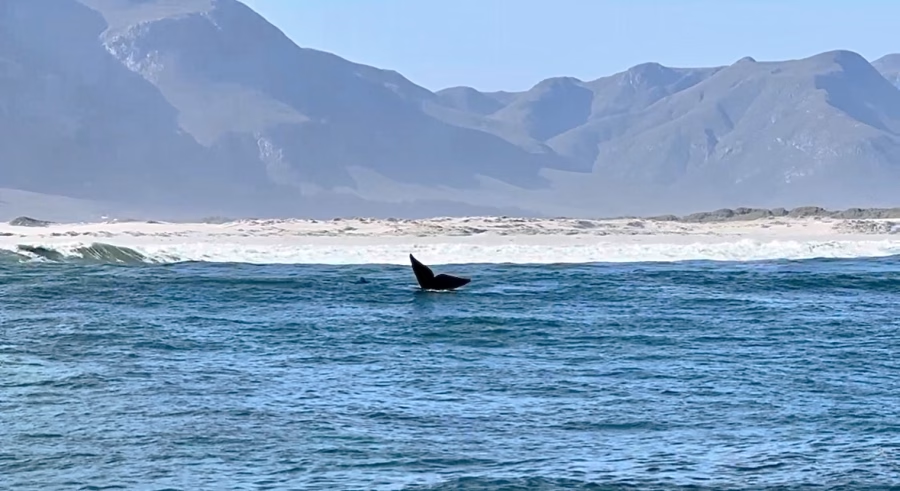
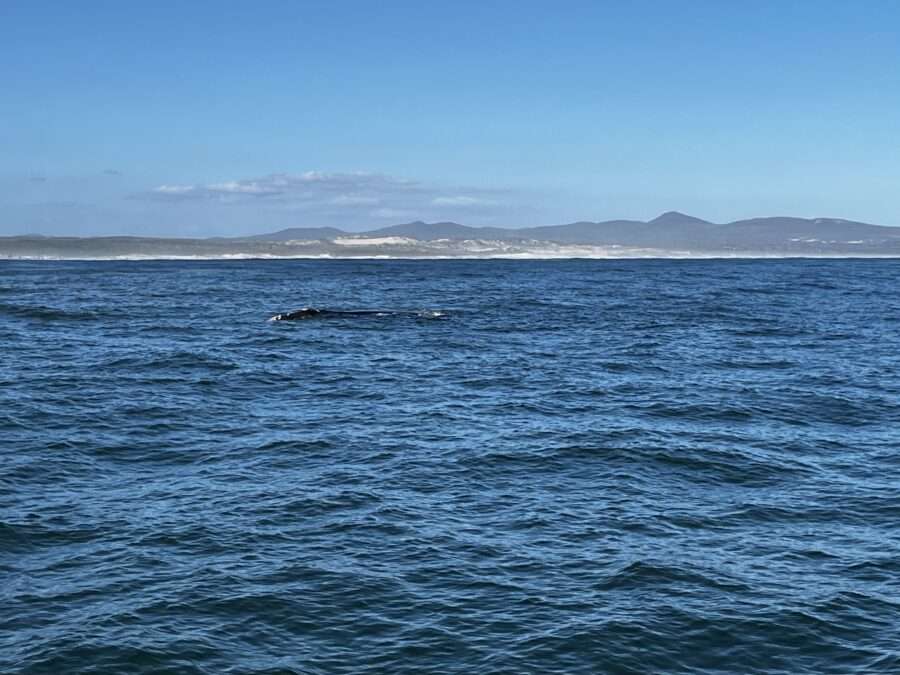
I later found out that we’d been on that boat for more than three hours, but it felt like mere minutes. Our captain took us across the bay and from then on, all I remember is staring in awe at the gigantic animals, some of them accompanied by smaller, but still enormous babies. We couldn’t get too close to them because of regulations. A good thing, too – you wouldn’t want to stress them out. And you wouldn’t want a stressed-out whale to capsize your boat.
All the whales we saw were Southern Right Whales, and we also spotted seals and penguins. Out in the (almost) open sea, the sound of the waves wasn’t too loud. We could hear the whales splashing in the water, and the sound of them clearing their blowholes carried surprisingly far. Probably the most exciting moments came when a whale dived nearby. You never knew whether it would resurface right next to the boat – or disappear completely. The passengers pointing excitedly told us exactly where to look. Even more thrilling was when we were the first to spot a whale.
I only made the mistake of looking back once. When I saw a gigantic wave towering over the boat, with another barreling right behind it, I decided to keep my eyes firmly on the front and sides of the boat. Best to trust the captain – he’d done this before.
Because of the swells, the whole tour felt like a bit of a fairground ride, but none of us were scared and nobody got seasick. I didn’t see any other passengers hanging over the railing either, and a good time was had by all. We thoroughly enjoyed our afternoon and wouldn’t have missed it for the world.
Whale-watching FAQ
Yes, you almost certainly can. Boarding the boat isn’t particularly difficult. The jetties are sturdy and the gangways are not too steep or wobbly. Some operators also offer wheelchair-accessible trips, but it’s best to check this before booking.
Most companies recommend booking online in advance. Just be aware that cancelling less than 24 hours before departure usually means paying the full fee.
If you prefer flexibility – for example, if you want to check the weather or try spotting whales from land first – you can try showing up without a booking. The downside is that on busy days, you might miss out.
Some operators offer a partial refund if no whales appear. Others let you join the next tour free of charge or at a discounted price. Policies vary, so it’s worth checking before you book.
If the operator cancels (usually due to weather or sea conditions), you’ll normally be offered the chance to reschedule. If that doesn’t work for you, you should receive a full refund.
If you’re prone to motion sickness, consider taking medication about two hours before boarding. Otherwise, you may spend a good part of the trip leaning over the side feeding the fish.
Not really, but remember that you’re on a boat and boats move. Sometimes quite a lot. When walking around the deck, make sure to hold on to something at all times.
It can get cold out on the water, even on a sunny day. As always, layers are the answer. Consider bringing a waterproof jacket. We didn’t get wet, but the sea does like to keep its options open.
We didn’t. Then again, we’re Dutch and we tend to wildly overestimate a) safety regulations in most countries and b) our own swimming skills. In reality, if something happens to the boat or you fall overboard, chances of making it out alive are slim. Wear a lifejacket. If it’s not provided on boarding, ask for one.
Probably not. I wasn’t scared at all – except maybe when I saw that one rather intimidating wave. And the one behind it. The ship’s captains ultimately decide when it’s safe to go out, so trust their judgment. On choppy days, the larger boats are definitely the more comfortable choice.
Absolutely. What started with a cancelled trip, big waves and a last-minute change of plans ended up becoming one of the most memorable experiences of our trip.
This article is part of our three-week South Africa itinerary, which took us from the Cape Province to the Kruger area.
We loved our stay at The Potting Shed. If you’d like to stay there too, you can check prices and availability here.
If you don’t want to drive, a lot of companies offer day trips from Cape Town
For more South Africa experiences and advice, see the South Africa country page.