Driving Swartberg Pass: is it safe? What to expect
Narrow gravel roads, blind corners, and steep drop-offs…
Driving the Swartberg Pass has a reputation for being one of South Africa’s most intimidating routes. So is it actually dangerous – or just dramatic?
We drove it ourselves, well past our 50s, with plenty of hesitation and a healthy respect for mountain roads. Here’s what it’s really like, what you need to know before you go, and whether it’s worth the nerves.
First stop: the Cango caves.
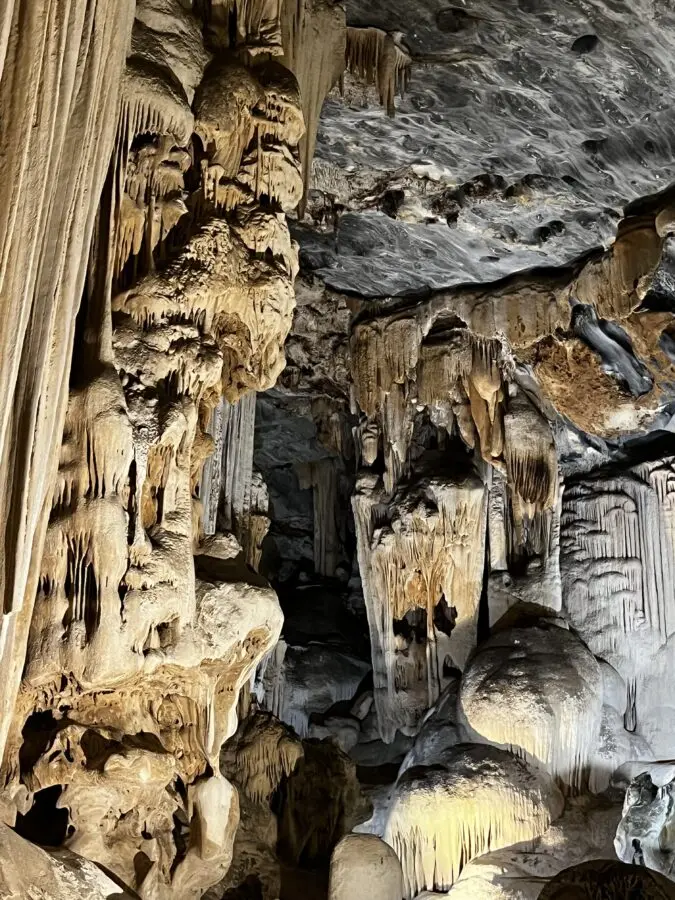
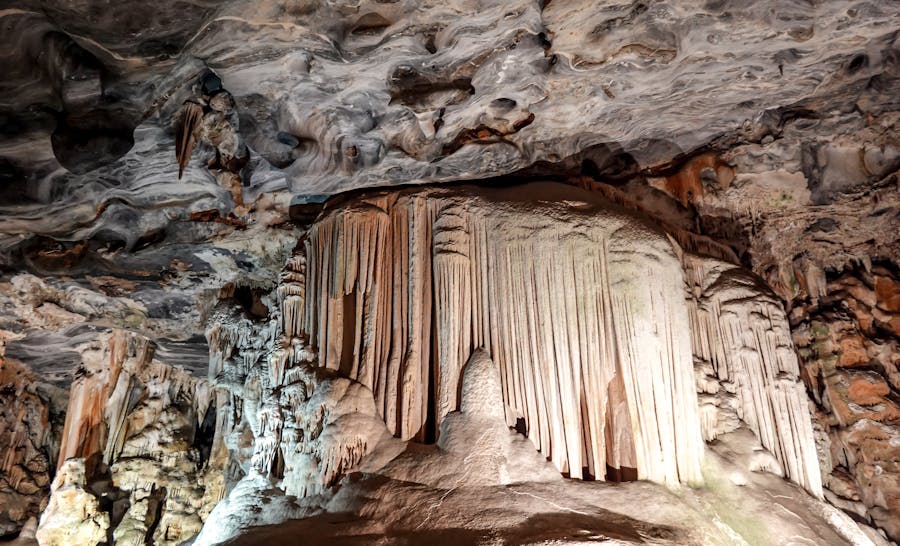
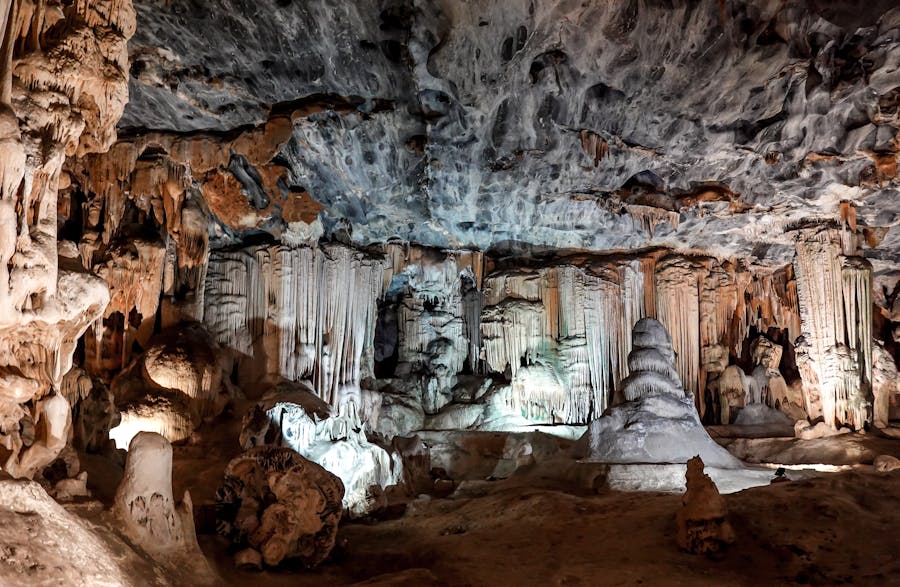
Before arriving at the pass, we decided to make a stop at the Cango caves. Now where normally I am a firm believer of “you’ve seen one cave, you’ve seen them all”, I have to admit this one was special. Beautifully lit, cathedral-sized and with gigantic cave formations. We did the guided tour through the parts of the cave that were easily accessible – although there were quite a few steps and steep paths. Our guide turned off the lights at one point, sang to us in Xhosa and drummed on a see-through rock. No, I’m not making this up. He also gave us a real sense of how scary it must have been to be the first inside the caves—just a rope in hand, darkness all around, never knowing if a flash flood or a sudden collapse might be waiting.
The braver ones among us can choose to venture much deeper into the cave. This guided tour means crawling through extremely (and I really mean extremely) narrow passages on hands and knees, sometimes even on your belly, all while carefully following the guide’s instructions—one wrong move and you could get stuck. I did a similar tour when I was younger (and slimmer), and it’s not an experience I’d want to repeat. If you’re curious whether you’d fit, there are cutouts in the visitor center you can crawl through. I did fit. Still a hard pass.
The Swartberg Pass
The pass itself
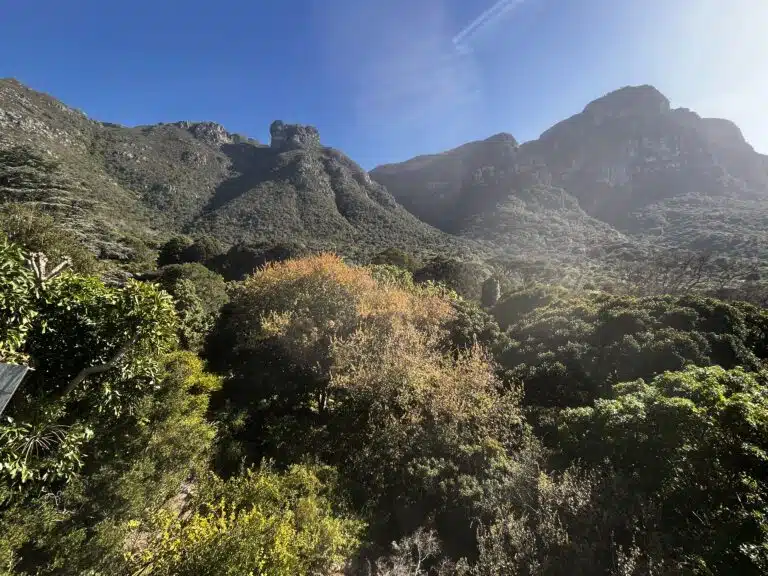
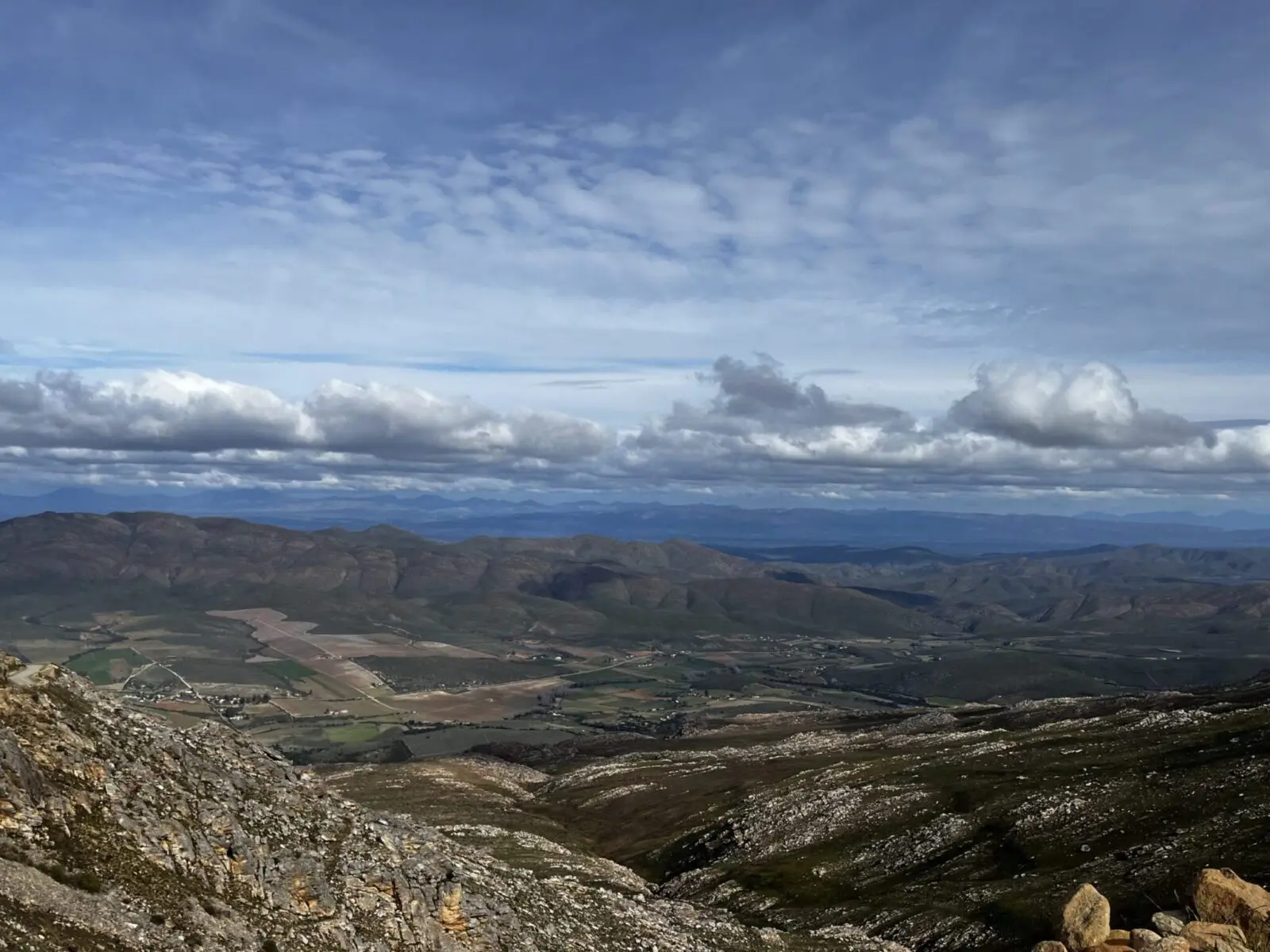
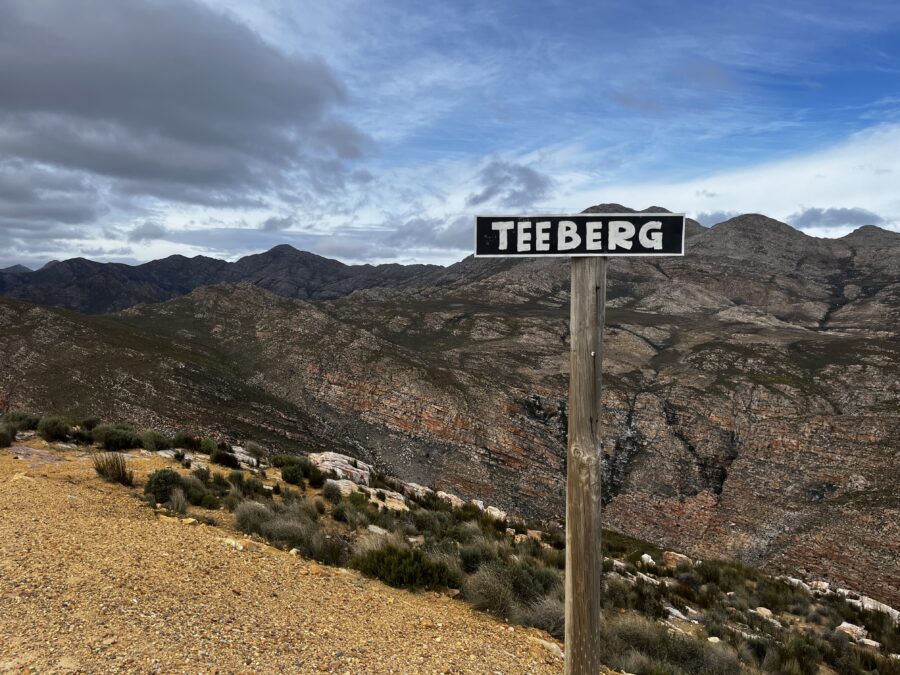
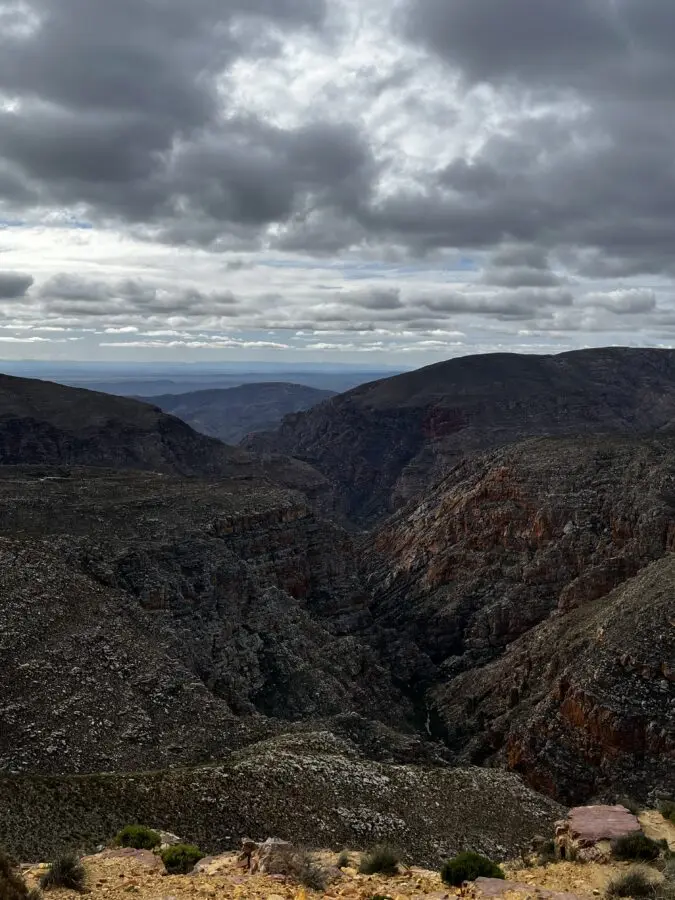
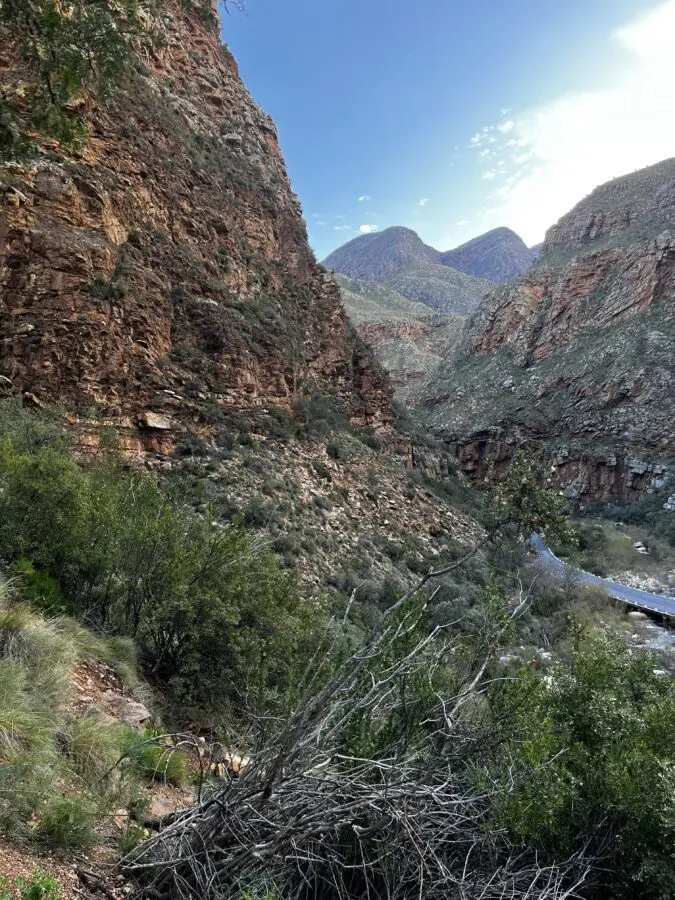
Let me start by giving you some information about the pass. It’s a gravel road that winds 25 km over the rugged Swartberg Mountains, connecting Oudtshoorn in the Little Karoo to Prince Albert in the Great Karoo. It was built in the 1880s by an engineer named Thomas Bain; apparently a man without fear of heights or lawsuits. It climbs to about 1 580 m above sea level, offering jaw-dropping views, historic stonework, and enough hairpin bends to put even Marc off them. The road is so narrow at some stretches that you have to honk before entering a bend with limited views. There are some serious drop-offs but because most have low stone walls it isn’t as scary as it sounds. On the way up to the summit from the Oudtshoorn side the gravel is smooth and the number of potholes limited.
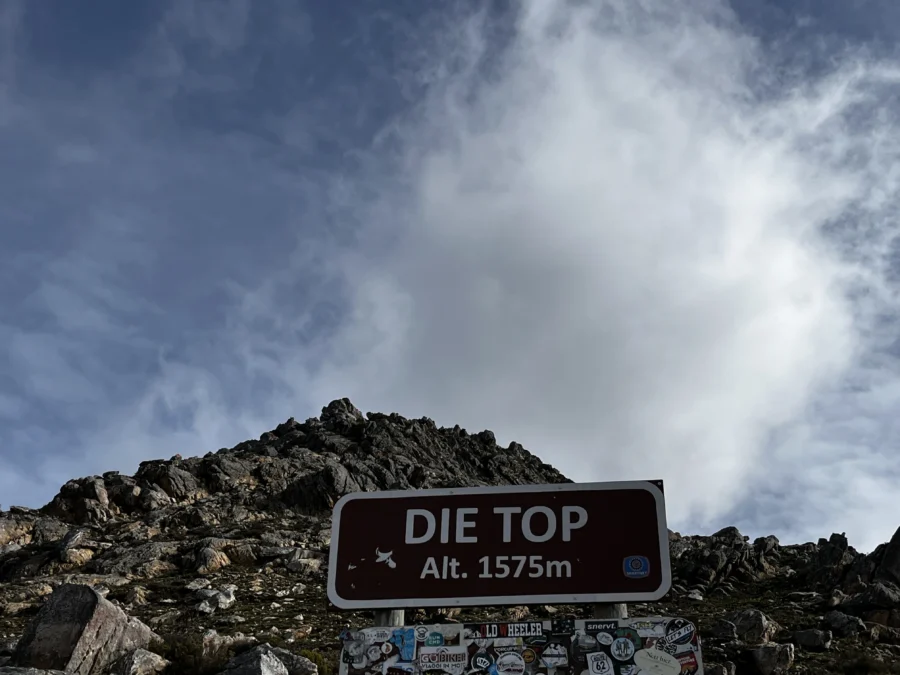
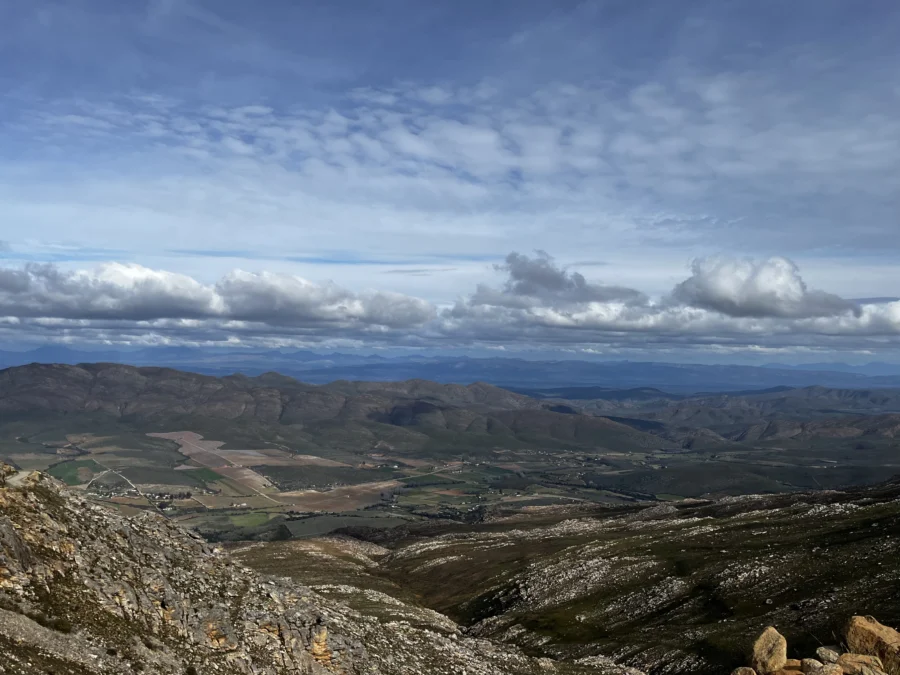
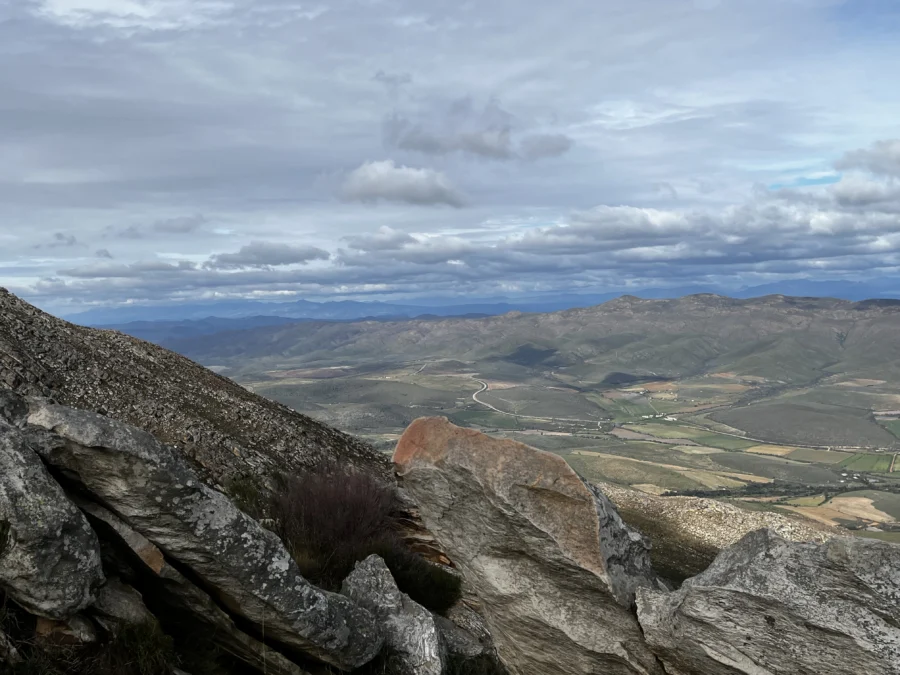
The summit of the Pass is “Die Top”, which means The Summit. Winds can be fierce here but the views more than make up for it. Do spend some time taking in the panoramic views of both the Little and Great Karoo. Also, don’t miss how beautiful the layered rocks are. On the descent towards Prince Albert, the road quality is slightly lower but it isn’t as steep as on the way up.
If you’re worried about driving the pass in the rain or in the snow: you’d be right. Rain, snow and sleet can cause the road to become dangerously slippery, and clouds and mist can significantly reduce visibility. Don’t drive the pass in these conditions. Chances are it will be closed anyway. On the road from Oudtshoorn to the pass there are signs. Does it say ” Swartberg Pass Gesluit”? Turn around. “Swartberg Pass Oop”? You’re in business.
Driving the pass
Turns out the pass wasn’t a problem at all. Well, not for me because I wasn’t driving. It had rained heavily the night before so I was a bit worried about it being muddy and slippery but it wasn’t. The road was narrow, winding and steep with a few drop-offs, but nothing worse than what you’d drive in the Swiss Alps or Norway. I’m not driving there either, to be honest. Do remember to engage the handbrake when stopping for photos and don’t park in the middle of the road. We saw people do both. The handbrake-guy was lucky to still be half inside the car when it started to roll. We barely saw the car stopped in the middle of the road in time. Don’t be that tourist.
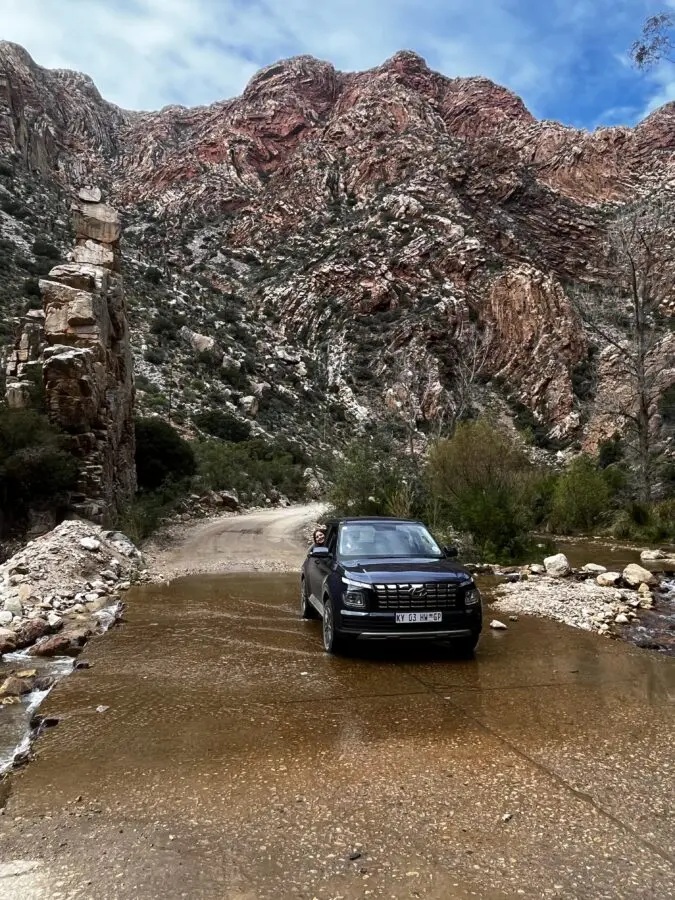
The top was very cold, so we didn’t hang around long. Just long enough to enjoy the views and take some photos. After that, it was time for the descent into Prince Albert. This is where the potholes became really bad. There were a lot of them, and they were deep. Navigating this road required some serious driving skill. Luckily, Marc had this covered. Driving through a river (not deep, but still a river) wasn’t a problem either – after that, the road quality got better and it was a smooth ride into Prince Albert.
One word of caution: while on the pass, make sure not to drive into the Gamkas-kloof. This one requires a 4X4, sublime driving skills and preferably a booking at the hotel “Die Hel” at the end. Yes, that means what you think it means.
The Meiringspoort Pass
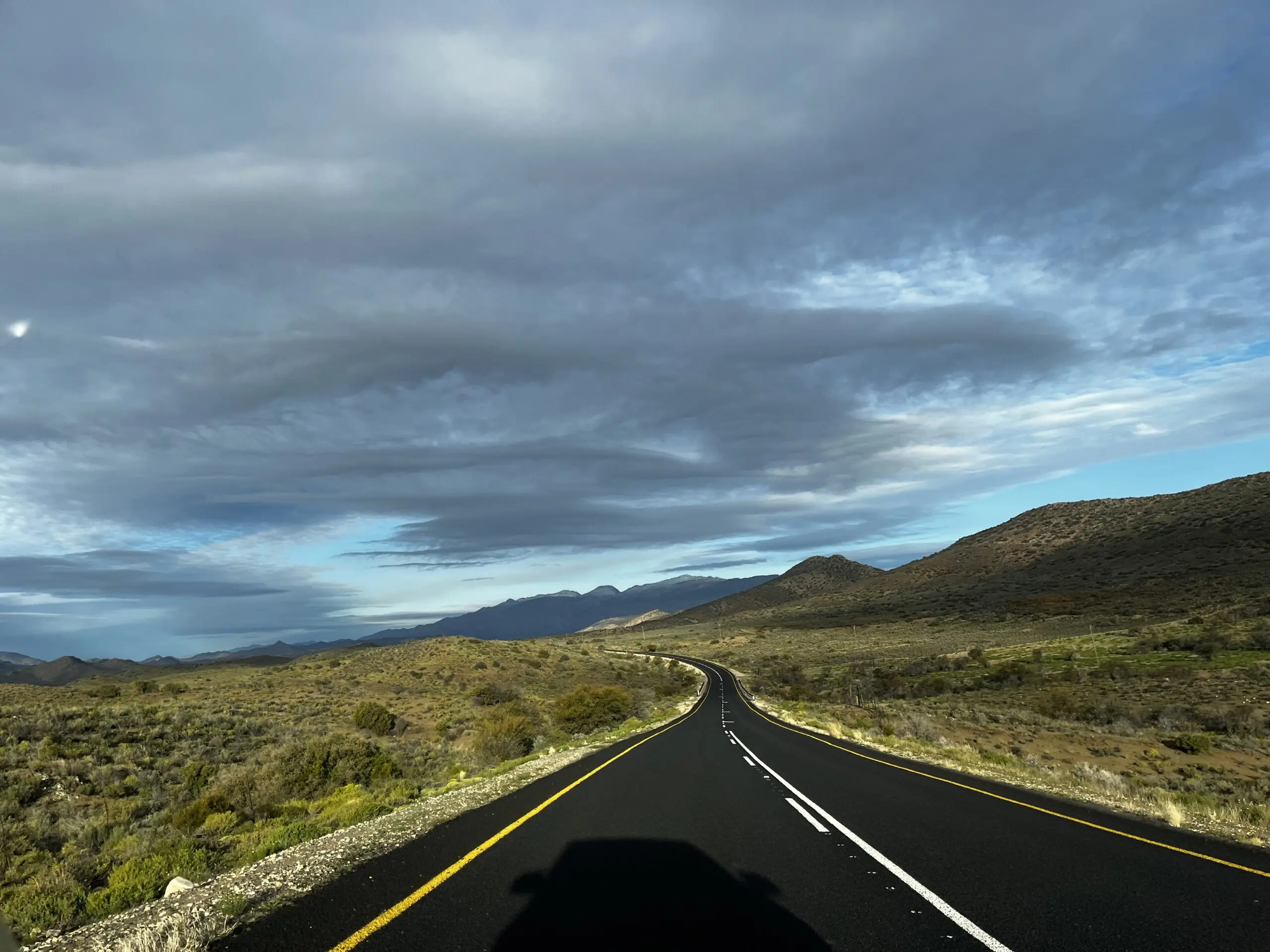
After a delicious lunch in Prince Albert, it was time to head back to Oudtshoorn. We decided not to drive the Swartberg Pass back. Instead, we drove about 45 kilometers along the northern side of the Swartberg Mountains to the next pass: Meiringspoort pass. The road along the edge of the mountains was beautiful, brand new and utterly deserted. We felt like we were alone in all of the Karoo. After this long stretch of deserted road, we turned into the Meiringspoort Pass.
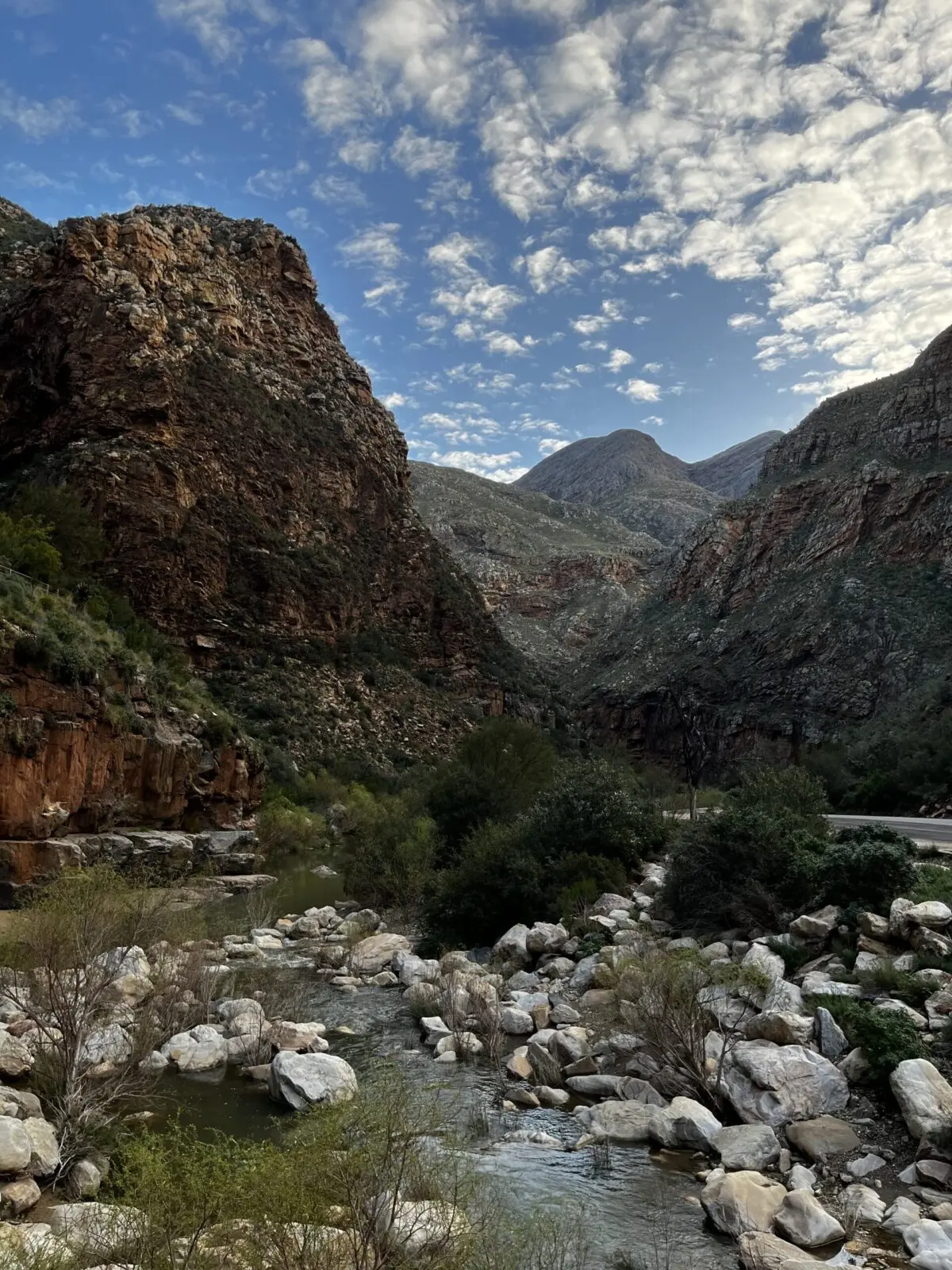
Unlike the Swartberg Pass, which is gravel, potholes and steep drops all the way up to almost 1600 meters, the Meiringspoort tops out at around 180 m. The paved road is easy to navigate, crossing the Groot River multiple times, and the scenery is breathtaking: towering cliffs, waterfalls and native vegetation. It’s just as beautiful as the Swartberg Pass, but very different. It’s also less of an adventure, without the risk of ending up in a pothole and having to be towed out.
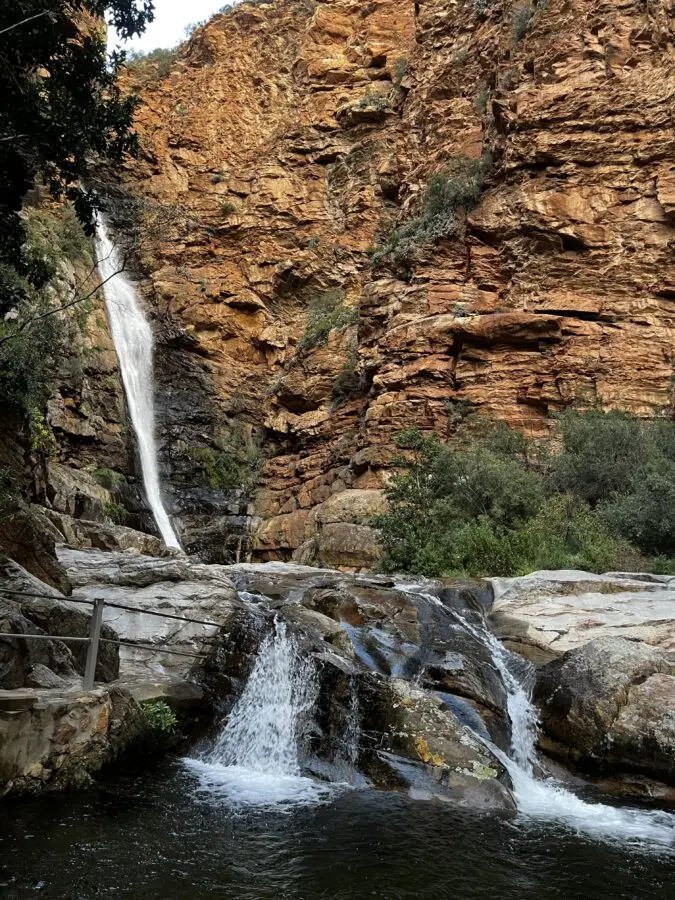
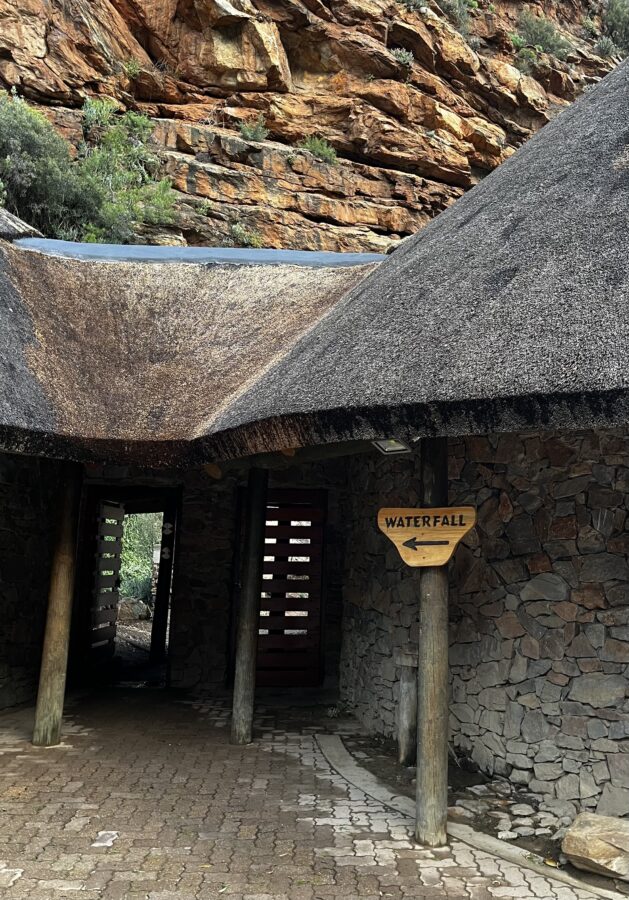
About 10 kilometers into the pass, we made a stop at the Meiringspoort Waterfall. The path from the parking area was mercifully short, though steep enough to remind us that trails are not always the gentle strolls advertised. It had quite a few steep steps, and included negotiating some rocks and stepping over streams. The waterfall didn’t look like much when it first came into view, but then we turned a corner and there it was – impressive enough to more than make up for the uphill scramble.
After spending some time admiring the waterfall, the surroundings and some monkeys scrambling across the rocks, we got back in the car for the rest of the drive back to Oudtshoorn. It was getting dark by then, and even though this road was of much better quality and the drops not nearly as steep, Marc still didn’t want to drive it in the dark. So once again: make sure you leave on time if you want to do this trip.
Some common questions about this road trip
The Swartberg Pass can feel intimidating due to its narrow gravel road, sharp bends, and steep drop-offs. However, in dry conditions and with careful driving, it’s not considered dangerous for most drivers. Taking it slowly and avoiding bad weather makes a big difference.
No, you don’t need a 4×4 in normal dry conditions. A regular car can manage the pass if driven carefully. However, after heavy rain, the road can become rough or slippery, and a higher-clearance vehicle is recommended.
Yes, if you want to do everything we did you will need the entire day. There are ways of shortening the trip: skip the Cango Caves or only drive up to the summit of the Swartberg Pass and head straight back. In my opinion this would mean missing some highlights of the trip, but it’s an option if you’re short on time.
A full circle Oudtshoorn to Oudtshoorn with a stop at the Cango Caves, up the Swartberg Pass, then on to Prince Albert and back via the Meiringspoort Pass, is about 190 kilometers. Over the Swartberg Pass to Prince Albert is 75 kilometers and takes about two hours. From Prince Albert over the Meiringspoort Pass is 115 kilometers and takes an hour and a half.
It’s not recommended to drive the Swartberg Pass in wet weather. Rain can make the gravel surface slippery and reduce visibility, increasing the risk on steep sections and tight corners. If possible, wait for dry conditions.
Yes, the Swartberg Pass is widely considered one of the most scenic drives in South Africa. Its dramatic mountain views, historic construction, and sense of adventure make it a highlight of a road trip through the Karoo
If after reading all of this you’d rather not do the driving, this is the guided tour that was recommended to us by our hosts. (affiliate link)
We did this day trip as part of our 24-day trip through South Africa. This was our 3-week South Africa itinerary
For more South Africa info and experiences, see our full 55+ South Africa guide.
Love a good road trip? Check out this three day tour from Marrakech to the Sahara we did.