Temples, palaces and kopi luwak: a day in Yogyakarta
Unsurprisingly, we started our tour of Yogyakarta early, both to avoid the crowds (this was unsuccessful) and to avoid the worst of the heat (jury’s still out). The programme for that day: Kraton, which is the Sultan’s palace, the Taman Sari water palace and the Prambanan temple complex. The tour would include lunch and it was a private tour, so no need to hurry through the sites and no Dutch family to get lost with, like we did at Borobudur.
The same driver who had picked us up from the airport showed up at exactly the agreed time and we got in the car for the short drive to our first stop: Kraton. Marc, who drives everywhere and anywhere under normal circumstances, was once again very happy he didn’t have to navigate the chaotic traffic. He joined me in my usual pastime of staring out of the windows of the car until we reached Kraton.
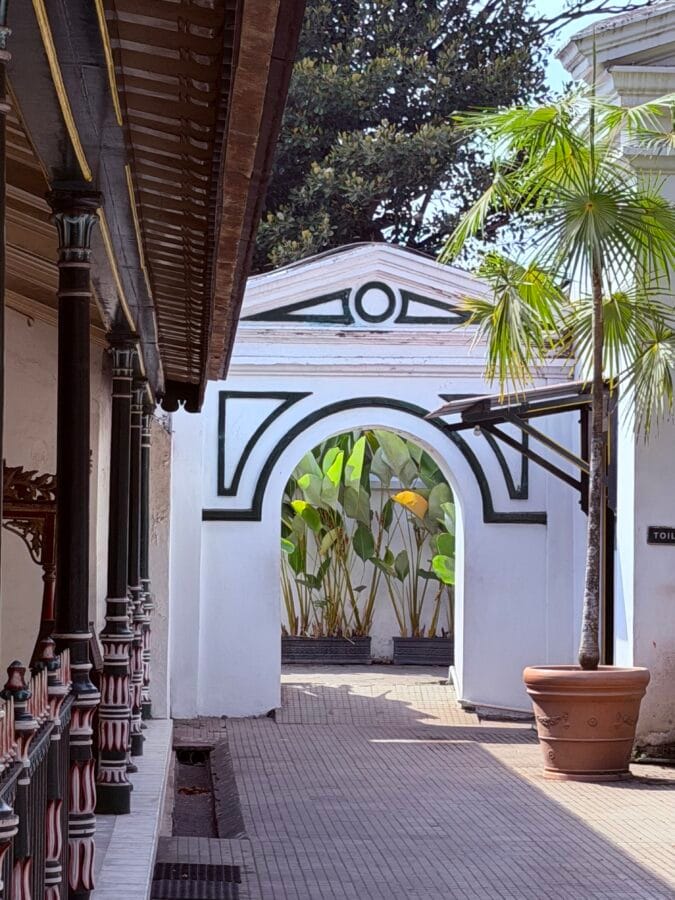
Kraton: the sultan’s palace.
Our driver parked the car. Parking a car at tourist attractions in Yogyakarta deserves a blog post of its own. Suffice it to say that there was no way for the driver to get in and out of a parking spot without moving at least four other cars like a very elaborate game of Rush Hour. The drivers of all the cars took care of this while we found our guide, who had our tickets.
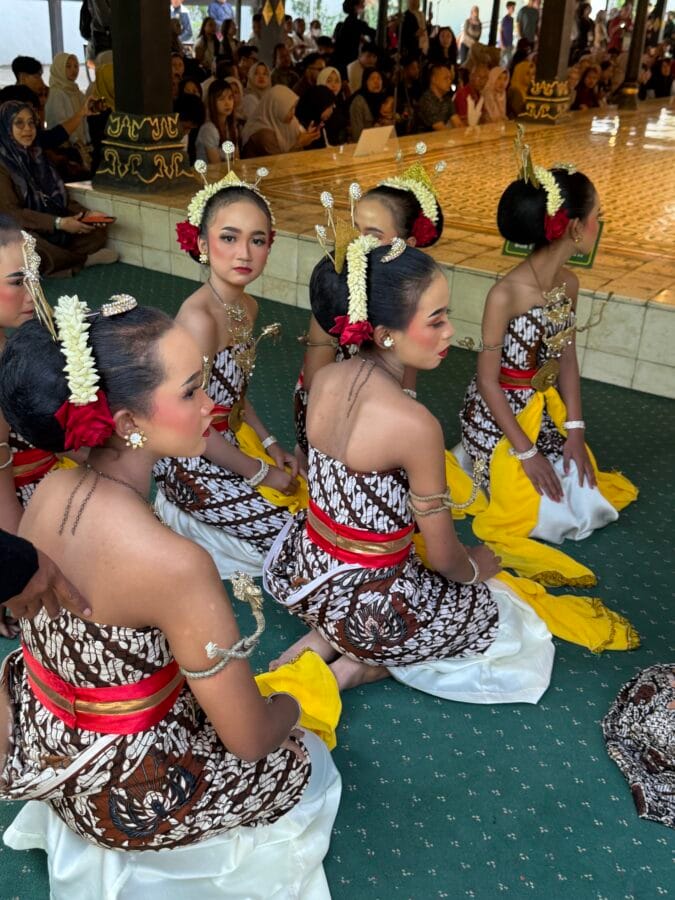
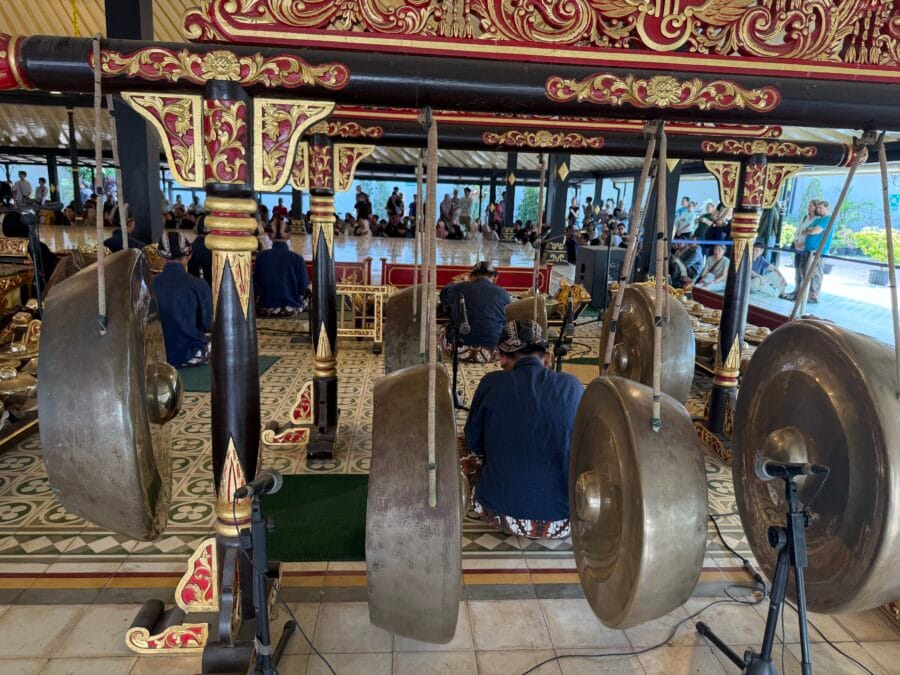
Kraton is still the Sultan’s residence, although without the harem these days. The current Sultan only has the one wife. There were quite a few things we weren’t allowed to photograph, and apparently even turning your back to the palace buildings or the abdi dalem, the royal court servants, is considered disrespectful. Hats and caps also have to come off. Meanwhile, there were noisy gamelans playing in the courtyard and young dancers in traditional dress wandering around. Our guide was explaining everything to us, but we could hardly understand her due to both the noise and her accent, so I’m afraid I can’t tell you much about what we were actually looking at. It was beautiful, though.
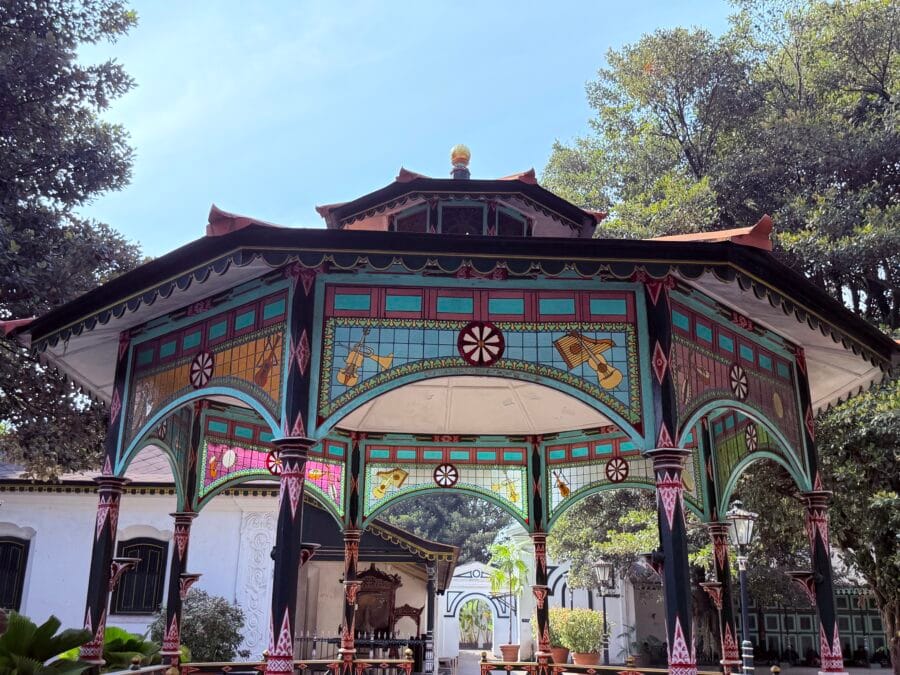
Taman Sari Water Castle
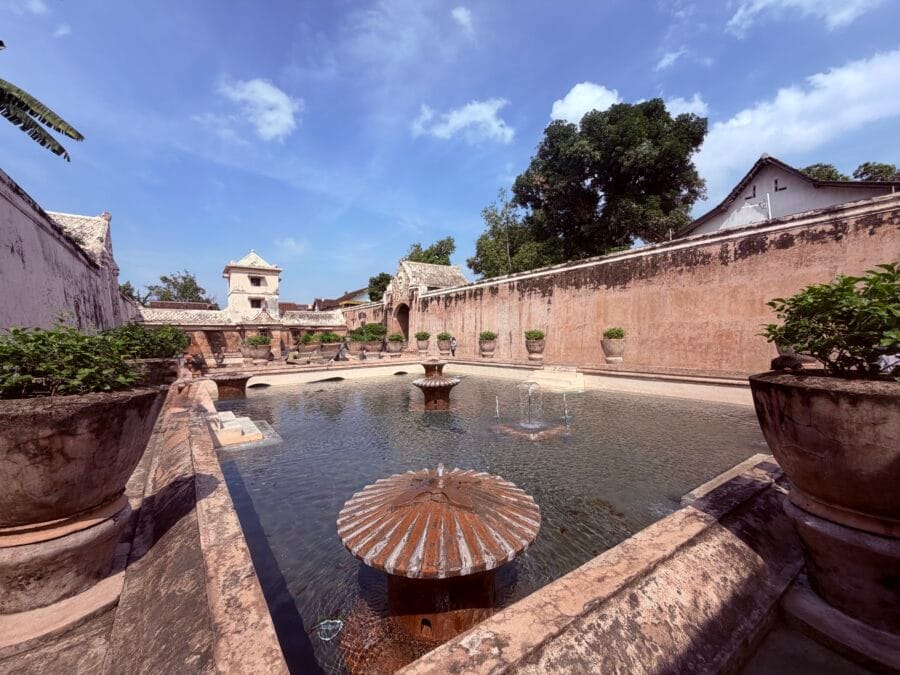
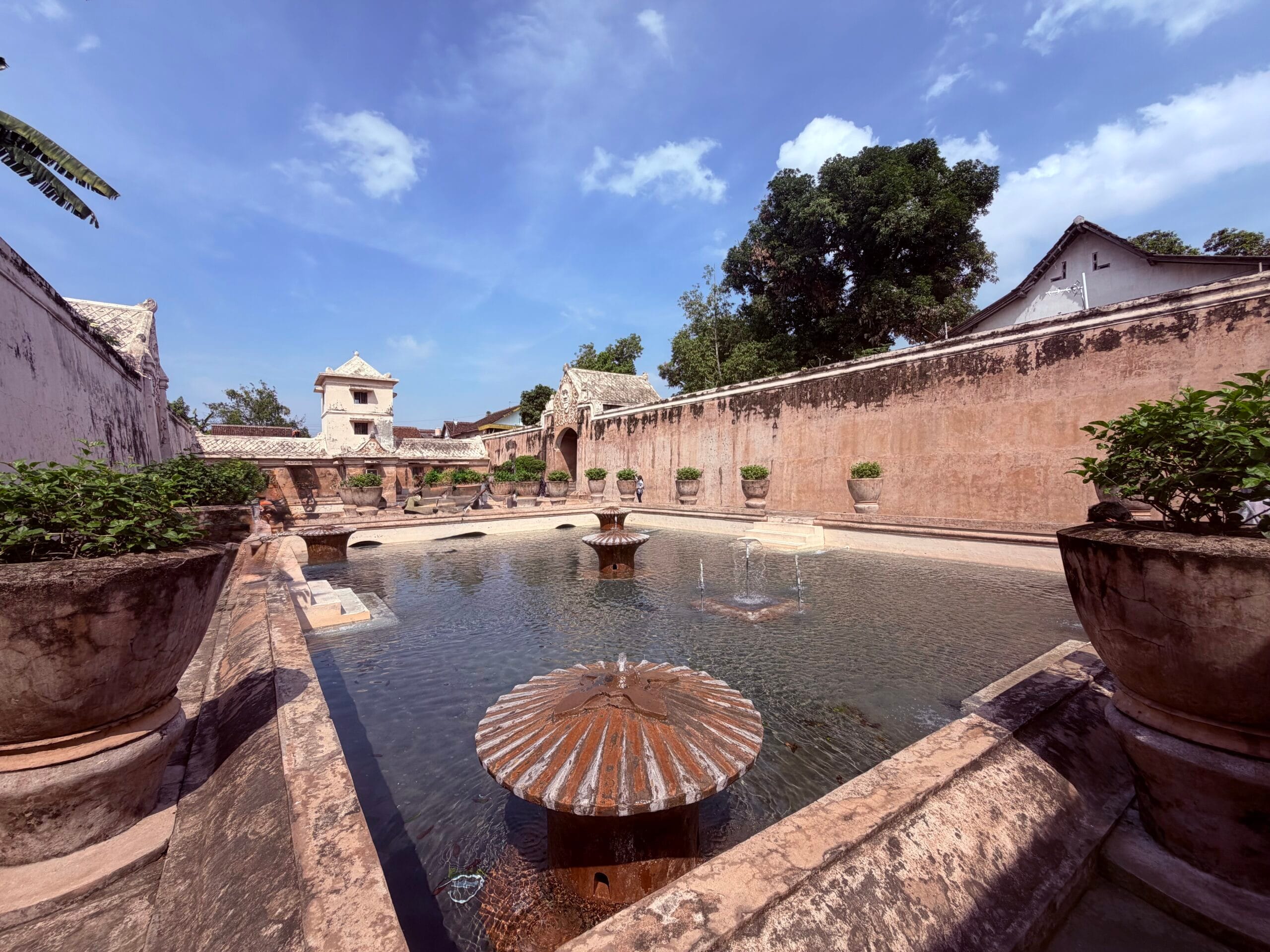
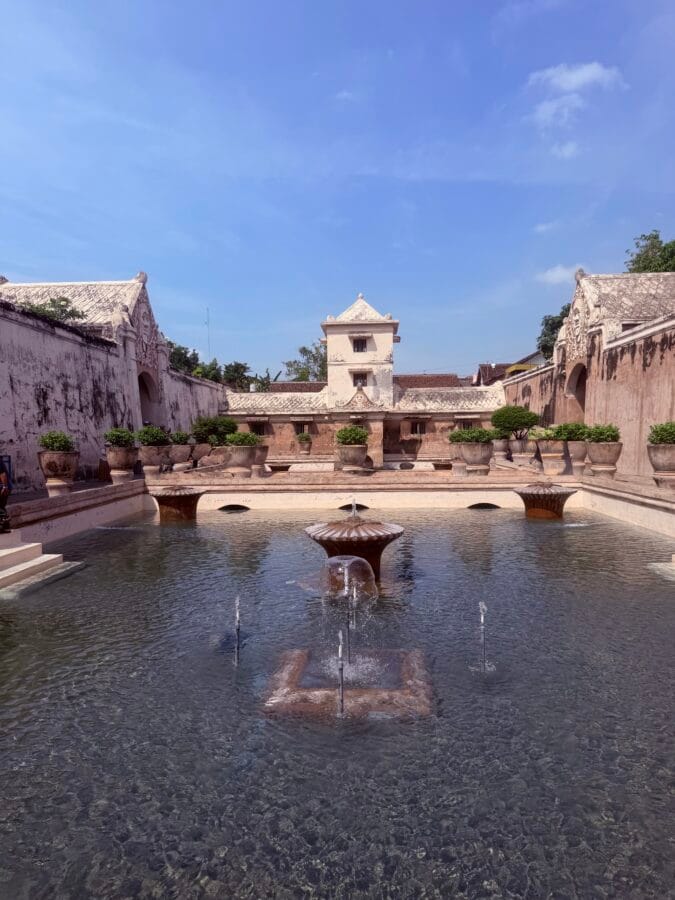
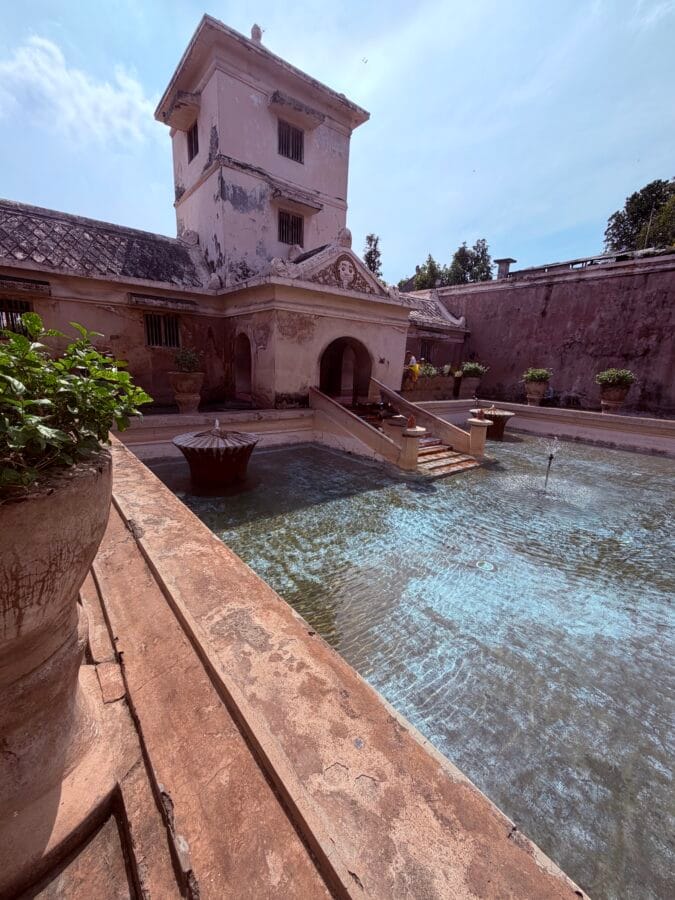
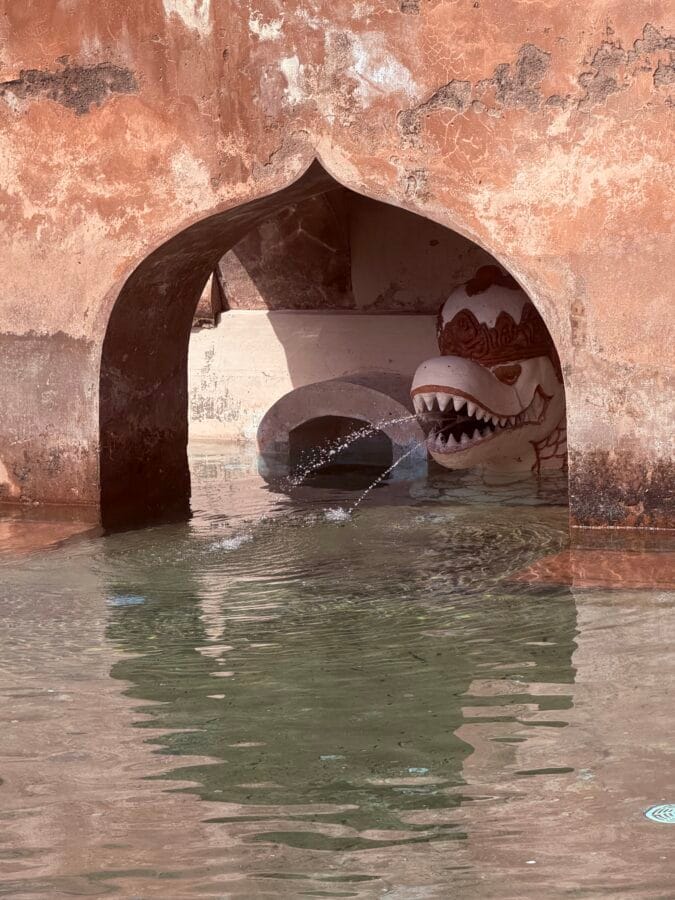
What’s not to like about a water palace? Taman Sari originally served as a royal garden and retreat, with pools, pavilions and underground passages connecting different parts of the complex. These days, it’s a somewhat ramshackle collection of ruins and restored buildings. This somehow makes it more interesting to wander around.
We climbed up, down and through various bits of the complex. All the while our new guide attempted to explain what everything had been used for. I’m sure there was a lot of fascinating history there. We understood only about half of that, too.
At the water palace, I especially loved the huge pools. They were originally used by the women of the Sultan’s harem, so there would really be no need for them to be quite this big anymore even if the palace were still in use for its original purpose. Although, to be fair, I wouldn’t mind having a few gigantic pools if I were the only wife of a Sultan.
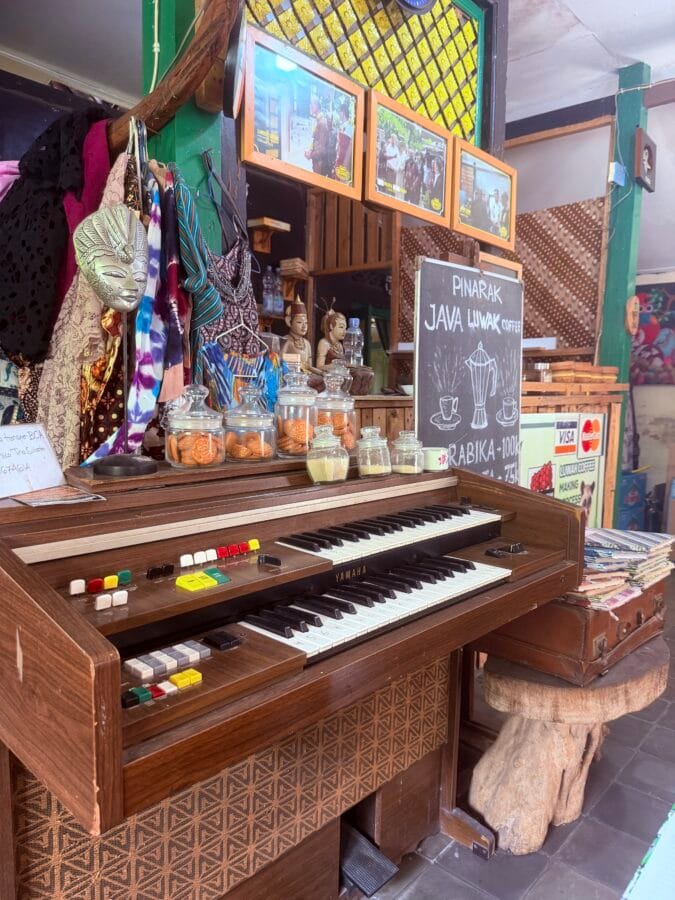
There was also a young couple with their child, all three dressed in beautiful traditional clothes. I photographed them, but I won’t use the photo here because I didn’t ask their permission to post it. We also saw some batik art that we liked quite a lot. Just not quite enough to actually buy it. And, because apparently no visit to this part of Indonesia is complete without it, we got to taste kopi luwak again – the famously expensive coffee made from beans that have passed through a civet’s digestive system. Still didn’t like it. Sorry, civet cats.
Prambanan temple complex
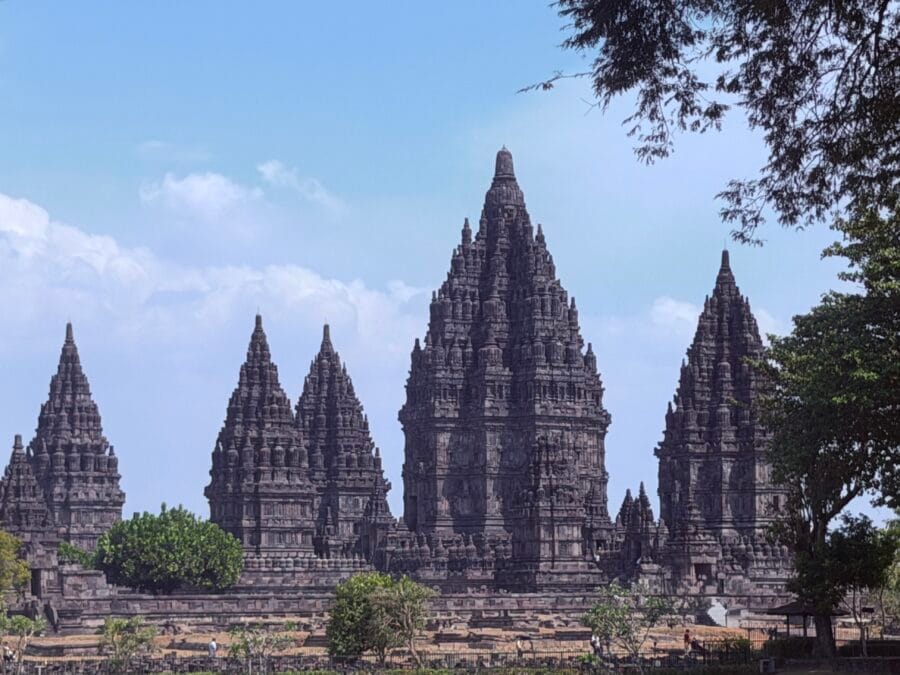
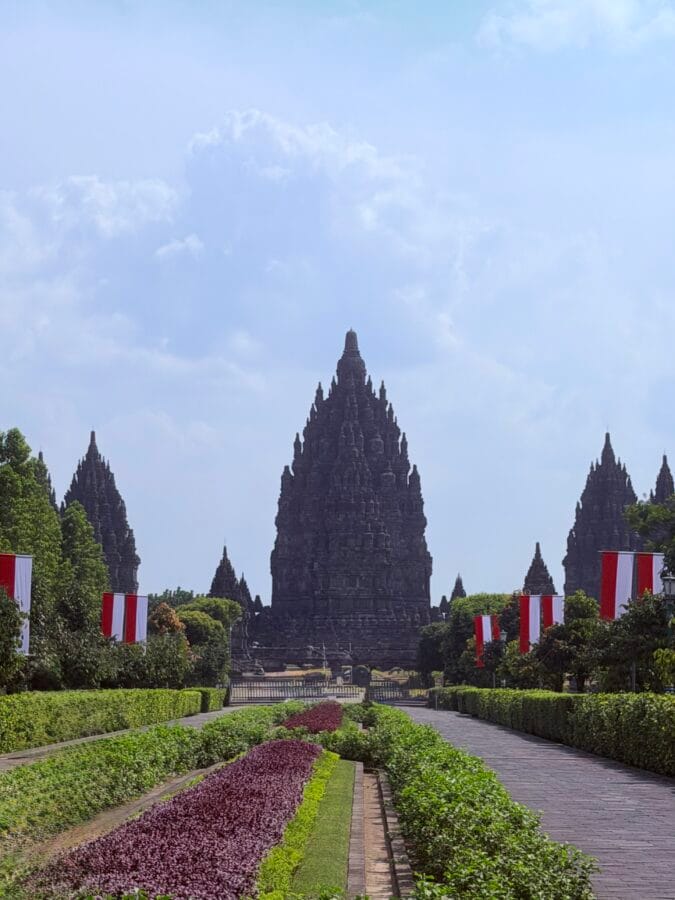
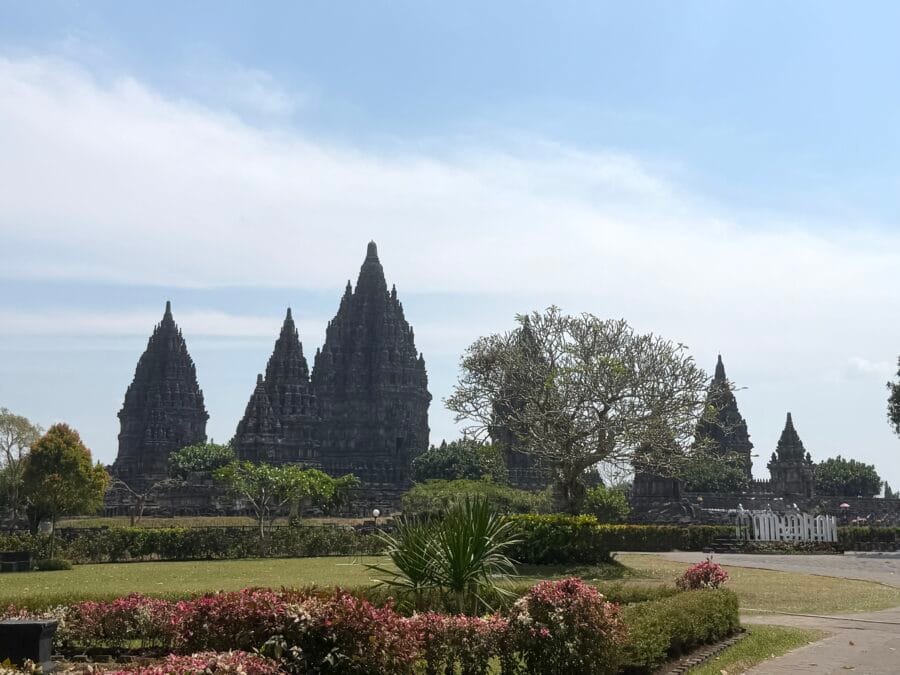
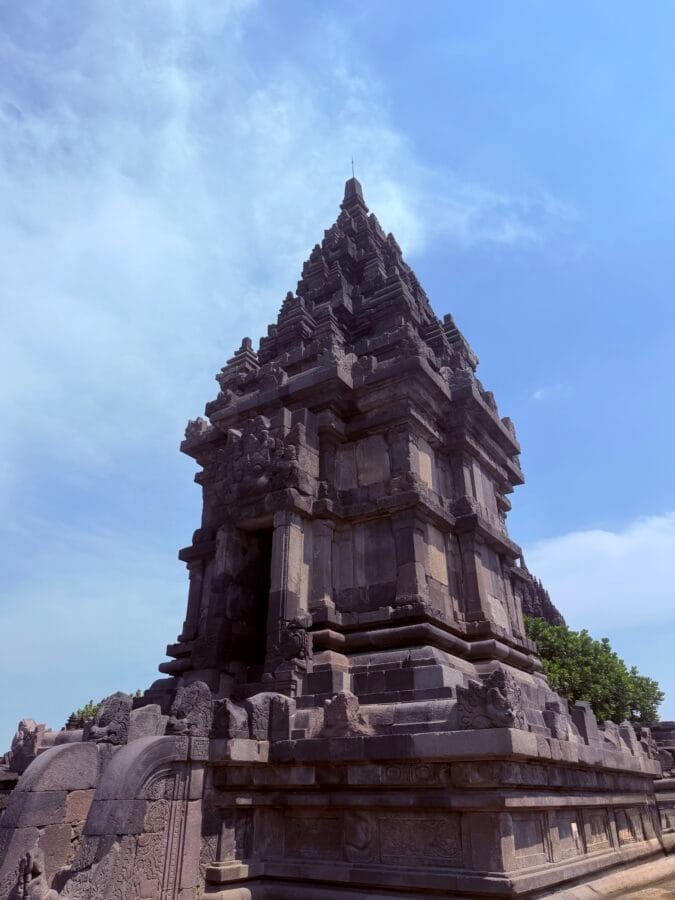
The Prambanan temple complex is a ways out of the city. It’s a Hindu temple complex, not unlike the famous Angkor Wat in Cambodia, just on a slightly smaller scale. It’s still huge, though. We got there after about an hour’s drive in our nice air-conditioned car and met our next guide. This one actually spoke good English.
Now, I know I shouldn’t be complaining about guides I couldn’t understand. No matter how difficult they were to follow, their English was still much better than any Bahasa Indonesia I had picked up along the way. It was, however, really nice to understand all of the information this guide gave us, rather than just a part of it.
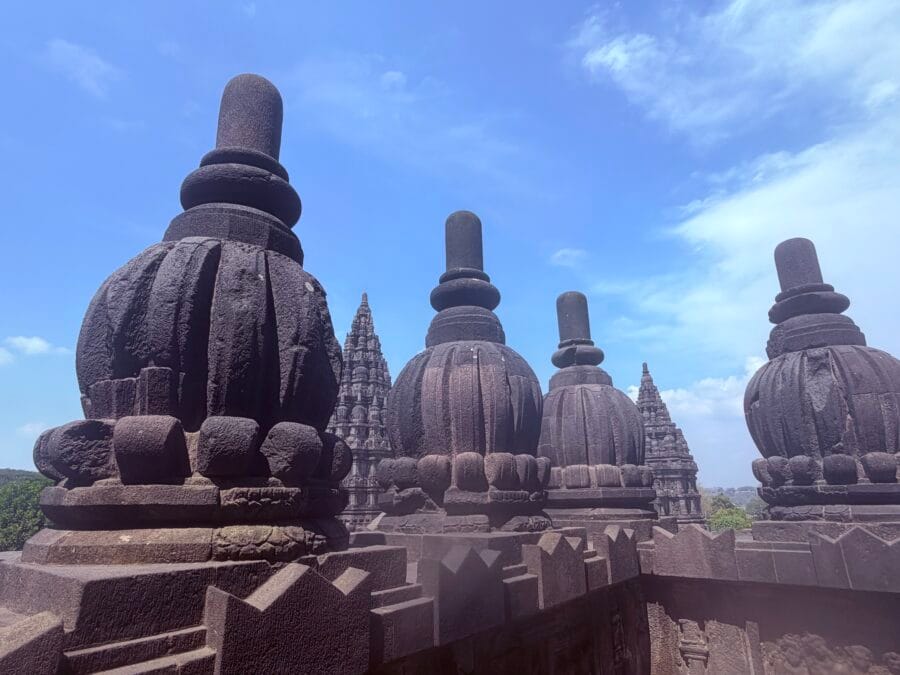
He took us into the temple grounds, waited patiently while we took photos and then led us to the highest of the structures and started telling us about the complex. The temples have been damaged and destroyed more than once over the centuries, by volcanic eruptions from nearby Merapi, earthquakes, neglect and a fair amount of looting. Reconstruction is still ongoing, with experts putting the original stones back together like a gigantic 3D jigsaw puzzle. And then there was the 2006 earthquake, which knocked down thousands of stones and caused huge amounts of damage. Thankfully, modern reinforcements kept the main towers standing, so at least we weren’t looking at another pile of rubble.
The temple we started in was dedicated to Shiva, the god known as the Destroyer and the Transformer. Among other things. It was the tallest of them all. Presumably to convince Shiva to take it slightly easier on the destroying and transforming.
The three main temples are dedicated to the Hindu trinity, with Shiva in the middle and Vishnu and Brahma on either side. Around them are smaller temples and shrines, many of which are still under reconstruction. Inside one of the temples, we found a statue of Ganesha, Shiva’s elephant-headed son. Getting up to the main temples involves some seriously high stairs, with enormous stone steps that make the temples seem even more imposing. And once you’re up there, you really get a sense of just how huge the whole complex is.
By the time we left the third temple, it was hot enough to start wondering if Merapi had accidentally sent some lava our way. We decided not to hang around after seeing the main temples. Instead, we went back to our driver, who took us to a restaurant near a river for lunch. We had great food and even better ginger and lime lemonade. And unlike what I had ordered in Yogyakarta, this time the ginger wasn’t fermented.
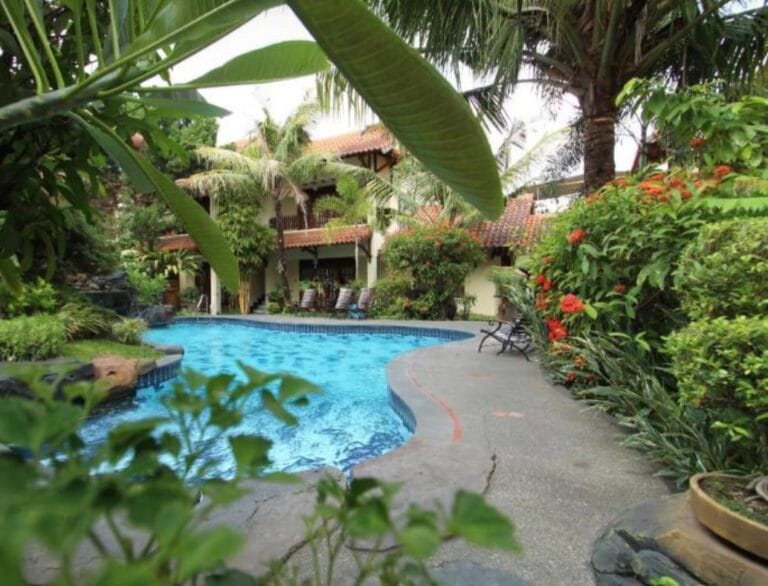
After lunch, the driver took us back to the Duta Garden Hotel through even more chaotic traffic – in time for a long swim, a nap and a stroll to the street with the restaurants.
Planning a Day of Sightseeing in Yogyakarta
Do you need a tour?
Not necessarily. Kraton, Taman Sari and Prambanan can all be visited independently. We chose a private day with a driver arranged by our travel agency, and met a local guide at each site. It was a convenient way to fit all three into one day without having to deal with Yogyakarta’s traffic ourselves. If you’d rather have everything organised for you, I’ll be writing a full guide of recommended tours within the next few weeks.
Can you visit all three in one day?
Yes, although it’s a fairly full day. We started early with Kraton, continued to Taman Sari and finished at Prambanan. Starting early is a good idea, particularly because it gets very hot.
Are the stairs at Prambanan difficult?
The stairs up to the main temples are high, and the stone steps are enormous. They’re manageable, but don’t underestimate them – particularly when it’s hot.
Do you need a guide?
You don’t have to have one, but we found having a guide useful for understanding what we were looking at. Just make sure you can actually understand your guide. Something we learned the hard way at Kraton.
Planning your own trip to Indonesia?
Here are a few more posts to help you plan your trip: