Travel insurance: when “it’ll be fine” stops feeling like a plan
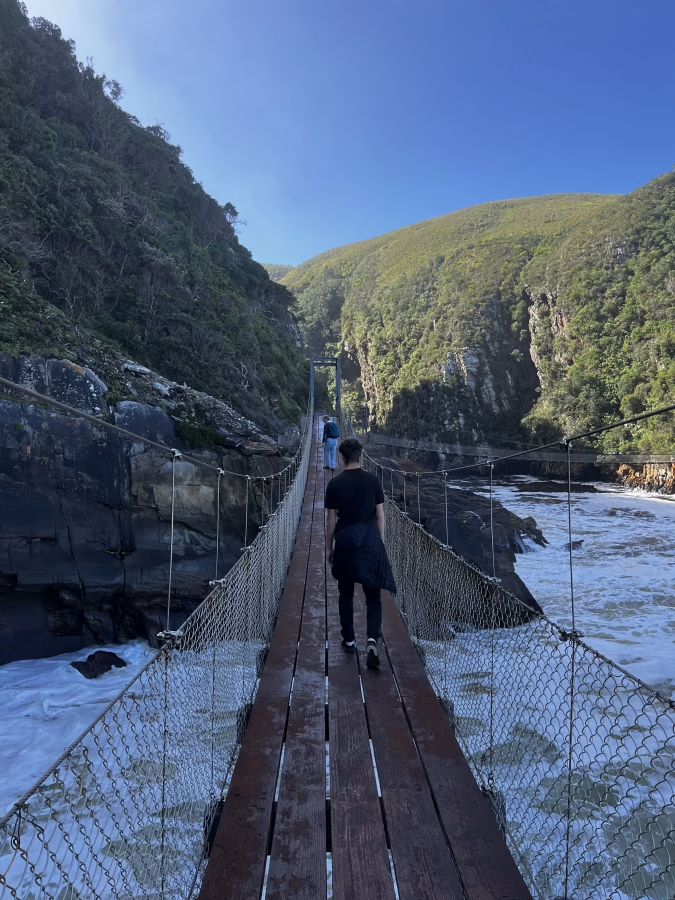
Standing on the Storms River Suspension Bridge in South Africa, I wasn’t thinking about travel insurance. I was mostly thinking about the fact that the bridge seemed to move rather a lot.
Below me, waves crashed against the rocks. Occasionally they crashed over the bridge itself. My husband and son marched confidently ahead while my normally fearless daughter looked distinctly less enthusiastic about the whole experience. As for me? I decided to just put one foot in front of the other instead of imagining headlines involving dramatic sea rescues. I made it across perfectly safely, of course.
Come to think of it, the things that have actually gone wrong while we were travelling happened nowhere near suspension bridges. Over the years I’ve forgotten a passport, missed flights, ended up in a clinic in rural Sumatra, left a backpack containing our money and travel documents in a parking lot in northern Maine, been stranded on Curaçao, slept on an Italian train platform and once found myself travelling on a freight train through Norway after missing the last passenger service.
Looking back, it’s almost impressive. Somehow we’ve always managed to sort things out. The backpack was recovered. Alternative flights were found. The freight train got us to our destination. Problems were solved. The world kept turning. But those experiences taught me something important: travel doesn’t always go according to plan.
When I was younger, I didn’t think much about that possibility. Travel insurance felt like an optional extra. My trips were cheaper, my plans were flexible, my possessions weren’t worth much, and I was convinced I could deal with whatever happened. To be fair, I usually did.
These days, things are a little different. We have ageing parents. We have young adult children. Our trips are often longer, more expensive and planned further in advance. If something happens to someone we love, we cancel. If a major problem interrupts a trip, the financial consequences are greater than they once were.
And then there’s health. I’m fortunate to be healthy, but I’ve also reached an age where I no longer assume that good health is guaranteed forever. I’ve learned that health cards such as the European Health Insurance Card (EHIC) or Global Health Insurance Card (GHIC) can be incredibly useful, but they don’t cover everything. Emergency evacuation, repatriation, private medical treatment, and many adventure activities often fall outside their scope. Those gaps can become expensive very quickly.
I’ve also learned that insurance isn’t simply a matter of buying a policy and assuming everything will work itself out. Disclosure of pre-existing conditions, exclusions, policy limits and timing can all affect whether a claim is paid. That’s why I’ve gradually stopped seeing travel insurance as optional paperwork and started seeing it as part of preparing for an adventure.
Far be it from me to tell you how you should deal with this part of travelling.
Everyone’s circumstances are different, and this article isn’t financial, medical or insurance advice. I’m not recommending any specific provider or policy. My goal is simply to share what I personally look for, what I’ve learned over the years, and some information that may help you decide what’s right for you.
How I choose now
Over time, I’ve become much more deliberate about how I choose travel insurance. These days, I don’t look for the cheapest policy. I look for what I jokingly call Alexandra-proof travel insurance. In other words, insurance that covers not just medical emergencies and cancellations, but also the sort of travel mishaps that seem determined to find me.
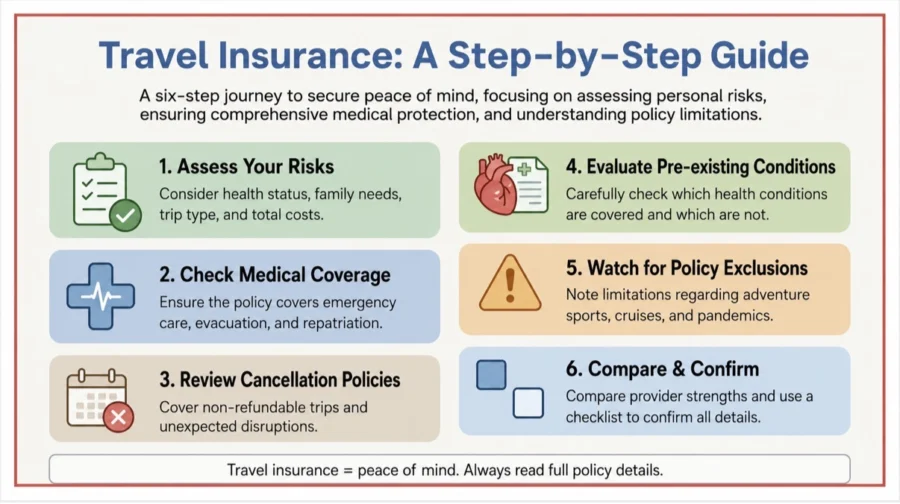
The first thing I check is medical cover, including emergency evacuation and repatriation. Not because I expect to be helicoptered off a volcano in Indonesia. But because if my (slightly too vivid) imagination has taught me anything, it’s that the expensive emergencies are rarely the ones you see coming.
I also pay close attention to how pre-existing conditions are handled. I don’t currently have any that affect my travel plans, but life has a habit of changing the rules when you’re not paying attention.
Next, I look at cancellation cover and whether the policy actually fits the sort of travel we do. Longer trips. Organised tours. Active holidays. Destinations with extreme weather. Places where things can occasionally become complicated. Which, if we’re honest, is often part of the appeal.
Because we travel several times a year, I also compare annual multi-trip policies with single-trip cover. In many cases, annual policies offer better value, fewer administrative headaches, and the reassuring feeling that you’re covered even when plans change unexpectedly. And plans do have a tendency to change unexpectedly.
Once I’ve checked those essentials, I compare providers side by side and read the exclusions carefully. It’s not the most exciting part of trip planning. That would be choosing destinations, researching hotels, and convincing myself that yes, I absolutely need to visit another volcano.
But the exclusions are often where you’ll discover the difference between genuine protection and reassuring marketing language. To make things easier, I’ve created a practical checklist. Before every trip, I use it to check that my policy matches my destination, activities, and travel plans. You can download it free below this article.
Travel insurance options
Below you’ll find information about several major travel insurance providers. This information is provided for general informational purposes only and is not a comparison, endorsement, or recommendation. You should always review the full policy wording and determine whether any policy is suitable for your own circumstances.
Some links are affiliate links, which means I may earn a small commission at no extra cost to you. For more details, see my affiliate disclosure page.
✅ Legend for Symbols:
✅ Included | ⭐ Optional / Extra | ❌ Not included
World Nomads
About this provider:
World Nomads offers simple and flexible travel insurance. Buy at home or while traveling and claim online from anywhere in the world.
Coverage at a glance:
✅ Emergency medical & evacuation (limits vary by plan)
✅ Trip cancellation & interruption
⭐ Optional cover for a range of adventure activities
⭐ 24/7 emergency assistance
❌ Some activities may require additional cover or may be excluded
Age: Eligibility and any upper age limits depend on your country of residence and chosen plan — always review the full policy wording.
View policy options
We receive a fee when you get a quote from World Nomads using this link. We do not represent World Nomads. This is not a recommendation to buy travel insurance.
Allianz Travel Insurance
About this provider:
Allianz offers a wide range of travel insurance plans, including single-trip, annual multi-trip, and optional add‑ons for varied travel needs.
Coverage at a glance:
✅ Emergency medical expenses & evacuation (limits vary by plan)
✅ Trip cancellation & interruption (limits vary by plan)
⭐ Optional coverage for baggage loss/delay and select activities
⭐ 24/7 global assistance available
❌ Certain high‑risk activities or pre‑existing conditions may require additional cover or exclusions apply
Age: Age eligibility and any upper age limits depend on the chosen policy and your country of residence — always review the full policy wording for details.
View policy options
This link is not an affiliate link. We do not represent Allianz, and this post is for informational purposes only — not a recommendation to purchase insurance.
Globelink International
About this provider:
Globelink International provides travel insurance options for UK and EU residents, including single-trip and annual multi-trip policies.
Coverage at a glance:
✅ Emergency medical expenses & repatriation (limits vary by policy)
✅ Trip cancellation & curtailment
⭐ Options for pre-existing medical condition screening
⭐ Annual multi-trip and long-stay policies available
❌ Policy limits and eligibility vary by age and residency
Age: Age limits and terms depend on the specific policy selected — always review the full policy wording carefully.
View policy options
This is an affiliate link. If you get a quote from Globelink using it, we may earn a small fee at no extra cost to you. We do not represent Globelink, and this post is for informational purposes only — not a recommendation to purchase insurance.
Some practical tips if you’re going to buy travel insurance:
- Buy early. If you want cancellation cover, it’s usually best to purchase your policy soon after booking your trip.
- Check exclusions carefully. Adventure activities, cruises, pandemics, armed conflict, and pre-existing conditions are common areas where limitations may apply.
- Keep documentation accessible. Save policy details, emergency numbers, and claim information somewhere you can easily find them.
- Use a checklist. It helps ensure your policy matches the trip you’re actually taking, rather than the trip you think you’re taking.
Final thoughts: better to have and not need, than need and not have
Do I enjoy paying for travel insurance? Not particularly. I’d much rather spend the money on a memorable meal, a nice hotel room, or another excursion that probably involves a spectacular view and an unnecessary amount of uphill walking.
But travel insurance is one of the few travel expenses I never truly resent. Because if I never need it, I’ve bought peace of mind. And if I do need it, future Alexandra will be extremely grateful that present Alexandra stopped worrying about hypothetical disasters long enough to prepare for a real one.
For me, that’s what travel insurance is really about. Not fear. Not paperwork. Not ticking a box. Just having the freedom to enjoy the adventure, knowing I’ve done what I reasonably can to prepare for the unexpected.
Travel insurance checklist: what to look for.
Travel insurance can be confusing. Our Travel insurance checklist guides you through coverage types, pitfalls, and what to look for so you can travel worry-free. Subscribe to download – you can unsubscribe any time.
✅ Disclaimer: This is general information, not personalised financial or medical advice. Always read full policy terms before purchase.
If you’re looking for more advice on what to look for when planning your next trip, you can take a look at our trip planning page.
Specific information about budgeting for your trip can be found in our budget planning post, which comes with a free planner.
In the early stages of planning your trip and not sure what to arrange and when to do it? Check out my travel timeline planning tips.