
How to plan a travel budget you’ll actually stick to (without missing out)
Most travel budgets look fine on paper. The problem is, they rarely survive the trip itself. Planning a trip budget is not the same thing as planning a cheap trip. This guide shows you how to estimate your total travel costs, break them into categories, and track your spending while you travel, so you can stay in control without turning your holiday into an accounting exam.
Travel budgets are often a bit too optimistic, a bit too vague, or based on what things should cost rather than what they actually do. And once you’re travelling, it’s surprisingly easy to stop paying attention; until you get home and realise your “rough estimate” was, in fact, very rough.
I’ve had the opposite happen too. Skipping a tour, a meal, or an experience because it felt like things were getting slightly out of hand… and then spending the rest of the trip wondering if I should have just done it. Even worse when it turns out I could easily have afforded it, and with enough left for an extra cocktail. Or two.
If your idea of a good trip includes a nice place to stay, decent food, and the occasional “yes, let’s do that,” your budget needs to reflect that.
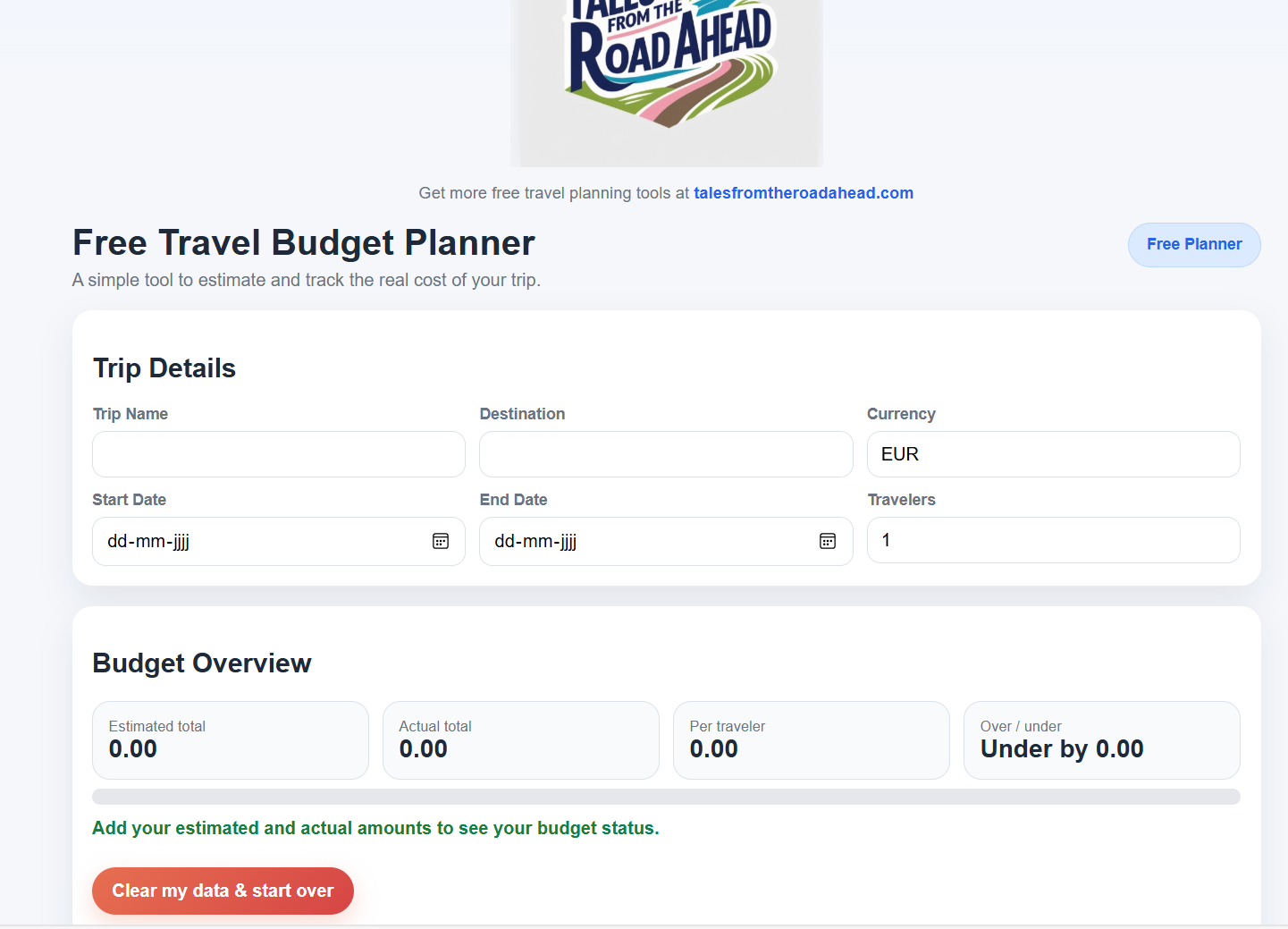
This isn’t about cutting corners or turning your trip into a spreadsheet exercise. It’s about having a clear, realistic idea of what things will cost, so you can make decisions along the way without mentally recalculating every coffee, taxi, or glass of wine, or missing out on something you’ll regret later. This is exactly why I created my interactive travel budget planner, which helps you plan and track your costs both before and during your trip.
How much should you budget per day when travelling?
Before getting into the details, it helps to start with a rough daily estimate. This doesn’t need to be exact — it’s just a way to avoid going into a trip completely blind.
Based on typical travel styles, a realistic daily budget might look like this:
- Budget travel: €50–€80 per day
- Mid-range travel: €100–€200 per day
- Comfort travel: €200+ per day
Of course, these numbers can shift quite a bit depending on where you’re going. In some places, €50 can stretch surprisingly far, while in others it might barely cover a night’s accommodation. The way you travel matters just as much: whether you’re moving around quickly, eating out often, or prioritising certain experiences.
If you want a clearer idea of what this looks like in real trips, I’ve broken down actual costs in a few destinations – from keeping things affordable in Morocco, to planning different budget levels in South Africa, to managing higher costs in Iceland.
What I’ve found is that having even a loose daily range makes decisions easier once you’re actually there. You’re not constantly wondering if something is “too expensive”. You already have a framework to work with. From here, the goal isn’t to stick rigidly to a number, but to build a budget that reflects how you actually want to travel.
Let’s break down how to do that in a way that feels realistic and sustainable for the whole trip.
Why most travel budgets fail
Most travel budgets go out the window halfway through the first week, and it’s not hard to see why. They’re usually wildly optimistic, underestimating the big costs (flights, accommodation, transport) and especially the small ones. “Just one more coffee,” “just one more cocktail,” and “I really need another bikini” add up faster than you think. And once you’re over budget with half a holiday left… well, why bother?
Another issue is that budgets are often too generic. You can’t simply divide your total by the number of days when a big hotel payment lands on day eight. Others are so rigid they fall apart the moment something changes: the weather, fuel prices, or your willingness to eat Pad Thai night after night.
Then there’s the classic mistake: budgeting to spend as little as possible. But if your budget doesn’t allow for what you actually want – comfortable hotels, guided tours, eating out – how long are you really going to stick to it?
A budget that’s too tight, too vague, or too rigid never works; which is exactly why budgeting ends up feeling like a waste of time.
If you’d like a calmer way to plan it, my free Travel Budget planner can help.
What a travel budget needs to include (the essentials)
Your budget should include everything you can possibly imagine spending money on; and a buffer (we’ll get to that). Start with the big, often pre-booked costs: flights, car rental, accommodation. That is, unless you enjoy living on the edge and risking a no-aircon hostel on the loudest stretch of Khao San Road. Don’t forget parking and airport transfers.
Then there’s daily spending: food, drinks, and whatever you actually want to do. That might be beach days, or it might be a four-day safari in a private game reserve. Whatever it is, budget accordingly. If you plan to enjoy a nice meal each day, don’t pretend you’ll live on supermarket sandwiches.
And finally, the small stuff. Snacks, tips, souvenirs, ATM fees. Individually minor, collectively not so much.
Fixed costs vs flexible costs
Not all travel costs are created equal. Some are fixed: flights, accommodation, car rental. The things you’ve already paid for and can’t easily change. And then there are the flexible costs: food, drinks, activities, taxis, souvenirs… all the “just one more” decisions that happen daily. This is where most budgets quietly fall apart. Because while you can’t suddenly spend less on your flights, you can very easily spend more on everything else. The trick is knowing the difference, and planning for both.
I like to pre-book and pre-pay in stages, spreading the cost over time so I’m not faced with one big total. And so I don’t suddenly become a tightwad and skip the things I was most excited about because the spending starts feeling a bit too real.

The part everyone underestimates: daily spending
Daily spending is the part everyone underestimates, and the part most likely to derail your budget. It’s not one big expense, it’s a constant stream of small ones. A coffee here, a Bali-themed tea towel there, “just one more” drink, a taxi because you can’t be bothered to walk. None of it feels like much at the time.
I’ve had trips where I ended up sitting in my hotel room, staring at my bank balance, genuinely wondering if I’d been mugged- because where else could all the money possibly have gone?
But of course, I hadn’t been mugged. I’d just been spending, all day, every day, in small, entirely reasonable amounts. Which is exactly why, these days, I set myself a daily budget for all the little things and actually stick to it. Not because I’ve suddenly become wildly disciplined, but because I’ve learned the hard way that “it’s only a few euros” repeated 20 times a day is anything but.
I’ve made a lot of travel budget mistakes myself: underestimating daily costs, forgetting the small stuff, setting budgets I had no intention of sticking to. Which is exactly why I plan differently now.
How to estimate your daily travel expenses
Now here’s where the magic starts: I get out my travel budget planner. First, I decide how much I’m willing (and able) to spend. If the flights alone eat that budget, it’s probably time to pick another destination.
Once I’ve established that, say, Indonesia is actually within reach, I start with flights. I book them as soon as we’ve decided to go, which is usually months (if not a year) in advance. Pro tip: never check the price again after booking. Nothing good comes of it.
Next up is accommodation. I book everything in advance, ideally with free cancellation and breakfast included, so I know my costs but keep some flexibility. Then I add transport: rental car if we’re driving, or trains, domestic flights, and guided tours if we’re not. Airport parking and transfers are easy wins to sort early too. I even remember to budget for pre-trip costs like visa, travel vaccines and a new bikini.
With the big stuff locked in, I set a daily budget for everything else: food, snacks, souvenirs, tips, and the inevitable “why not” decisions. Then I add a 10% buffer.
Finally, I put it all into my travel budget planner… and sit in a corner and cry for a bit when I see the calculated total.

A simple travel budget example
To give you an idea of what this looks like in real life, a typical trip budget isn’t neatly divided. Flights and accommodation usually take the biggest chunk, often more than half the total. Then there’s daily spending (food, drinks, activities), which sounds manageable until you multiply it by every single day. And finally, the small extras and buffer, which somehow never feel like much… until they are.
For a two-week trip, you might spend €800–€1,200 on flights, €1,500 on accommodation, and €50–€100 per day on everything else. It adds up quickly – especially the “everything else.”
Some destinations are simply more expensive (I’m looking at you, Iceland), while others have pricey flights but are surprisingly affordable once you’re there (hello Thailand). I’m still waiting to find that magical place with both cheap flights and cheap stays – but so far, no luck.

Always include a buffer
No matter how carefully you plan, something will cost more than expected. Or something better will come along that you hadn’t planned for at all. That’s why I always build in a buffer; usually around 10%. It’s not there for disasters (though it helps with those too), but for real life. Prices change, plans shift, and sometimes you just decide that yes, that slightly overpriced boat trip is absolutely worth it.
With a buffer, you can book that tour, buy that third bikini, and have that second cocktail while triumphantly thinking, “I can do this because I budgeted for it!” Without a buffer, every extra expense feels like a mistake. With one, it’s just part of the plan.
Budget for the trip you actually want
Your trip won’t be much fun if you’re staying somewhere you don’t like, living on pot noodles (unless that’s genuinely your thing), and have no room in the budget for anything beyond sitting on a beach, even when it rains. If that’s what your budget looks like once the flights are booked, it’s probably a sign to pick another destination, or plan a shorter trip.
Of course, there will always be compromises. I’d love to stay at Marina Bay Sands when we go to Singapore later this year, but that’s not happening. One night would eat up the entire budget for the trip. And that includes the buffer. We won’t be in five-star resorts or dining in Michelin-star restaurants. But I do make sure we can stay somewhere nice, eat well, and say yes to that slightly overpriced jungle trek.
Because in the end, a good budget isn’t about spending less. It’s about spending on the things that actually make your trip worth taking.

A small upgrade from “miscellaneous spending”
I came across one of my old travel journals the other day, from a trip to Thailand. It started off neatly organised: rows of numbers, what I’d spent, what was left. By the end of the trip, everything was lumped under “miscellaneous,” which loosely translates to “can’t be bothered.”
When I added it all up, I’d actually stayed under budget. And still, I’d skipped a snorkelling tour because I thought it was too expensive.
That’s not how I want to travel. So I created a budget planner that lets me assign a budget to clear categories. And as long as I keep track of what I spend each day, it shows me exactly where I stand: what I’ve spent, what’s left, and whether I’m on track. Which, in my opinion, beats the “miscellaneous spending” approach.
If that sounds useful, you can subscribe below and download the planner for free.
Travel Budget FAQ
What should a travel budget include?
A travel budget should include transport, accommodation, food, activities, travel insurance, visas, local transport, spending money, and a small buffer for the unexpected. The goal is to plan for the full cost of the trip, not just the big-ticket items.
How do I plan a realistic travel budget?
Start by deciding what kind of trip you actually want, then research the real cost of each part of it. Break your total into categories, estimate your daily spending, and add a buffer so your budget can handle price changes or last-minute extras.
How much buffer should I add to a trip budget?
A buffer of 10 to 15% is a good starting point for most trips. It gives you breathing room for exchange rate changes, surprise transport costs, or last-minute extras.
How do I track travel spending during a trip?
The easiest way is to track your spending by category as you go, whether that is in a notebook, spreadsheet, or travel budget planner. Checking in daily or every couple of days makes it much easier to stay on track.
What is the difference between a travel budget and budget travel?
A travel budget is a plan for how much your trip is likely to cost and how you will manage your spending. Budget travel usually means travelling as cheaply as possible. You can create a travel budget for any kind of trip.
Why do travel budgets usually fail?
Most travel budgets fall apart because they are too vague, too optimistic, or missing key costs. Daily spending is easy to underestimate, and little extras add up fast. A budget works much better when it is based on real prices and built around the trip you actually want to take.
Try the travel budget planner
A simple way to plan your trip, track your spending, and avoid the “where did all my money go?” moment.
No spam. Just the planner—and the occasional travel tip.
For more travel planning advice, you can take a look at more planning posts on this page.