Kruger self-drive safari: routes, safety tips and what to expect
There are few travel experiences that make you feel as gloriously alive as rolling through Kruger National Park with the windows down (officially not allowed, if I remember correctly), the sun warming your arm, and an elephant casually blocking the road like it owns the place (because it does). If you’ve ever watched David Attenborough whisper calmly while a lion strolls past and thought, “Honestly, I could do that – preferably with air‑conditioning,” then a self‑drive safari in Kruger is your next great adventure.
And the best part? You’re in charge. No guide telling you when to stop, no timetable, no group of strangers debating whether that distant dot is a leopard or a log. Just you, your car, and the wild. We did all three types of safari (see my guide to choosing the best safari type for more information) and this was the one that felt the most adventurous. Did we see as much wildlife as when we went out with guides? No. Did the sightings feel incredibly rewarding? Yes.
At a Glance
Is a Kruger self-drive safari a good idea?
Yes, for many 55+ travellers a self-drive safari in Kruger is very doable and hugely rewarding. You do not need to be ultra-fit or wildly adventurous, but you do need to enjoy driving, plan your days sensibly, and be happy with a slower, more independent style of safari.
Best for: independent travellers who enjoy flexibility, wildlife spotting at their own pace, and the feeling of being in charge of the day.
What to expect
- Long stretches of slow driving, with frequent stops for wildlife sightings
- Early starts and a more relaxed rhythm in the middle of the day
- Good roads and easy driving conditions inside the park
- Rest camps and picnic sites for meals, toilets, and breaks
- A more adventurous, less polished experience than a fully guided safari
Top tips
- Choose an SUV if you can, but a regular car is perfectly fine
- Drive slowly: patience matters more than distance covered
- Stay at least two nights per base if you want the trip to feel relaxed
- Use rest camps and picnic sites to break up longer drives
- Follow the park rules carefully and stay in the car except at designated stops
This may not be for you if…
- You want every sighting and logistics detail handled for you
- You dislike long hours in the car, even with beautiful scenery
- You prefer a more luxurious or effortless safari experience
- You would find independent planning more stressful than exciting
Kruger National Park entrance fees
Before you start living your documentary‑narrator dreams, you’ll pay a daily conservation fee: essentially your all‑access pass to the greatest wildlife show on Earth. International visitors pay a set per‑day rate, and if you’re planning to visit multiple South African parks, the Wild Card can save you enough money to justify an extra night of sundowners. Think of it as a loyalty card for people who prefer elephants over shopping malls.
The park gates open at sunrise and close at sunset, which is the park rangers’ subtle way of saying: “Go have fun, but don’t wander around after dark unless you want to meet the night shift.” You do not want to meet the night shift.
Where to stay in Kruger: rest camps vs lodges outside the park
Staying inside Kruger feels like you’ve wandered straight into a nature documentary, minus the camera crew and the pressure to whisper dramatically. You wake up to birdsong and you can hit the road the moment the animals start their morning routines. The rest camps are comfortable, atmospheric, and absolutely nothing like the camping trips you endured decades ago. Plus, you get access to the guided game drives that depart from the main camps, perfect for those moments when you want someone else to do the spotting, or when you fancy the thrill of a night drive – something you definitely can’t do on your own unless you enjoy stern lectures from rangers.
Staying outside the park gives you more luxury, more restaurant options, and you don’t have to book accommodations months before. The only downside is queueing at the gate each morning, which is fine until you end up behind someone who packed their entire house into their rental car and can’t find their passport. We were too late to book inside the park, so we stayed in BushVillas on Kruger in Phalaborwa when staying in the north side of the park and in Idle and Wild in Hazyview when in the central area.
Choosing the best car for your Kruger self-drive
Here’s the beauty of Kruger: you don’t need a rugged 4×4 that looks like it’s preparing for a trans‑Sahara expedition or the Camel Trophy. The roads are excellent, and a regular sedan will take you almost everywhere you want to go. Roads are tarmac or dirt, and well-maintained all along.
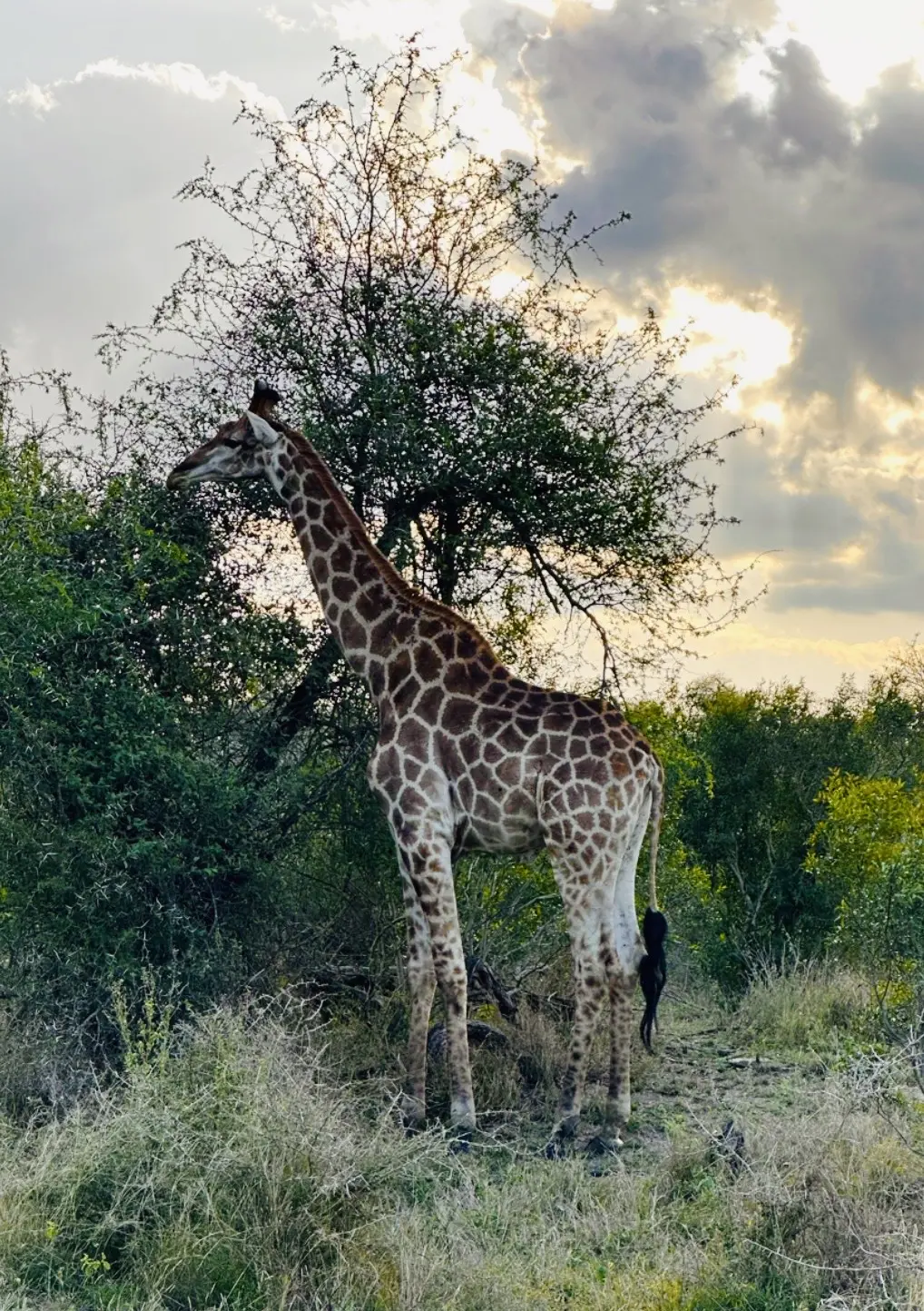
That said, an SUV gives you a higher viewpoint. This is perfect for spotting wildlife and practicing your best Attenborough narration. “And here… we observe the majestic giraffe, wondering why humans stop for every single one of them.”
Plus, the extra height helps when you’re trying to see over the car in front of you that has inexplicably stopped to photograph yet another impala. Impalas are pretty, but after impala number 259 you start to think “Oh look, another impala, moving on.”
Kruger driving tips: the art of going slowly
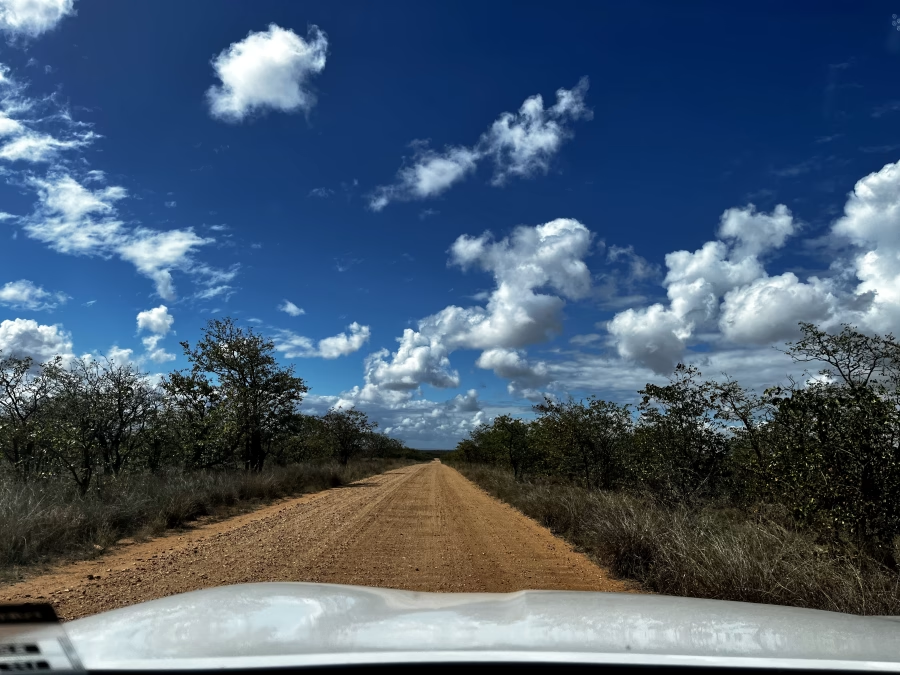
Kruger rewards the slow and curious. This is not the place for speed; it’s the place for patience, snacks, and the occasional dramatic gasp when something big appears out of nowhere. Also, speeding and running over the wildlife is frowned upon.
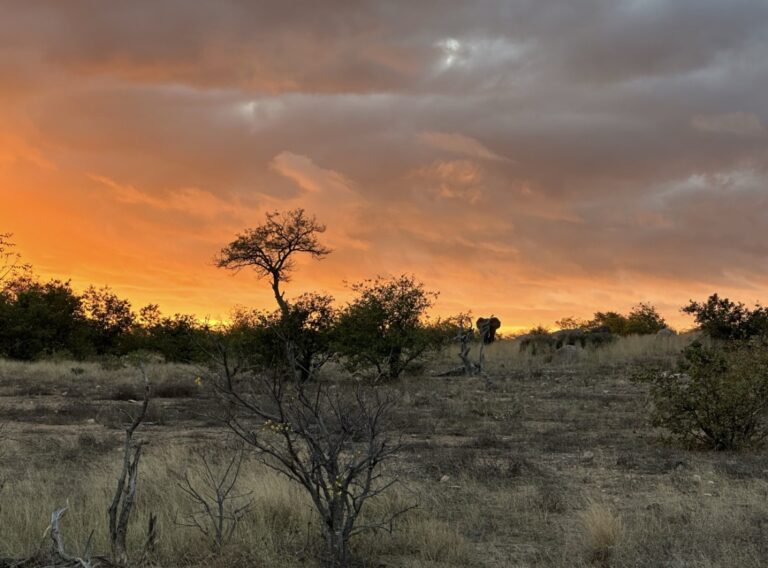
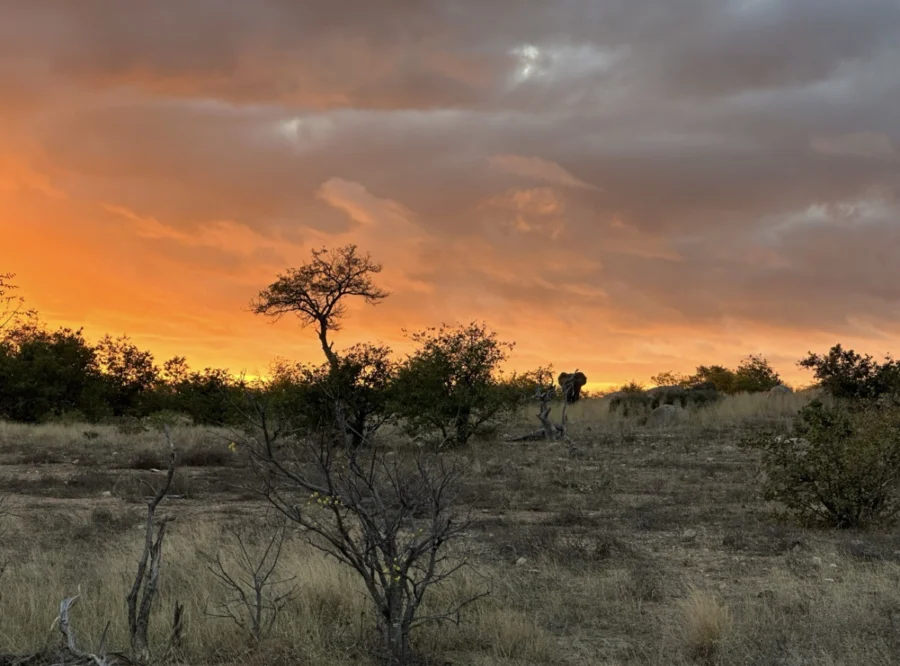
Some of the best sightings happen when you’re barely moving, scanning the bushes for a flick of a tail or a pair of ears. Early mornings and late afternoons are prime wildlife hours, and the light is so beautiful it makes your phone photos look like you’ve been secretly taking photography classes. I took all the photos in this post with an iPhone.
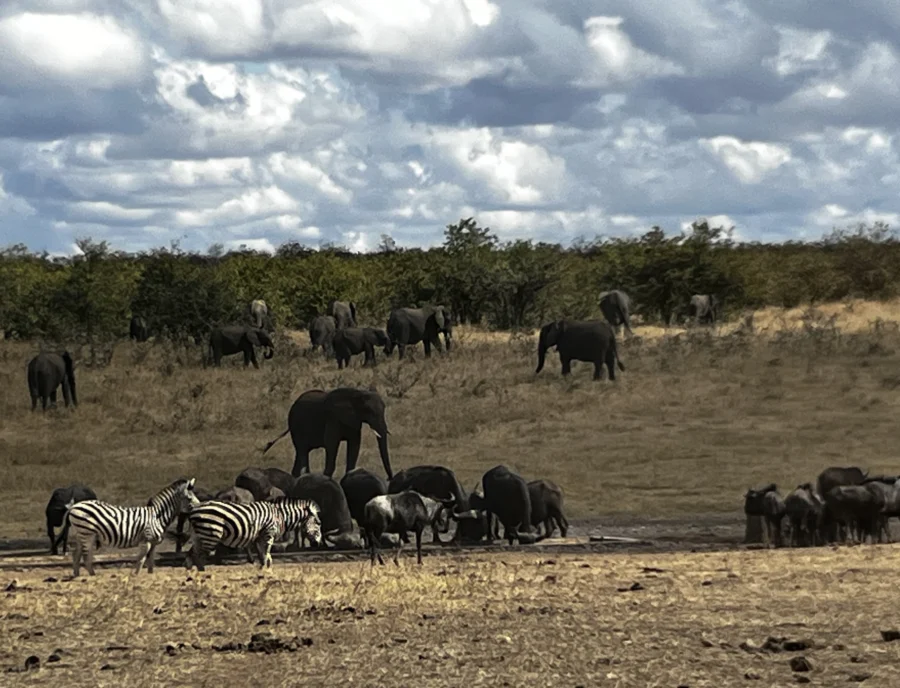
Bring water, bring snacks, and bring your sense of adventure. Because you never know what’s around the next bend: a herd of elephants, a sleepy lion, or a tortoise causing a traffic jam because it simply refuses to hurry.
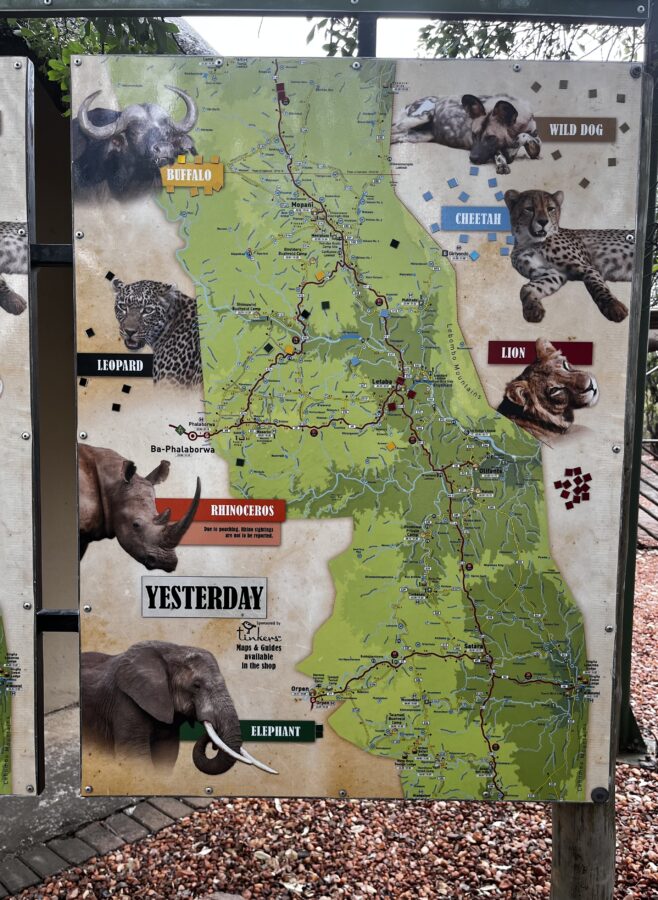
Pro tip: at all the gates there are big boards with maps indicating where wildlife has been spotted: elephants here (then again, elephants are everywhere), lions there, leopard in yonder tree. The only thing not on the boards are rhinos as poaching is still very much a problem.
And yes, stay in your car unless you’re at a designated spot. Even Attenborough doesn’t wander around Kruger without a plan, a camera crew, and probably someone holding a tranquilizer dart just in case.
Safety in Kruger: how to spot wildlife safely
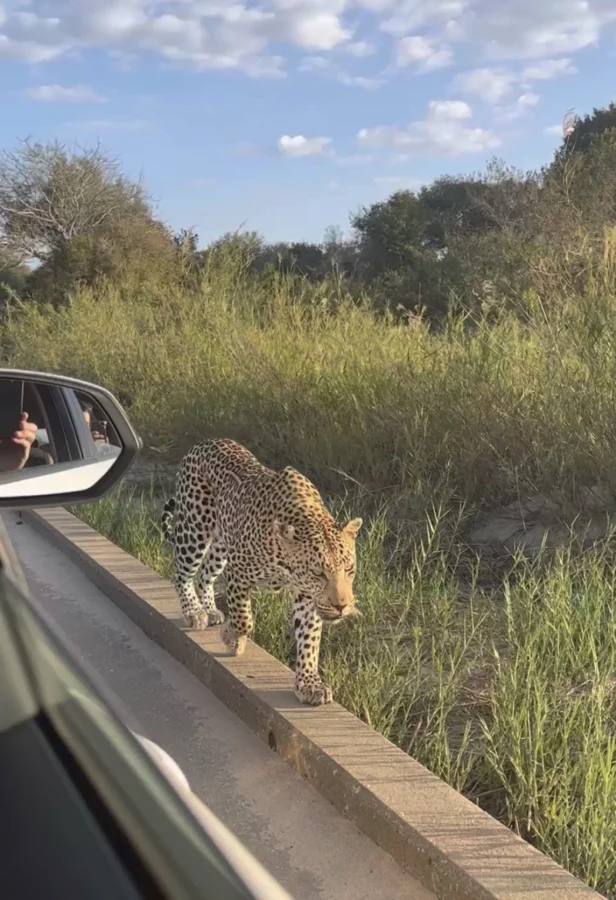
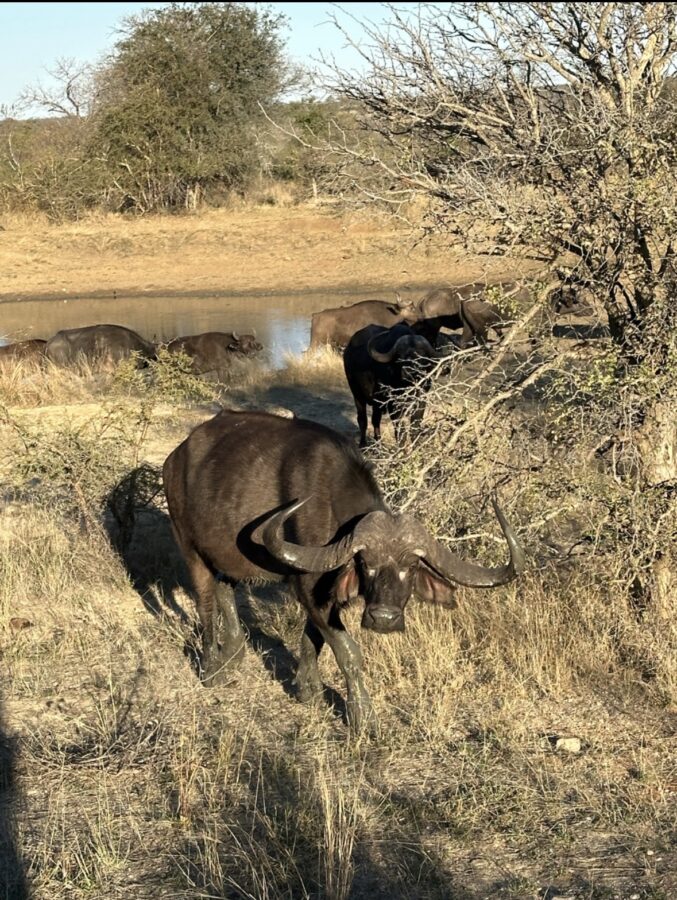
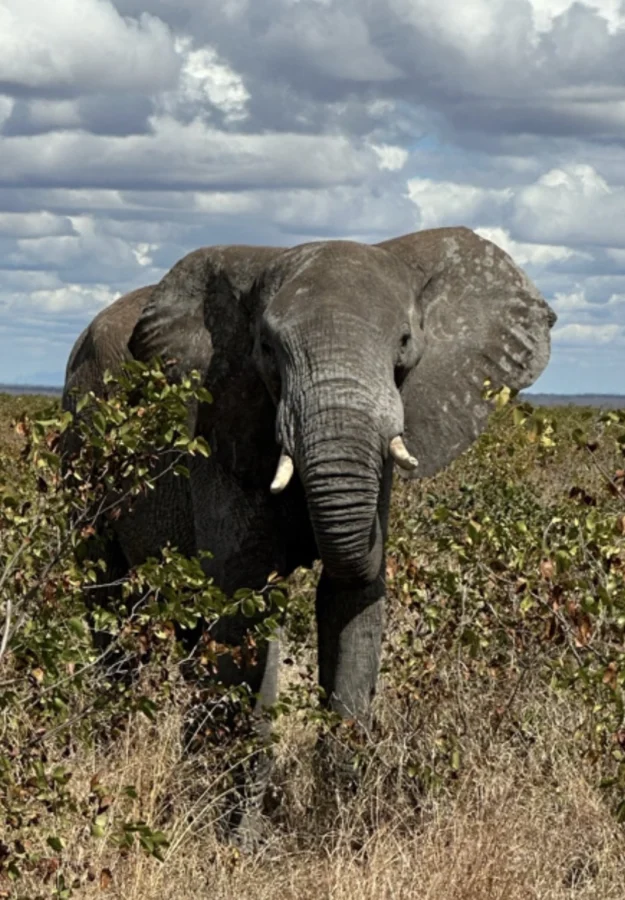
Kruger is very safe as long as you respect the rules. Give animals plenty of space; especially elephants, who appreciate a generous personal bubble. Don’t block their path, don’t get too close, and don’t assume buffalo are just big cows with attitude.
On the road, keep an eye out for animals crossing unexpectedly. Warthogs, in particular, have a habit of sprinting across the road like they’re late for a meeting they forgot to put in their calendar.
I can’t stress it enough: do not get out of the car. Not when you spot something you’d like to see up close (unless, of course, you don’t mind it being the last thing you ever see). Or because your hat accidentally blew out of the window. Not even because you’re desperate for a toilet. Just the fact that you don’t see any animals, doesn’t mean they don’t see you.
If you want to know more about how to behave on safari, read my guide to safari etiquette.
Eating in Kruger rest camps
At some point during your self‑drive safari, you’ll realize two things: a) you’ve been staring at animals for hours without blinking, and b) you’re suddenly starving.
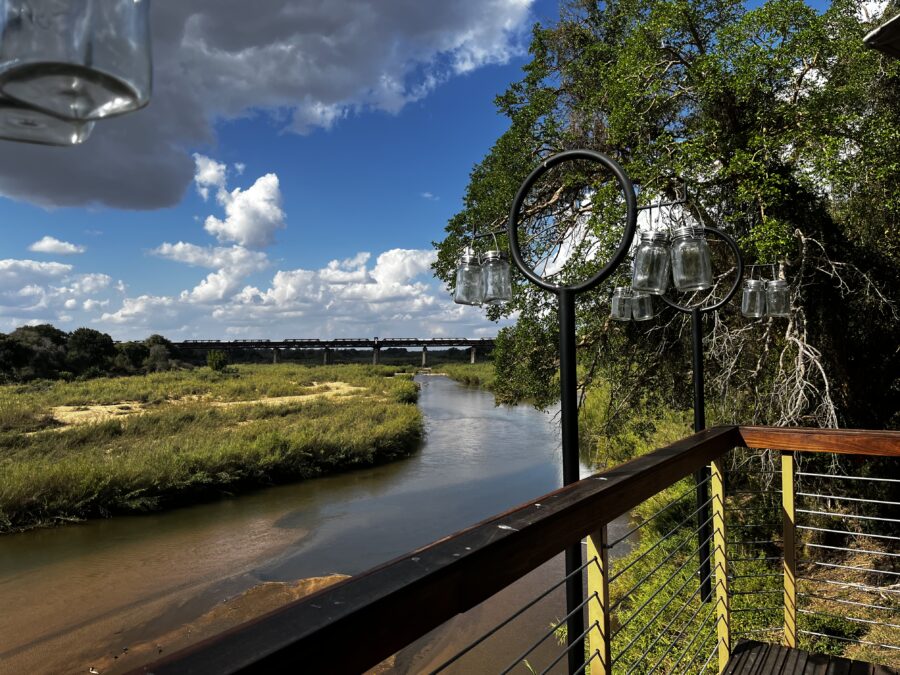
Luckily, Kruger’s rest camps are perfect for a midday break. Most have restaurants where you can sit on a terrace, order something tasty, and sometimes see the wildlife pass you by. The menus are simple but satisfying: think toasted sandwiches, burgers, salads, and the kind of cold drinks that taste extra refreshing after a morning of lion‑spotting.
If you prefer something quieter, many camps also have shops where you can grab snacks, fruit, or even ingredients for a DIY picnic. Just remember: the monkeys are professionals. They will absolutely steal your lunch if you give them half a chance, and they won’t feel bad about it.
Picnic sites: your private dining room in the bush
Kruger’s picnic sites are one of the park’s best‑kept secrets. These are designated spots where you can get out of your car, stretch your legs, and enjoy lunch surrounded by nature – safely, of course. Some sites have gas braais (barbecues) you can use, others have shaded tables, and all of them have that magical “I can’t believe I’m eating here” feeling.
There’s something wonderfully peaceful (and magical) about sipping a cup of coffee while listening to hippos grumbling in the distance or watching hornbills hop around like they’re waiting for you to drop a crumb. Just remember to check the map for opening times and facilities. And always close your cooler box because the local wildlife has excellent taste.
Required fitness level for a self-drive safari
A self‑drive safari is one of the most accessible adventures out there. You’re not hiking up mountains, sprinting after cheetahs, or dangling from a rope while someone shouts “Look natural!” for a photo. Most of your day is spent comfortably in the car, stopping whenever something interesting appears. In Kruger, this is roughly every five minutes. As long as you’re comfortable sitting, stretching your legs at rest camps, and hopping in and out of the car at designated spots, you’re good to go. Think of it as an adventure that requires curiosity, not cardio.
Toilet breaks and facilities in Kruger
Kruger is wonderfully prepared for real‑life needs. You’ll find clean, well‑maintained toilets at all rest camps and most picnic sites, which means you never have to “improvise” behind a bush – and trust me, the wildlife would absolutely notice you. Plan your stops around the camps and picnic areas, and you’ll be perfectly comfortable. Just don’t wait until the last second; Kruger is big, and the next bathroom might be a scenic 20–30 minutes away. Consider your toilet breaks part of the adventure, with far better views than any motorway service station.
Exploring Kruger by region
Kruger is huge – bigger than some countries – and each region has its own personality. Think of it like visiting three different parks without ever crossing a border.
Southern Kruger: the social butterfly
The south is where the action is. It’s lush, busy, and packed with wildlife. If you want a good chance of seeing the Big Five before lunch, this is your place. It’s also the most popular region, so you’ll share sightings with other cars – lots of them. But honestly, when there’s a leopard in a tree, no one minds a little company.
Central Kruger: big cats and big skies
The central region is classic savanna: open grasslands, wide horizons, and a reputation for excellent predator sightings. This is lion country. If you’ve ever wanted to see a pride lounging around like they own the place (which they do), head here. It’s a little quieter than the south, but still lively enough to keep things interesting.
Northern Kruger: the wild, quiet soul
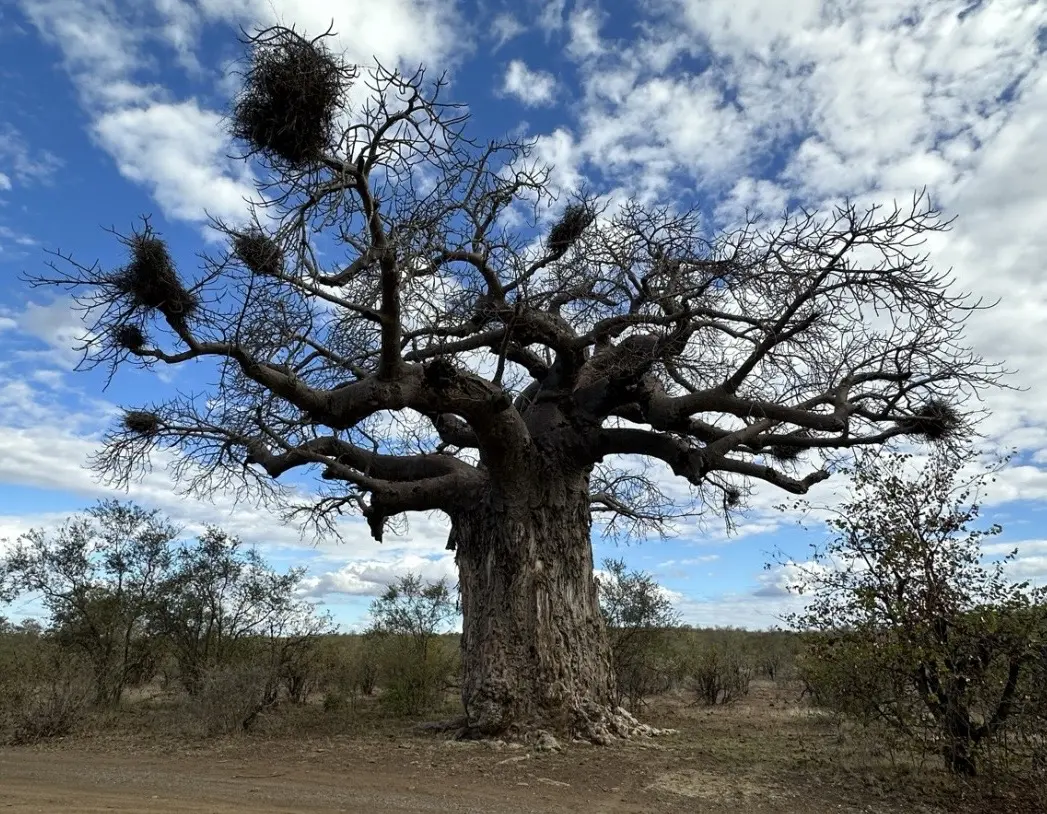
The north is for travelers who like things a bit wilder and more peaceful. The landscape shifts to baobabs, riverine forests, and wide, empty roads where you might drive for ages without seeing another car. Birdwatchers adore this region: it’s basically their version of Disneyland. The wildlife is still there, just more subtle, more patient, and more rewarding when you find it.
If the south is the energetic extrovert and the central region is the confident middle child, the north is the wise, quiet friend who always surprises you.
Kruger rest camps overview: which camps are right for you
Whether you’re staying inside Kruger National Park or just passing through from nearby lodges, it helps to know where the rest camps are. Inside the park, they’re the main places to sleep, stock up on supplies, grab a meal, or join a short guided drive if you fancy it. For those staying outside, they make perfect spots to stop for lunch, stretch your legs, or enjoy a quick coffee while wildlife passes by.
The table below gives a practical overview of the main rest camps, their location, accommodation options, and nearby roads. Think of it as your planning map for where to stay or stop during your self-drive safari, whether it’s a one-night stay or just a daytime visit. Swipe to the side to see the full table.
| Region | Rest Camp | Closest Gate | Accommodation Type | Best For | Extra Amenities |
|---|---|---|---|---|---|
| South | Skukuza | Paul Kruger Gate / Phabeni Gate | Bungalows, guesthouses, campsites | First-time visitors, high wildlife density, Big Five | Large shop, multiple restaurants, golf course, museum, fuel station |
| South | Lower Sabie | Crocodile Bridge Gate | Bungalows, safari tents, campsites | River wildlife viewing, lions, sunsets | Restaurant deck overlooking Sabie River, shop, fuel station |
| South | Crocodile Bridge | Crocodile Bridge Gate | Bungalows, campsites | Quiet stays, excellent rhino sightings | Small shop, fuel station |
| South | Pretoriuskop | Numbi Gate | Bungalows, huts, campsites | Scenic hills, cooler climate, history | Restaurant, swimming pool, shop, fuel station |
| South | Berg-en-Dal | Malelane Gate | Bungalows, guest cottages, campsites | Rhino sightings, mountainous scenery | Restaurant, shop, fuel station, walking trail |
| Central | Satara | Orpen Gate | Bungalows, guesthouses, campsites | Lion sightings, open savanna wildlife | Restaurant, shop, fuel station |
| Central | Orpen | Orpen Gate | Cottages, bungalows | Small quiet camp, elephant sightings | Shop, small restaurant, fuel station |
| Central | Olifants | Phalaborwa Gate | Bungalows, guesthouses | Best views in Kruger, river scenery | Restaurant terrace, shop, fuel station |
| Central | Letaba | Phalaborwa Gate | Bungalows, huts, campsites | Elephants, birding | Restaurant, elephant museum, shop, fuel station |
| North | Mopani | Phalaborwa Gate | Bungalows, cottages | Quiet stays, birdlife, Pioneer Dam | Restaurant, shop, fuel station |
| North | Shingwedzi | Punda Maria Gate | Bungalows, campsites | Remote wilderness, baobab landscapes | Restaurant, shop, fuel station |
| North | Punda Maria | Punda Maria Gate | Bungalows, safari tents, campsites | Birdwatching, quiet northern Kruger | Restaurant, shop, fuel station |
Best itineraries
Kruger is huge. It’s bigger than my (admittedly tiny) country. The best itineraries depend on how many days you have, where you are staying, which animals and landscapes you want to see and how much time you want to spend in the car on any given day. Some roads are well-known for big cat-viewings, like the roads around Satara rest camps. Some roads take you past rivers and waterholes. My advice: buy one of the park guides. They’re books with detailed maps of the park. As an added bonus: they have photos of all the animals and little check-boxes to keep track of sightings. Children love that. So do most adults. Read about sample itineraries in Kruger Park if you want more advice on routes to take.
So – why should I self-drive in Kruger?
A self-drive safari in Kruger National Park gives you the freedom to explore at your own pace, whether that means staying overnight at rest camps inside the park, or taking day trips from nearby towns like Phalaborwa and Hazyview. You’ll encounter elephants, giraffes, about a million impalas, and some big cats if you’re lucky. You’ll have plenty of flexibility to stop for meals, coffee, a little detour or a prolonged stay at the side of the road hoping to see that leopard again. For detailed planning resources, including park maps, conservation fees and regulations, check the official SANParks Kruger National Park website.
No matter where you stay, Kruger rewards curiosity, patience and a sense of adventure. So buckle up, roll down the windows (or maybe don’t) and let the park unfold in front of you.
Plan Your Next Step
Not sure where to go next?
If you’re planning a Kruger self-drive, these guides will help depending on where you are in the process.
Still deciding if self-drive is right for you?
Compare the different safari styles, from self-drive to guided safaris and private reserves, to see what feels easiest and most enjoyable for your kind of trip. Read the safari options guide
Working out where to stay?
If accommodation is the bit that will make or break the experience, start with my guide to safari lodges and comfortable bases for 55+ travellers. Explore the accommodation guide
Want help picturing the experience?
If you’re wondering what safari actually feels like day to day, this guide is a good place to start. See what safari is really like
Ready to add more than just game drives?
There’s plenty to do around Kruger beyond safari itself, from scenic routes to gentler day trips. Browse non-safari ideas
Just want the full big-picture guide?
If you’re still at the beginning, my broader South Africa guide for travellers over 55 pulls the whole trip together. Start with the full overview
Some quick answers to common questions
No. Kruger’s roads are so good you could drive them in a small hatchback. An SUV is nice for the higher viewpoint, but absolutely not required.
Yes – as long as you stay in your car, give animals space, and resist the urge to pet anything with tusks, horns, claws, or a suspiciously confident attitude.
Not at all. A self‑drive safari is more about curiosity than cardio. You’ll spend most of your time comfortably in the car, hopping out at rest camps and picnic sites to stretch your legs, grab a drink, or admire the view. If you can handle a relaxed day of exploring, you’re more than ready. You don’t even have to climb into a safari truck.
Rest‑camp restaurants serve solid meals with even better views. Picnic sites are perfect if you prefer a quieter bush lunch with shade, tables, and the occasional hornbill judging your sandwich choices.
Kruger has plenty of clean, well‑maintained toilets at rest camps and most picnic sites. Just plan your stops- the next bathroom might be a scenic 20–30 minutes away. And no, you cannot “just nip behind a bush.” The wildlife would absolutely notice.
The south is lively and full of wildlife, the central region is big‑cat heaven, and the north is quiet, wild, and perfect for travelers who enjoy having entire roads to themselves. If you have the time, I’d stay in at least two different areas. We stayed in Phalaborwa and Hazyview.
Three days is good. Five to seven is glorious. You’ll want to come back no matter how long you stay, if you’re anything like me.
Quite possibly – but nature doesn’t do guarantees. Leopard sightings are rare, but we saw four different ones. Lions and giraffes surprisingly took a lot longer. You will see more impalas than you ever thought existed. And maybe, like me, you will realise that birds are far more interesting than you ever knew.