The Overthinker’s Scorecard: needing medical care in rural Indonesia
I’d worried about all sorts of things before travelling to Indonesia. Missing flights. Losing luggage. Wobbly suspension bridges. Orangutans. Volcanoes. Tsunamis. Mosquitoes. Needing medical care in Indonesia wasn’t particularly high on the list. Perhaps it should have been.
This little mishap was part of our 9 days in Sumatra, which I describe in more detail in the Sumatra itinerary.
The evening before we were due to climb Mount Sibayak for sunrise, I went from feeling absolutely fine to feeling as though I’d been hit by a truck. First came the shivering. The sort where you’re wearing a jumper over your clothes, hiding under the blankets, in tropical Sumatra… and you’re still freezing. Then came the fever. Then the throat pain. Not the sort where swallowing is a bit uncomfortable. The sort where every sip of water makes you decide never to eat or drink anything again. I spent the entire evening asleep instead of preparing for the trek.
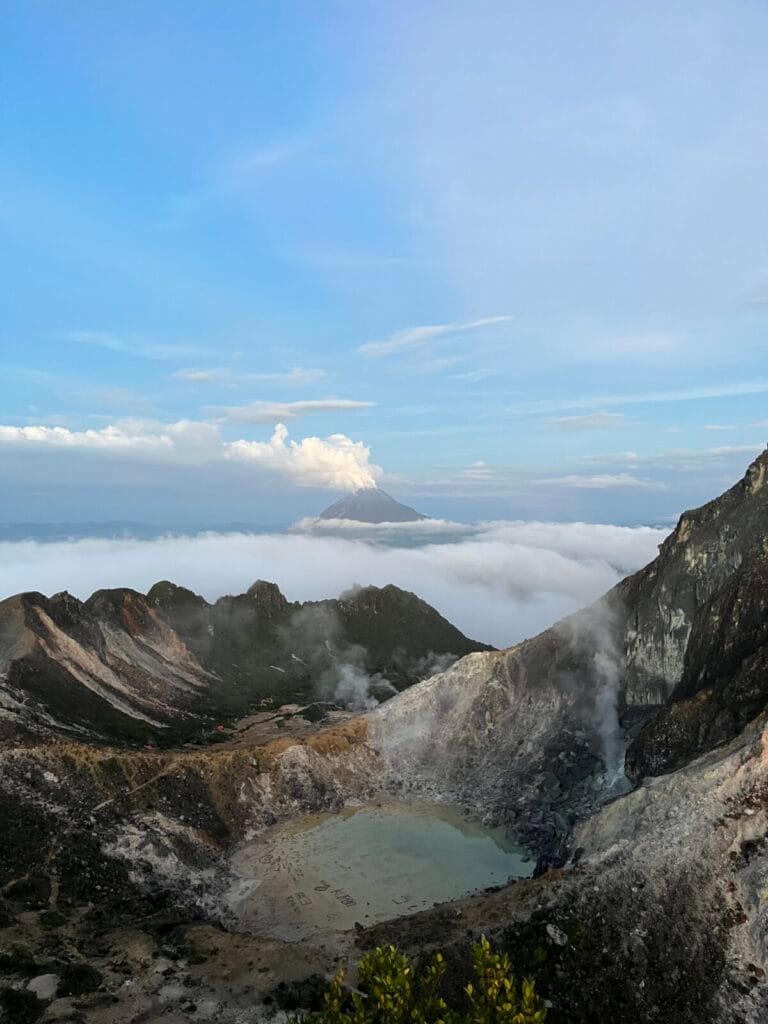
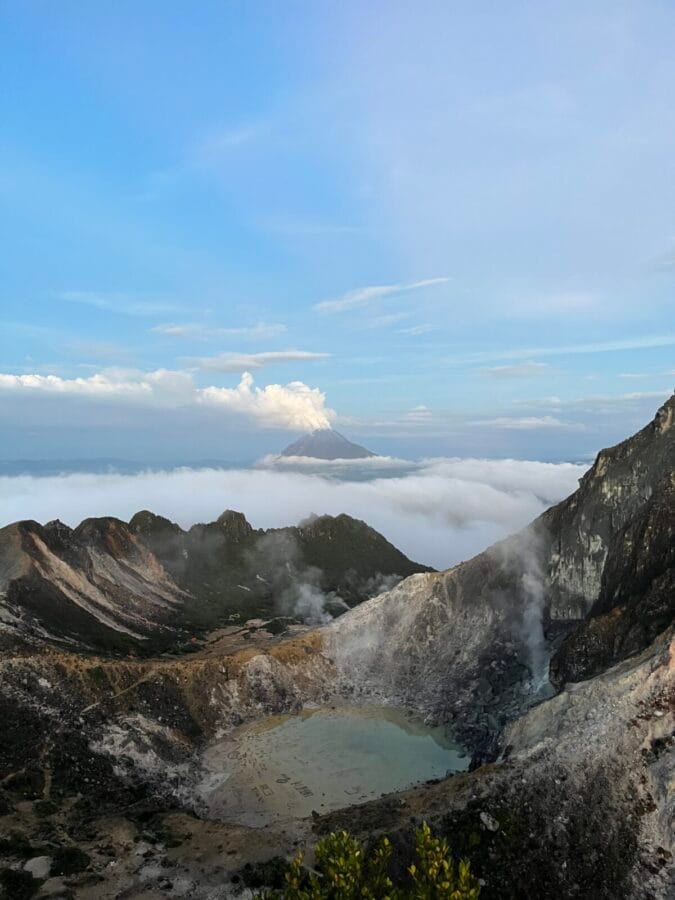
The following morning, while Marc set off to climb Sibayak, I managed to sit upright for long enough to eat half a slice of toast and drink some tea before collapsing back into bed. The volcano would have to do without me. Marc later came back and told me it had been tough and “I would have made it when fit but absolutely not now.” Well at least I didn’t collapse halfway up a mountain.
Later that day we travelled from Berastagi to Samosir Island. As if a raging sore throat and fever weren’t enough, my digestive system decided it wanted some attention too. By the time we arrived in Tuktuk, I felt utterly miserable.
Now, I am fully capable of convincing myself that almost anything can be safely ignored and will go away on its own. But this time even I admitted it might be sensible to seek some medical advice.
Our guide didn’t hesitate. “We’ll go to the clinic.”
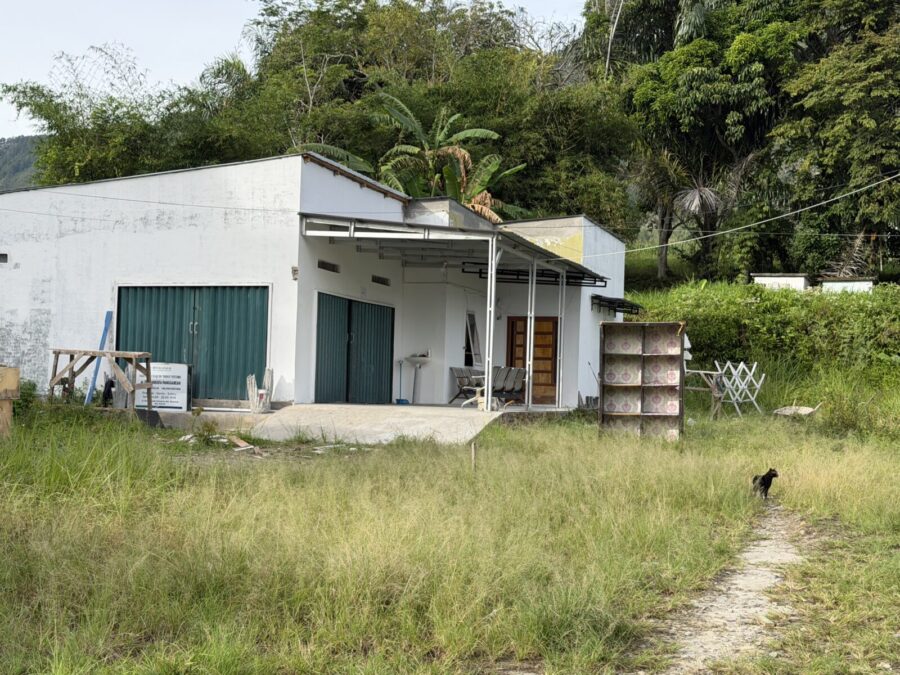
The clinic certainly wasn’t what my Western brain associates with modern healthcare. There were chickens wandering around outside. The building looked as though it had been there for decades. If I’m honest, I probably judged it before I’d even walked through the door.
Inside, however, every assumption I had quietly disappeared. The nurse was calm, friendly and completely professional. She checked my blood pressure, which turned out to be much lower than normal. She took my temperature, which turned out to be much higher than normal. She listened to my heart and lungs. They were fine. She examined my abdomen. It was not fine. She looked at my throat. Then she asked how long I’d been in Asia.
At first I wasn’t sure why that mattered, until I realised exactly what she was doing. She was working methodically through the possibilities, including whether I could have picked up one of the more serious tropical illnesses that become more likely after a longer stay.
Only after she’d completed her examination did she phone the doctor, who was making her rounds. She arrived, confirmed the diagnosis of a bacterial throat infection and dehydration, and prescribed antibiotics, oral rehydration salts and enough painkillers to sedate a medium-sized elephant. I also received an injection of what later turned out to be a boost of B-vitamins.
There was no pharmacy attached to the clinic, so my guide went off to collect the medication for me. A little later, he returned with everything I needed.
The clinic wasn’t a private facility, and the process was surprisingly straightforward. After the consultation, I paid at reception, in cash. The whole experience, including the consultation and medication, came to around €25.
It wasn’t exactly the kind of medical experience I’d expected to have on a remote Indonesian island. But the doctor was thorough, the treatment was organised and, most importantly, I felt I was in good hands.
The next day I already felt noticeably better. In fact, I convinced myself I felt well enough to join the 17-kilometre cycling tour around Samosir Island. Whether that was a wise decision is open to debate.
The whole experience also reminded me how easy it is to judge healthcare by appearances. I’d looked at the outside of that clinic and quietly wondered what sort of care I’d receive. The reality? Exactly the sort of thorough assessment I’d expect from a nurse back home. Professional. Systematic. Calm.
The chickens, it turns out, had absolutely no influence whatsoever on the quality of medical care.
Getting medical care in rural Indonesia: what travellers should know
My experience in Tuktuk was reassuring, but it would be wrong to assume that every rural clinic in Indonesia offers the same facilities or level of care. Indonesia has a network of community health centres, known as Puskesmas, alongside private clinics and hospitals. These local health centres are often the first point of contact for medical care. They can deal with many everyday health problems, but more serious illnesses or injuries may require treatment in a larger hospital, sometimes a considerable distance away.
A few things are worth keeping in mind if you’re travelling around Indonesia:
Don’t wait too long. If you’re genuinely unwell, seek medical advice rather than hoping it’ll pass. I was very glad I did.
Ask for local help. Your guide, hotel or tour operator can help you find medical assistance. In my case, my guide even went to collect the medication prescribed by the doctor. That was particularly helpful.
Carry some cash. I paid at reception, and the consultation and medication came to around €25. However, costs vary, and some facilities may expect payment upfront.
Check your travel insurance. Make sure it covers medical treatment, hospitalisation and emergency medical evacuation. In remote parts of Indonesia, getting to an appropriately equipped hospital can be a challenge.
Know where to go. A local clinic may be perfectly adequate for a relatively straightforward problem, but don’t assume it can deal with every emergency. Ask your accommodation or tour operator about the nearest hospital before you need one.
My experience taught me that medical care in rural Indonesia isn’t necessarily something to be afraid of. Just make sure you’re prepared for the possibility that the nearest appropriate medical facility might be further away than you’d like.
Overthinker’s Scorecard
How worried I was before walking into the clinic: ★★★★★
How reassuring the building looked: ★☆☆☆☆
How thorough the medical assessment actually was: ★★★★★
How quickly I started feeling better: ★★★★☆
Likelihood I’ll judge a rural clinic by its appearance again: ★☆☆☆☆
Would I do it again?
I’d much rather skip the bacterial infection. But if I became ill while travelling through rural Indonesia again, I wouldn’t hesitate to seek medical help.
One of the biggest fears many travellers have is, “What if I get sick somewhere remote?”
I discovered that “remote” doesn’t automatically mean “poor.” Sometimes excellent care comes in a modest building with chickens wandering around outside. And sometimes the scariest part of the whole experience exists only in an overthinker’s imagination. Although I could have done without that painful injection.
More Overthinker’s Scorecards
Crossing the wobbly suspension bridges of Bukit Lawang, Sumatra
Riding a camel in the Moroccan Sahara
Mount Sibayak, the volcano I didn’t get to climb
Travel with an overthinker
If you’d like honest reviews, practical travel advice and proof that most of the things I worry about never actually happen, join my newsletter.