Smart spending in Thailand: the upgrades that are worth paying for
Thailand has a reputation for being cheap. Which is both true and slightly misleading.
You can absolutely travel here on very little. You can also spend more than you expected. Usually not in one dramatic moment, but gradually, through a series of entirely reasonable decisions that all seemed like a good idea at the time. Because what’s another passion fruit smoothie or a taxi in the larger scheme of things?
For a typical two-week trip, the cost depends less on Thailand itself and more on how you choose to travel through it. Particularly if you’d prefer the trip to feel comfortable and fairly easy, rather than something that requires a strong sense of humour and a decent recovery period.
In this post, I’m not giving specific prices because the cost of travelling in Thailand depends enormously on your choices. One person is sleeping in a hostel dorm and eating pad thai from a street cart. Another is sipping cocktails by an infinity pool and being greeted by name at breakfast. Someone else is trying not to lose sight of the guide’s flag in a tour group of forty. All of them are technically in Thailand.
What this post is instead is my take on where to save your money and where to spend it, based on the theory that not every budget decision deserves equal enthusiasm.
This is based on the route we took. Loosely planned, occasionally adjusted, and mostly designed to avoid unnecessary faff. I’ve outlined that here if you’re putting something similar together → Thailand 2-week itinerary
In a hurry? Here’s the short version.
Thailand can be surprisingly affordable, but the total cost depends less on Thailand itself and more on how you choose to travel.
A lower-budget trip usually means more effort: longer travel days, simpler accommodation, and spending a bit more time thinking about what things cost. A comfortable mid-range trip costs more, but often feels considerably easier.
If you’re going to spend extra anywhere, make it accommodation, transport and experiences that reduce hassle. Food is excellent at almost every price point, which makes it one of the easiest places to save money.
What different budgets feel like
A simpler, lower-budget trip
This works. Plenty of people do it, and do it well. You’ll stay in more basic places, spend a bit more time getting from A to B, and think slightly harder about what things cost. The food will still be excellent, and you’ll still see everything you planned to see. It just takes a bit more effort to make it all happen. For a shorter trip, that’s often fine. Over two weeks, it can start to feel like you’re putting in more energy than you’d ideally like.
A comfortable, mid-range trip (where things stop being hard work)
This is where Thailand becomes very easy to enjoy, and where most people quietly end up. You’re staying somewhere you’re actually pleased to come back to, getting around without turning travel days into endurance events, and choosing things because you want to do them, not because they’re the cheapest option available. Nothing feels particularly difficult. You’re not arriving places already tired, and you’re not spending half your time working out how to get anywhere. It’s not extravagant. It’s just… straightforward.
A higher-end trip (or a few well-timed upgrades)
This is less about going all out, and more about choosing a few moments where you don’t overthink the cost. A particularly well-placed hotel, somewhere with a view you’ll actually remember, or a couple of experiences that feel a bit more considered can change the feel of the trip quite quickly. It’s not necessary, but it is noticeable.

What is worth spending on, and what is not?
Thailand is very good at making you feel like you’re saving money. Right up until you realise you’ve booked three exhausting transfers and a questionable hotel, and are now rethinking your life choices in 37°C heat.
The good news is that it doesn’t take much to avoid that. A few well-placed upgrades can make a trip feel significantly easier and more enjoyable, while other things simply aren’t worth paying extra for.
Here’s where your money tends to make the biggest difference.
Where does spending a little more make the biggest difference?
|
Worth paying for |
Not worth the extra cost |
|
Well-located hotels |
The fanciest hotel in town |
|
Reliable air conditioning and a comfortable bed |
Expensive restaurants every night |
|
Flights for long distances |
Taxis instead of ride shares like Grab |
|
Airport transfers after long journeys |
Paying more for facilities you probably won’t use |
|
Small-group or private tours |
Upgrades that don’t save time, effort or stress |
The best upgrades in Thailand aren’t necessarily the most expensive ones. They’re the ones that save time, energy and unnecessary hassle.
Hotels in Thailand: this is not the place to prove a point
Thailand has an impressive range of accommodation, and a lot of it looks like excellent value. Some of it genuinely is. Some of it just looks that way in photos taken at very specific angles.
This is one of the quickest ways to make your trip harder than it needs to be. A room that seemed “fine for a few nights” has a way of becoming noticeably less fine when you’re tired, it’s hot, the bed is too hard, too small or both, the neighbours are noisy and the advertised air-conditioning is a tired-looking fan next to an open window.
You don’t need luxury, but you do need a place that works. Somewhere with reliable air conditioning, a decent bed, and ideally a bit of quiet. In most parts of Thailand, that sweet spot sits somewhere in the middle. Not the absolute cheapest option, but not the kind of place where you’re paying for features you’ll barely use once the novelty has worn off.
That said, it can be worth choosing one or two places to stay that feel a bit more special. Not necessarily the most expensive, but somewhere with a view, a bit of character, or a setting you’ll actually remember. It doesn’t have to be every night. In fact, spacing these out can make them feel more like part of the experience rather than just another hotel.
Where you stay matters just as much as what you book. Being slightly better located often makes more difference than upgrading the hotel itself. It’s the difference between stepping out and getting on with your day, and spending half of it working out how to get anywhere.
When choosing places to stay, remember that time and confort are at least as valuable as the money in your bank account. A cheaper hotel that makes everything harder doesn’t really save you anything. It just shifts the cost into effort.
Transport: looks fine on a map, less so in real life
Distances in Thailand can be deceptive. What looks manageable when you’re planning can turn into something rather more involved once you’re actually doing it.
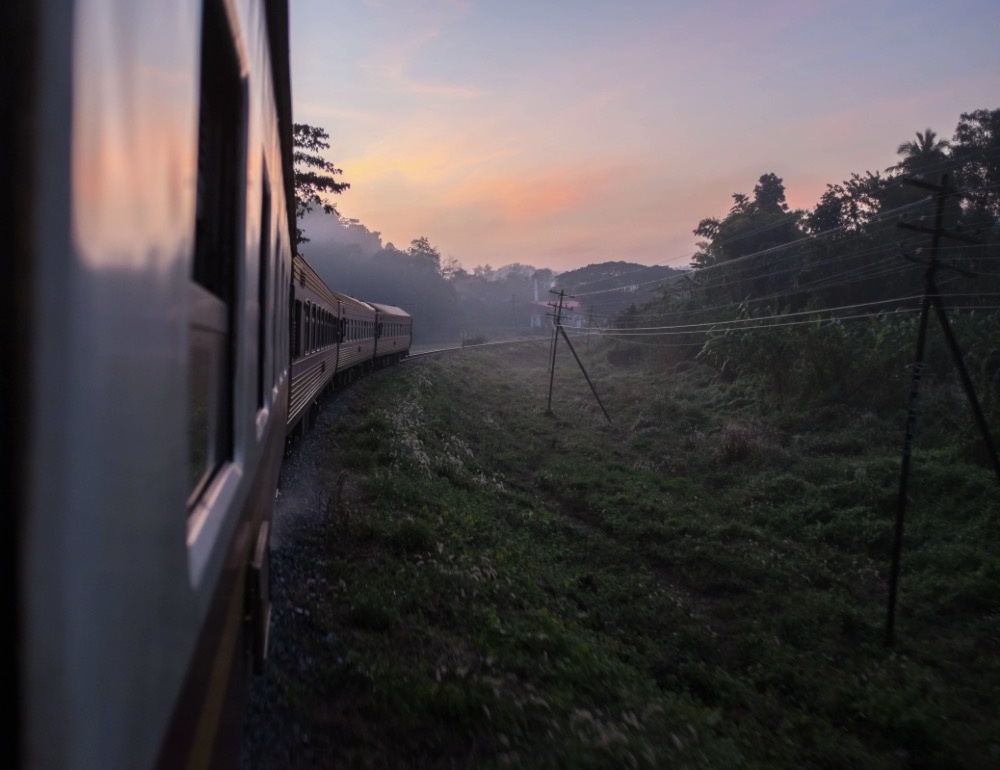
Long train journeys and overnight buses have a certain appeal at first. They seem efficient, even vaguely adventurous. In practice, they often involve not sleeping properly, arriving slightly disoriented, and losing the better part of a day recovering. That said, I did enjoy the night train between Bangkok and Chiang Mai. Maybe not the best night of sleep I’ve ever had, but waking up at dawn in a whole new part of the country made up for it.
Still, transport is where spending a bit more can quietly improve everything. A short flight replaces an entire day of travel. A simple transfer means you arrive where you’re meant to be without having to think too hard about it. Just looking for a driver holding my name on a sign, rather than working out the local transport, made the whole day feel considerably more manageable.
Even smaller choices make a difference. Opting for the easiest route rather than the cheapest one tends to leave you with more energy for the parts of the trip you actually care about. Saving money is useful. Being too tired to enjoy where you are slightly undermines the point.
Tours: a bargain, right up until you’re stuck on a bus
There is no shortage of tours in Thailand, and many of them look like excellent value. The itineraries are full, the prices are appealing, and everything seems very efficient. The experience can be something else entirely.
Packed schedules often mean you spend more time getting in and out of vehicles than actually enjoying where you’ve come to see. What looks like “seeing more” can end up feeling like moving quickly through a series of places without quite experiencing any of them.
Spending a little more here tends to buy you space rather than luxury. Smaller groups, a slower pace, and the chance to take things in without being hurried along to the next stop. We did a few tours with a private driver. This was of course not the cheapest option, but definitely worth it.
If something is noticeably cheaper than everything else, it’s usually worth assuming there’s a trade-off somewhere. It’s just a question of whether you’ll notice it on the day. We only went on very small or private tours and this was definitely worth it.
Food: happily, this is hard to get wrong
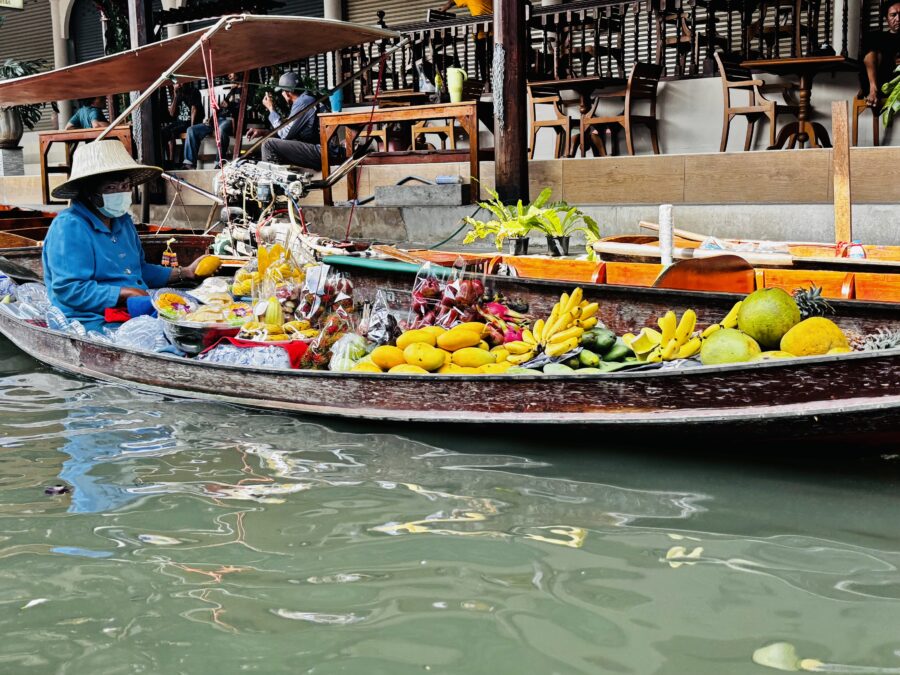
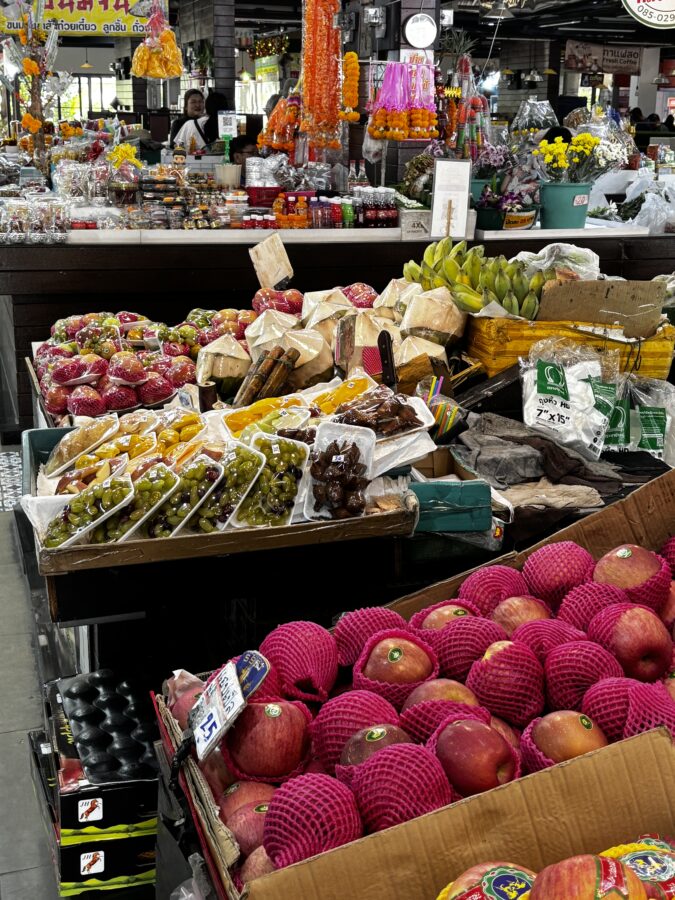
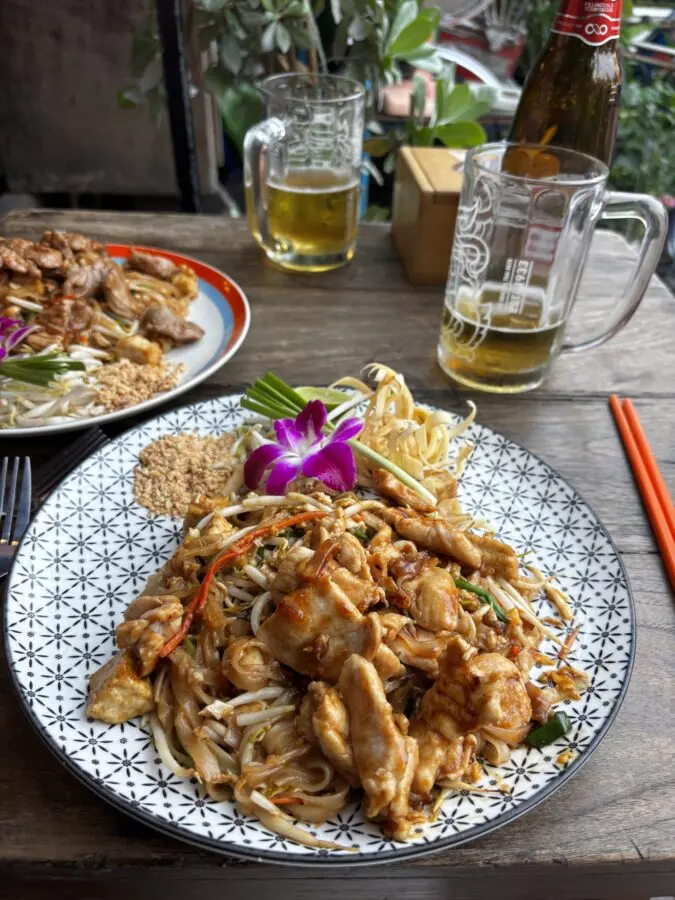
Food is where Thailand makes things very easy. Some of the best meals you’ll have will be in places that don’t look particularly remarkable from the outside. Local restaurants and street food stalls often deliver far more than anywhere trying too hard to impress.
There’s a reassuring simplicity to it. If somewhere is busy, it’s usually for a reason. If food is being cooked fresh, it’s generally a good sign. It doesn’t need to be more complicated than that. Just stay away from that skinned alligator on Khao San Road that’s been there since time immemorial.
Still, it’s worth the occasional upgrade. A meal somewhere with a view, or simply somewhere a bit more considered, can be part of the experience in a different way. Not essential, but enjoyable. I can really recommend The Riverside in Chiang Mai, although doing this right after a cooking class was probably not our brightest idea.
For everyday eating, though, this is one area where spending less doesn’t feel like a compromise at all.
Small comforts: the things you don’t think you need (until you do)
Some of the best decisions you make in Thailand won’t feel particularly significant at the time.
A massage at the end of a long day can make everything feel more manageable the next morning. Using a laundry service means you don’t have to think too much about what you packed or what needs washing next.
They’re small things, but they have a noticeable effect on how the trip feels overall. Less effort, fewer minor irritations, and a slightly easier rhythm to the days. They also tend to be surprisingly affordable, which makes them feel less like indulgences and more like sensible choices.
When in doubt: a simple way to avoid most regret
If something will help you sleep better, move around more easily, or avoid unnecessary stress, it’s usually worth spending a little more. If it’s mainly about appearances, or something you’re unlikely to fully enjoy anyway, it probably isn’t.
Thailand can be very affordable, but the real value isn’t in spending as little as possible. It’s in spending in a way that makes the whole trip feel easier, rather than more complicated.
Now that you’ve saved a few Baht…
Looking for more Thailand travel advice? Start with my Thailand Travel Hub, where you’ll find everything from destination guides to practical planning tips.
Not sure how to fit everything into one trip? My Thailand itinerary can help you decide how to spend your time and build a route that works for you.
And if you’re worried about overspending, here’s how I keep track of my travel budget without turning every holiday into a spreadsheet exercise
If accommodation is something you wouldn’t mind spending a bit more on, check out a few interesting options in my post Special places to stay in Thailand.