Bukit Lawang jungle trek: what it’s really like – and why I loved it
When I was planning our Sumatra itinerary, seeing the orangutans in Bukit Lawang was one of the non-negotiables; it was the main reason for coming to Sumatra. Bukit Lawang sits on the edge of Gunung Leuser National Park, one of the few places in the world where you can see orangutans in their natural habitat. The usual way to explore the rainforest is on foot with a local guide, heading into the jungle for several hours (or, for those fitter and braver than me, several days) in search of orangutans and other wildlife before eventually making your way back down to the village.
There was never a doubt in my mind: this was what we were going to do.
Obviously, my determination did not stop me from worrying before going on the actual jungle trek. I’d already spent a considerable amount of time worrying my way to Indonesia, so this was hardly a new development. Would I even make it up the hill? Would I hold up an entire tour group? Would I collapse with fatigue and dehydration? Would I accidentally look at an orangutan twice my size the wrong way? Was tubing back really a good idea when there was a flooding risk higher up the mountain? Would I be spilled from the raft and disappear into the jungle down the rapids of the Bohorok River?
Spoiler: none of that happened.
Because we had a guide who knew what he was doing.
Meeting our guide and setting off
After a quiet night and breakfast in the beautiful bamboo restaurant at Ecolodge Bukit Lawang, we met our guide for the day. We had a private guide, which meant my fear of holding up an entire group of 20-something backpackers was completely unjustified.
He asked us if we’d put on insect repellent. Of course we had. He then told us to tuck our trousers into our socks. We obliged. High fashion it was not, but still a better look than running around in a panic because a leech had found its way into my clothes. He picked up a bamboo stick and casually asked me if I would like to use it. Of course I would. Marc was not offered one. Like I said, the guide knew what he was doing.
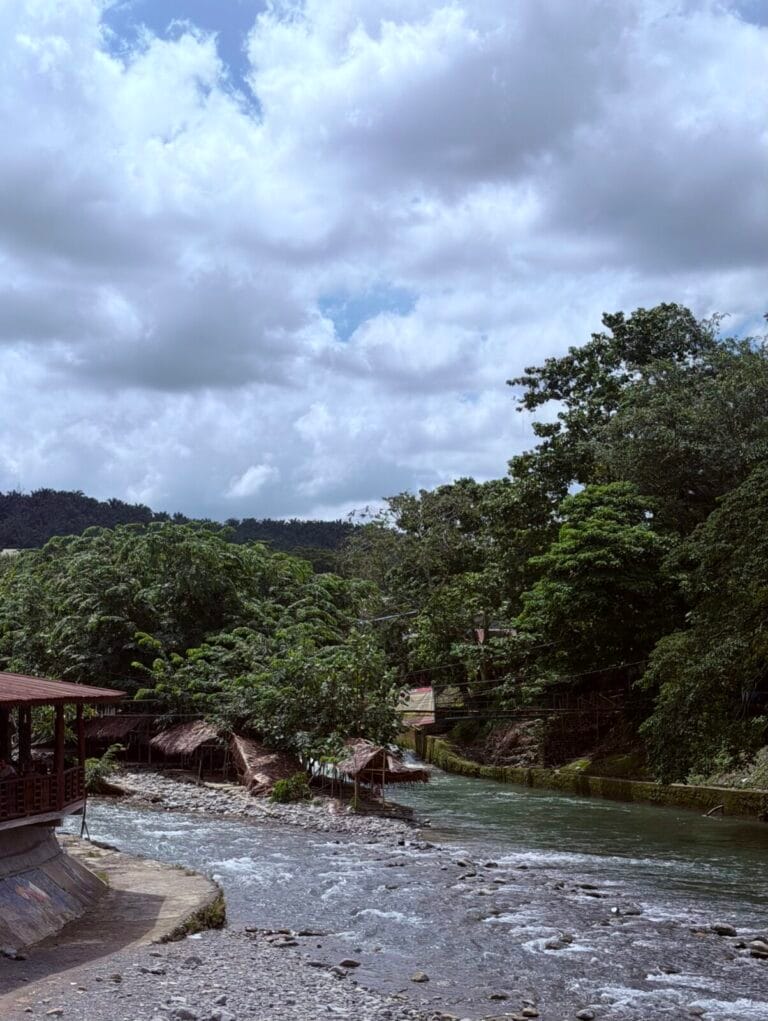
When he was satisfied with our preparations, he led us to the beginning of the trail into Gunung Leuser National Park. Because we were staying at the Ecolodge Bukit Lawang, we could walk straight to the trailhead. Anyone staying on the other side of the river will have to cross one of the dreaded suspension bridges first. They look worse than they are.
The first part of the trail was a bit of a workout, but not especially difficult. There were around 200 steps leading up towards the entrance to the park, but they were well maintained and easy to navigate.
At regular intervals, our guide stopped to show us things along the way: cinnamon trees, coffee plants and cloves. All of these were excellent opportunities for me to catch my breath. This may or may not have been his intention all along. Whatever the reason, it made the climb feel remarkably manageable.

Into the rainforest
After the uphill climb, we arrived at the entrance to Gunung Leuser National Park. There were a lot of signs telling us what not to do. They covered things I would never even consider doing, but if you were planning to feed the orangutans, leave rubbish everywhere or get between a mother and her baby: don’t. We decided to just do what the guide told us to do and leave it at that.
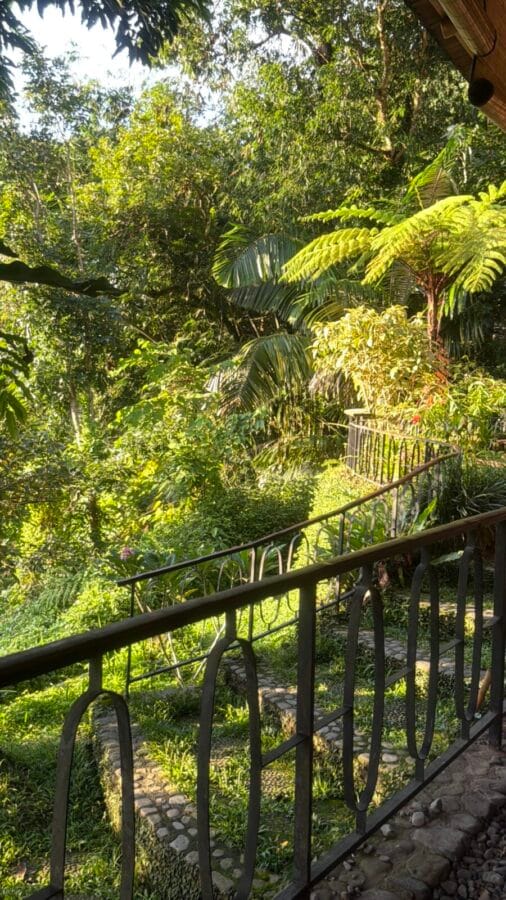
The first thing I noticed about the jungle was how quiet it still was. We were very early, and apparently most of the animals were having a bit of a lie-in. What we heard: the wind in the trees, an occasional bird and the occasional rustle in the foliage. What we saw: a lot of shades of green.
And into the jungle we went. Up and down hills, climbing over tree roots and carefully finding our footing because the ground was still slippery after the previous day’s deluge. Our guide made his way through the jungle, listening and looking carefully for whatever might cross our path. Sometimes he went down an especially steep section first, telling us to stay where we were until he knew for sure that this was the way to go.
Marc and I did as we were told. When you’re out of your depth, listen to the experts. In fact, at one point our guide asked us whether we’d done a lot of jungle trekking before. Apparently, we were “doing everything right”. We hadn’t. But I wasn’t going to correct him. There are moments in life when you simply accept a compliment and move on.
The uphill sections were entirely manageable, although my thigh muscles started to complain after an hour or two. The downhill sections were less about cardio and more about trying not to slide down the mountain in an undignified manner. The stick helped. A lot.
And then, all of a sudden, our guide stopped. He looked into the trees. Then he turned to us. “Look.”
Our first orangutan
Now I have to be honest here. What our guide pointed at was no more than an orange spot in a tree, far in the distance. “A mother and her young in a nest,” our guide told us. It could have been an expressionist painting for all I knew, but it was orange, it was in a tree and it was moving, so I was going to take his word for it.
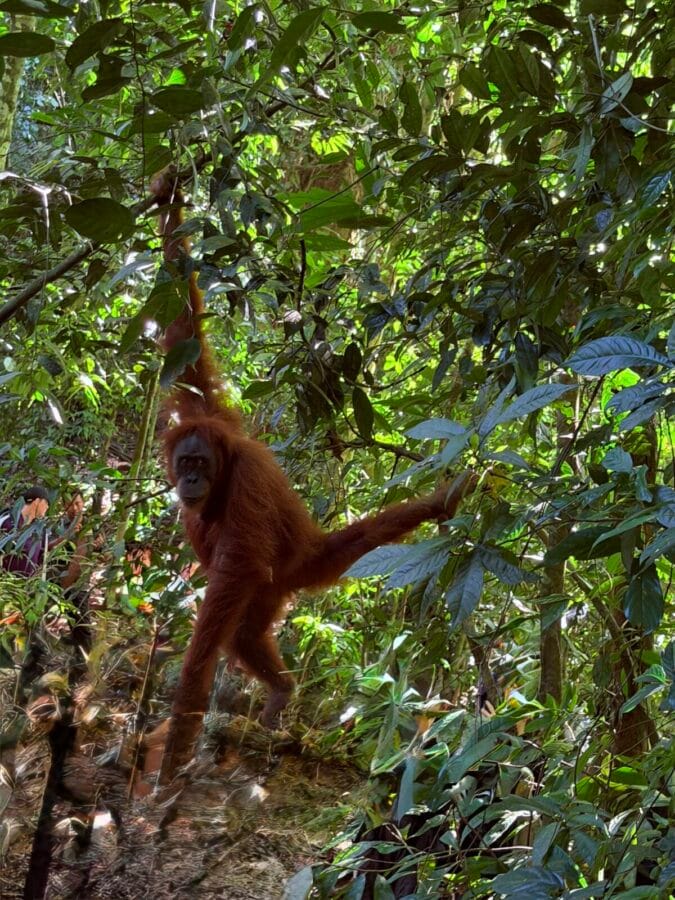
After some staring and pointing, all of a sudden the orange spot became bigger. And bigger. Until it was close enough to see that it was, in fact, an orangutan. A real one. In the wild. Our guide told us it was the youngster, about seven years old: young enough to still be with his mother, but old enough to leave the nest without her and go on a little adventure of his own. It was an amazing moment.
It got slightly less amazing when a larger tour group appeared: about 15 people with one guide. They joined us in staring at the orangutan while making a considerable amount of excited noise. Our guide took one look at the situation and told us we were moving on. He led us deeper into the jungle. Suddenly, I was very happy we’d splurged on a private guide.

Deeper into the jungle
After we’d left the larger group behind, we walked a steep uphill section, crossed a tiny waterfall and stopped when our guide pointed out a group of baboons. Some of them were tiny. Some of them looked decidedly thug-like. Our guide told us to keep our distance. I did not need to be told.
We also came across a group of macaques and some Thomas Leaf monkeys. We saw a hornbill that our guide was more excited about than we were. Then our guide told us to stop and watch again. Another orangutan. A big male. He looked calm and completely uninterested in us. Nevertheless, we kept a safe distance. My new iPhone got to show off its zoom capabilities, and the big male sat still long enough to allow it.
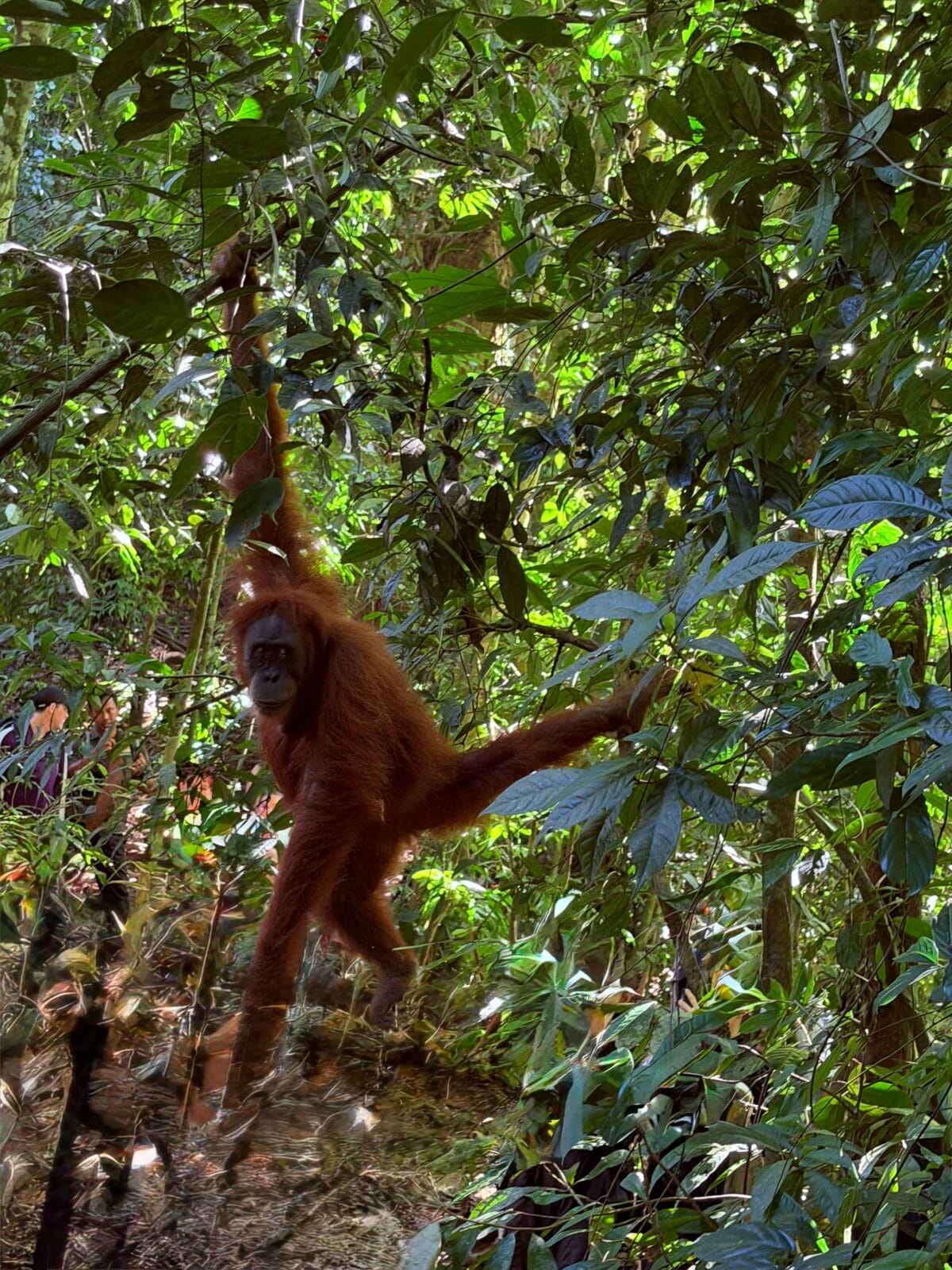
Who did not sit still, and did not keep her distance, was a young female orangutan we came across not even five minutes later. She swung through the trees, came within three metres of us and then settled into a tree above us, happily munching on some fruit. She even made eye contact. Apparently, she did not know or care that eye contact between orangutans and humans is generally considered unwise. We admired her for a long time until she disappeared into the trees, leaving behind banana peels and two giddy Dutch people.
By then, we’d been in the jungle for about three hours and it was time to head back. Where the trek so far had been mostly uphill, we were now going down. This was slightly more difficult than I’d expected. It was steep. It was slippery. There were numerous things to trip over. And there were streams to cross using stepping stones.
Either Marc or our guide held my hand on some of the trickier sections, and there were ropes alongside some of the steeper parts. The bamboo stick was still earning its keep. But at some point, I simply sat down and slid down the hill on my bum. Elegant? No. Effective? Very.
After about an hour of walking, sliding and generally making our way down the mountain, we arrived at the Bohorok River. Waiting for us were three rubber inner tubes tied together, a second guide and a huge pile of fruit.


Tubing down the Bohorok river
We had spent almost four hours climbing, scrambling and sliding through the jungle. Now we were going to let three tied-together inner tubes take us home. After we’d eaten two entire pineapples, six snake fruits and a few tangerines, it was time to get on the rafts. And I am using that term loosely.
Our phones, shoes and other valuables were packed in a plastic bag, which was then packed in a second plastic bag, which was packed in a third plastic bag and sealed with duct tape. I had a feeling we were going to get wet. On the bright side, some cool water sounded excellent after the sweaty exertion of the jungle hike.
Marc and I were squeezed together in the middle tube. Our new guide got into the first tube, while our jungle guide pushed us into the current and jumped into the last tube. And off we went.
Bouncing down rapids, waves of cold water splashing over us, people waving from the riverbank, macaques in the trees, a waterfall coming down the mountain straight into the river, and both guides shouting “Whoohoo!” whenever the next round of rapids came up. It was an absolute joy.
Our arrival back in Bukit Lawang came far too quickly. We stopped at a small pebbled beach, where we were helped out of the tubes and got our valuables back. I put my shoes on and immediately waded back into the river for a swim. The shoes didn’t dry until we were on the next island, but going in barefoot was not an option. Neither was not going in at all. We had a lovely swim, said goodbye to our guides and walked back to the Ecolodge completely soaked.
It was absolutely fabulous.


Would I do it again?
In a heartbeat. It wasn’t too difficult or strenuous, I felt very safe with our guide, and the tubing back was the perfect conclusion to the day. In fact, if I were ever going back, I might even consider a longer hike, taking us further into the jungle, with lunch included and a longer river ride back.
We were lucky enough to have some great animal sightings, but this is absolutely not guaranteed. The further you go into the jungle, the more likely you are to see wildlife, so a longer trek may well be worth considering if seeing orangutans and other animals is your main priority.
There are options to stay overnight for anything from one night to six or seven nights. But I like my creature comforts too much to sleep in an improvised tent on a riverbank. Even if that means I never get to see a tiger.
Planning a Jungle Trek in Bukit Lawang
Right, now for the boring but useful stuff. If you’re considering doing a jungle trek in Bukit Lawang yourself, these are the things I would want to know before booking.
How difficult is the Bukit Lawang jungle trek?
That depends on how long you go for, but even a relatively short trek is a proper jungle hike rather than a gentle stroll through some attractive trees. Expect steep sections, tree roots, slippery ground, uneven paths and streams to cross. It can also be very hot and humid, and rain can make the trails considerably more slippery.
That said, I found our trek much more manageable than I had expected. The uphill sections were tiring, but they weren’t terrifying, and our guide set a comfortable pace and stopped regularly. The downhill sections were actually more challenging for me because of the steep, slippery terrain.
You don’t need to be an elite hiker, but you should be reasonably comfortable walking for several hours on uneven ground. And if you’re worried about your fitness, talk to your guide beforehand. Trekking options vary considerably in length and difficulty.
How long does a Bukit Lawang jungle trek take?
There are options ranging from a few hours to several days. A shorter trek can take around three to four hours, while a full-day trek is typically around six to seven hours. Multi-day treks take you further into the forest and involve spending one or more nights camping in the jungle.
We spent almost four hours in the jungle, which in our case was enough. We saw several orangutans and other wildlife and still had the tubing adventure to look forward to afterwards.
If seeing as much wildlife as possible is your main priority, a longer trek gives you more time and takes you further away from the busiest areas. There are even treks lasting six or seven days for people who are considerably more committed to jungle life than I am.
Want to do something similar to our trek? Book a day trip from Medan with a Bukit Lawang jungle trek →
Fancy going further into the jungle? Explore multi-day trekking options →
Do I need a guide?
Yes. Trekking in the national park is not something you should do independently. Visitors need a national park permit and must be accompanied by a guide. And honestly, I wouldn’t want to do it without one anyway.
Our guide knew how to navigate the terrain, where to look for wildlife and when to stop or move on. He also checked difficult sections of the trail before letting us follow and adapted the pace to us.
Should I book a private guide?
I would. We had a private guide, just the two of us, and I was very happy about that. Not only did it mean there was no group of 20-something backpackers waiting impatiently for me to catch up, it also meant we could walk at our own pace and spend time watching wildlife without having to coordinate a large group.
We saw what happened when a larger group caught up with us during our first orangutan sighting. There were about 15 people with one guide, all excitedly staring at the same animal. Our guide took one look at the situation and moved us deeper into the jungle. For us, having a private guide was absolutely worth the extra cost.
Will I definitely see orangutans?
No guarantees. Likely, but not certain. We were incredibly lucky. We saw several orangutans, including a large male and a young female who came remarkably close to us. We also saw macaques, baboons and a hornbill, among other things.
But this is a rainforest, not a zoo. The animals are wild and free to do exactly what they like. They may be hiding high in the canopy, moving through another part of the forest or simply having a day when they don’t fancy appearing for tourists.
Going further into the jungle and spending more time there does give you more opportunities to spot wildlife, which is one reason to consider a longer trek if seeing animals is a priority. And that’s part of the point. You’re entering their world, not the other way around.
Is it safe?
We felt very safe with our guide, but this is still a genuine jungle environment and you need to behave accordingly. The most important thing is to listen to your guide. If they tell you to stop, stop. If they tell you to keep your distance from an animal, keep your distance. If they tell you to wait while they check a steep section of trail, wait.
There are also specific rules for wildlife encounters. Visitors should not feed or touch orangutans, should not approach them or get between a mother and her young, and should maintain an appropriate distance. Official guidance recommends staying at least 10 metres from orangutans and keeping encounters quiet and calm.
In other words: admire the orangutan, take your photographs, and resist the urge to make friends with it.
What should I wear?
Wear comfortable clothes that you don’t mind getting dirty and wet. Long trousers are a good idea, and our guide had us tuck ours into our socks to make it harder for leeches to get inside. So long socks are useful. Insect repellent is also essential. I wore a quick-dry shirt with long sleeves, but I saw plenty of people in short sleeves.
Wear proper walking shoes with a decent grip. The trails can be slippery, particularly after heavy rain, and there are steep sections where you will be very grateful for shoes that actually grip the ground. And don’t worry too much about looking stylish. The wildlife won’t care.
What should I take?
Keep it simple. You don’t want to carry a heavy backpack through the rainforest. We took water, our phones and the usual essentials. A small camera or phone is obviously useful because you are probably going to want photographs.
A refillable water bottle, insect repellent, sturdy shoes and long trousers are among the commonly recommended essentials. And take something waterproof for your valuables.
Our phones and other belongings were put into one plastic bag, then another, then another, and finally sealed with duct tape before we went tubing. But this was just the tubing. Plenty of opportunities to drop your phone into the river before then.
How much does a Bukit Lawang jungle trek cost?
There isn’t one universal price because the cost depends on the length of the trek, whether you have a private guide, what is included and whether you’re camping overnight.
As a rough current guide, operators are advertising shorter treks from around €55 per person, while one-day treks are around €60–€70 per person. Multi-day treks cost more, with two-day trips commonly starting at around €100–€120 per person. A lot of tours include transport to and from Medan; this makes them more expensive. Check exactly what is included before booking, particularly the national park permit, food, water, guides and the river tubing.
Prices can change, so I would always check with your chosen operator before making your booking.
What about the tubing?
If your trek includes the river return, I say do it. The “rafts” are essentially several rubber inner tubes tied together, with guides accompanying you down the Bohorok River. It sounds slightly questionable when described like that. It is considerably more fun than it sounds.
After almost four hours of hot, sweaty jungle trekking, bouncing down the rapids in cold water was the perfect ending to the day. We got completely soaked, which was exactly what I wanted by that point. River conditions can vary, though, so listen to your guides and don’t assume that tubing will always be possible. Your operator will know whether conditions are suitable on the day.
Should I do a longer trek?
If I went back to Bukit Lawang, I probably would. Our four-hour trek gave us an amazing introduction to the rainforest and we were lucky enough to see some fantastic wildlife. A longer trek would take you further into the jungle, away from the busiest areas, and give you more time to look for animals. Multi-day options include jungle camping and, depending on the itinerary, a river journey back to Bukit Lawang.
What is doable and fun varies wildly between people. Decide for yourself how much comfort you’re willing and able to give up in exchange for a more immersive jungle experience.

More Indonesia Adventures
Planning a trip to Indonesia? You might also enjoy:
How I Planned Our Indonesia Itinerary
How I put together our rather ambitious Indonesian adventure, from choosing where to go to fitting all those flights, ferries and adventures together.
The Indonesia Travel Guide
The practical information I wish I’d had before planning our trip.
Needing Medical Care in Rural Indonesia
What happened when I needed medical care during our travels, and what I learned about getting treatment away from the big tourist centres.
A review of our stay at the Ecolodge Bukit Lawang
Fancy coming along for the next adventure?
Join my newsletter for new travel stories, practical tips and the occasional account of something I probably should have thought through beforehand.