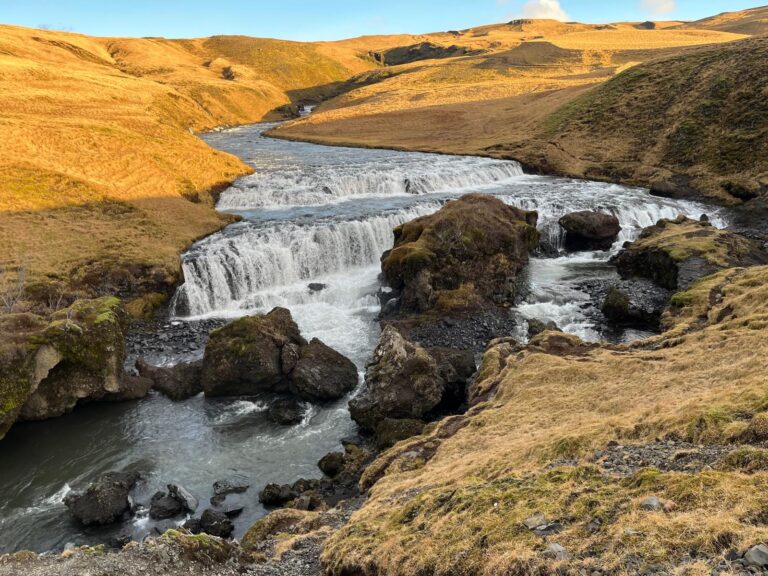
Independent travel vs group travel: how to choose what suits you
At some point in our lives, many of us find ourselves wondering: “Do I still enjoy travelling completely independently, or would I rather join a group and let someone else do the thinking, planning and problem-solving?”
This is not about having a trip planned for you while you travel on your own. This is about group travel, with a guide and other travellers, spending weeks together on a shared itinerary.
Now until recently my only experience with group travel was from more than 30 years ago, when I travelled to Lloret de Mar with a group of friends, on a bus with forty others, at least 20 of whom were chain smoking. Smoking on buses (and airplanes, and in restaurants, and at work) was still a thing in the early nineties. Twenty-four hours of sitting upright on a bus, in secondhand smoke, followed by shared meals with complete strangers who complained about everything. Not my idea of fun, so that was my last tour in a group, until we went on a three-day small group tour through Iceland. It wasn’t a traditional group tour, but it was enough to make me realise that group travel in 2026 bears very little resemblance to a smoking bus full of grumbling strangers in the early nineties.
Before going into the details, let me give you a quick overview of the pros and cons of each type of travel. Maybe it will help you decide.
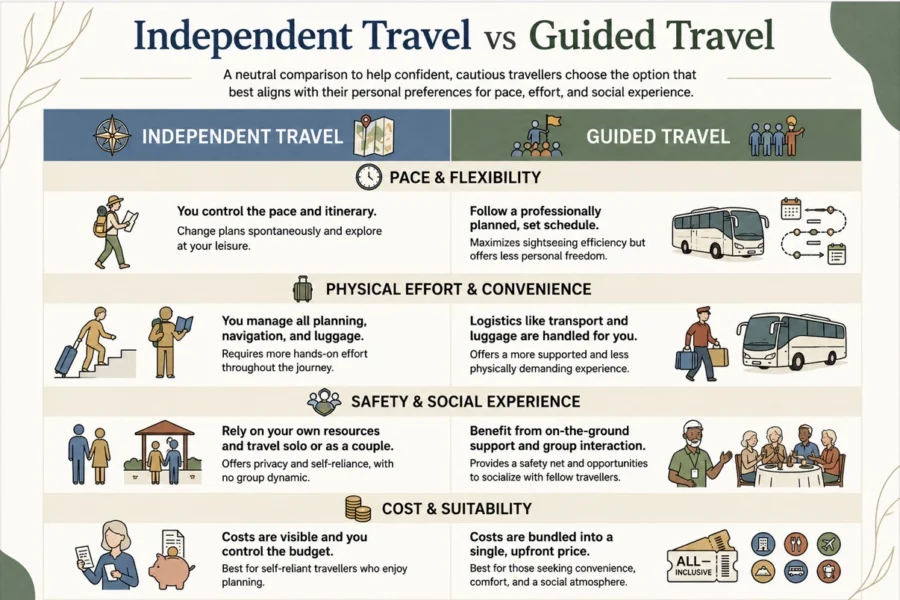
The appeal of independent travel
Independent travel means you travel on your own terms. It might be fully self-planned, or it might involve hotels, transfers, or guides booked in advance, but the main thing is that you are not part of a group.
You decide when to get up, how long breakfast lasts, and whether today is dawn-till-dusk busy or blissfully quiet. If you enjoy freedom, flexibility, and changing your mind without needing to convince fifty strangers and a tour guide, independent travel can still be very rewarding when you’re no longer a twenty-something backpacker.
The downside is that you are also responsible for everything. If transport is delayed, hotel bookings have magically disappeared, directions are confusing, or plans need to change, it is up to you to deal with it. What once felt like adventure can occasionally feel like too much hassle. Although I still insist near-disasters make the best stories.

What group travel really means
Group travel means travelling with a set group of people, usually with a guide, on a shared schedule. Transport, accommodation, and daily activities are organised in advance, and you move through the trip together.
This can be extremely comfortable. There is no navigation to worry about, no tickets to buy on the fly, and no decisions about what happens next. Something goes wrong? Not your problem. You simply follow the plan and enjoy the experience. Especially in unfamiliar countries this can feel safer than being on your own.
The trade-off is structure. Days often start early, flexibility is limited and on a lot of these tours the pace can be relentless: full days and lots of different towns and hotels. You will be spending a lot of time with the same people. For some, this is part of the fun. For others, this sounds less than ideal.
Energy, not age, is the deciding factor
At some point, energy starts becoming a thing. Independent travel allows you to slow down, skip things quietly, and build in rest days when you need them.
Group travel can feel more intense day to day, but it also removes the mental effort of planning and decision-making. Which one feels easier depends entirely on how you personally recharge.
One thing that has always put me off group travel is what I call “twenty-something backpacker anxiety” (you can read more about that in my post Will I Fit? Will I Cope?). I’ve always worried about being the slowest person in the group and holding everyone up.
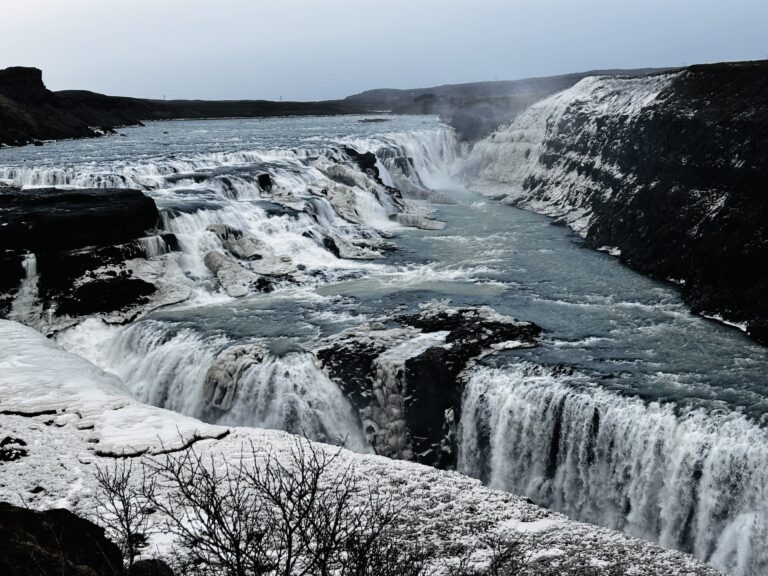
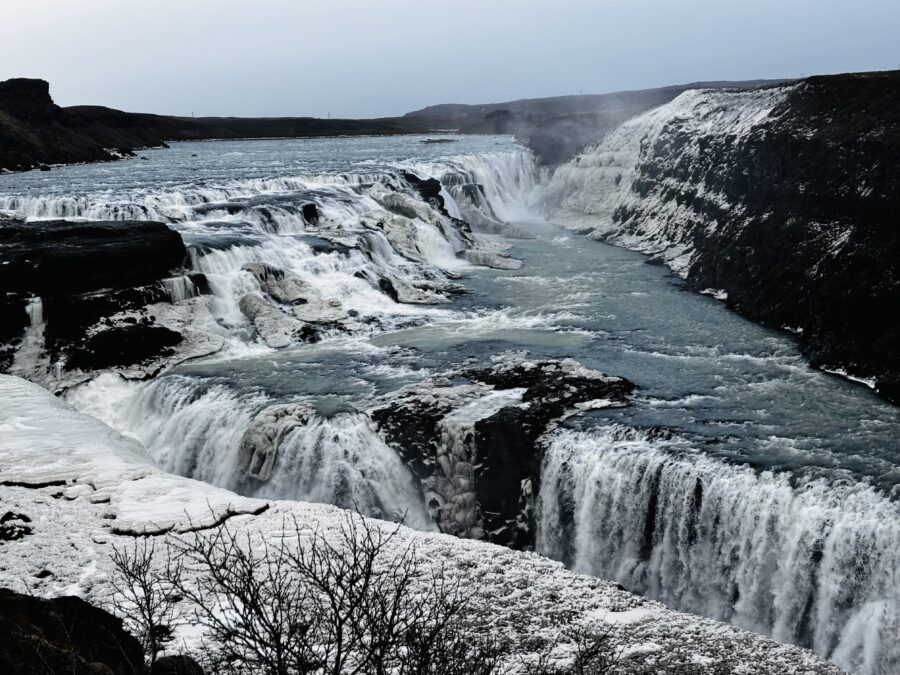
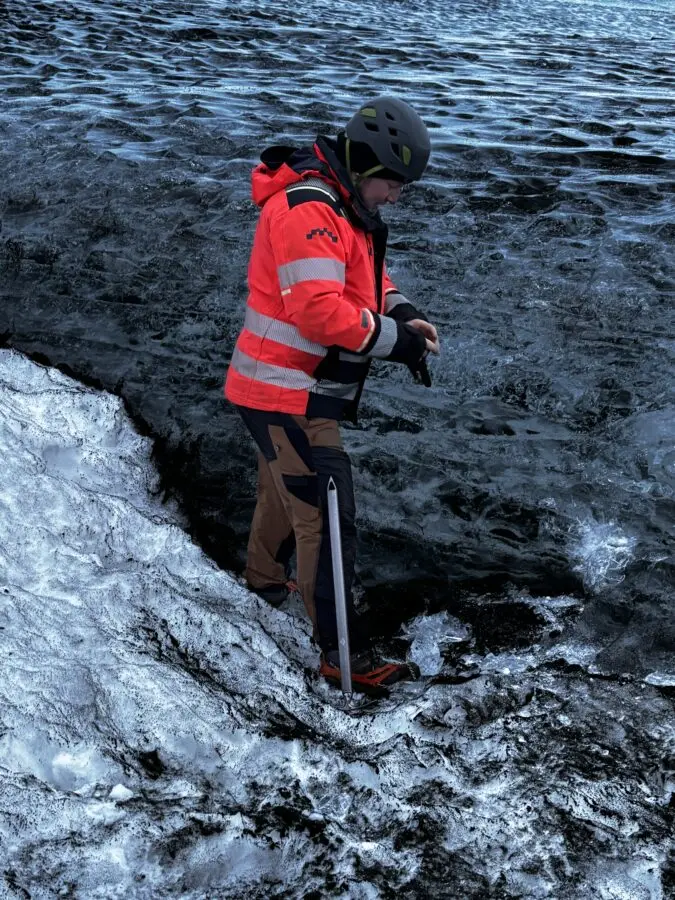
That fear followed me to Iceland, where we joined a three-day small-group tour. We were the oldest participants by at least twenty years, so naturally I assumed I’d spend three days trailing behind everyone else. As it turned out, I was never the last person in and out of the bus, up the stairs, down the path, or across the glacier. All that worrying had been a complete waste of time. (You can read more about the trip to Iceland here if you’re interested.)
That said, the concern isn’t always entirely unfounded. If you’re considering a group tour, it can be worth checking who has already booked. Some tour companies make this information available before you commit. A healthy mix of ages and travel styles can be reassuring, particularly if you’re worried about keeping up. And if you do end up panting at the back of the group while everyone else strides ahead, chances are you won’t be the only one.
The social side of things
Independent travel is peaceful and predictable, especially if you are travelling as a couple or a family. Social interaction outside your own family happens when you want it to.
Group travel is social by default. This can be wonderful, particularly for solo travellers. It can also be tiring if you value quiet time or need space to yourself. Personally I recharge by spending time alone or with someone who knows not to talk to me when I am in reset mode. Others recharge by spending time with other people, which I also enjoy, but in limited amounts. Group travel still allows for time alone, but not as much as I’d like.
Cost, value, and expectations
Independent travel can sometimes cost less, but it requires more time and effort to organise. Group travel often costs more upfront, but many expenses are bundled and clearly laid out. If you’re interested in the budget planning part of things, you can read more about how I plan a budget these days and, more importantly, stick to it.
So which one works best?
As usual, there is no universally correct answer. Many travellers happily do both, choosing group travel for more complex trips such as safaris or remote regions, and travelling independently where they feel confident and relaxed.
For Marc and me, organising trips ourselves and travelling independently is still usually the way to go. I did really enjoy the Iceland trip, though, so I’m no longer completely averse to travelling in packs. There are still destinations on my list where I’d happily join a group tour, particularly in countries that feel a little intimidating or where navigating independently would be more challenging. Think India, where I’d appreciate having experienced guides and a bit of local knowledge. Sometimes it’s nice to let someone else figure out where to go and what to do.
Ultimately, the “right” way to travel is the one that lets you enjoy the journey, whether that’s complete independence, a knowledgeable guide, or the luxury of not having to make yet another decision.
If you want to read more about itinerary planning, this is how I plan an itinerary without cramming 6 activities into one day and not enjoying any of them. Jo