Planning Indonesia independently: the itinerary, the spreadsheet and the budget
A little over a year ago, I wrote a post called Travel Agency or DIY Explorer?, pondering the eternal question: is it better to let someone else organise your holiday, or should you just roll up your sleeves and do it yourself? Apparently, I hadn’t quite finished pondering.
The last time we went to Java, we let a travel agency organise the trip for us. They put together a lovely itinerary, taking in some of Java’s highlights. If you’re curious what a travel-agency-organised Java trip looks like, you can read about it here: 7 days in Java
When we started planning our next Indonesian adventure, I asked the same travel agency to put together an itinerary. Three weeks, several islands, plenty of adventure. The proposal came back at €12,000 excluding international flights. It included Kalimantan, with a klotok boat trip through the jungle, Flores and Komodo, and a grand finale on Sumba. Lovely itinerary. Eye-watering price tag. I was not quite prepared to spend that much on a holiday.
So I decided to organise the whole thing myself. How hard could it be to book a few flights, find some nice hotels and arrange transport across the world’s largest archipelago? I had the internet, a reasonable amount of common sense and, most importantly, Excel. What could possibly go wrong?
Quite a lot, as it turned out. Within a few days, Kalimantan was out. Then Sumba. Lombok was in. Flores, which had looked perfectly manageable on paper, began to feel like a logistical puzzle with too many moving parts. Then I discovered West Java. And just when I thought I was getting the itinerary under control, Marc came up with Sumbawa. Because apparently, we hadn’t considered enough islands yet.
By this point, I had abandoned any attempt to recreate the travel agency’s proposal. I was building an entirely different trip, one that suited us better and that I could hopefully organise without either losing my mind or spending €12,000. All the while, The Spreadsheet grew. Flights, ferries, hotels, drivers, travel times, budgets, alternative routes and approximately seventeen different versions of what our holiday might look like. The Spreadsheet was the only way I could keep track of the whole operation without drowning in a sea of post-its. I’ve decided to share it, along with the other travel planning tools I’ve created, in my Travel Library. If you subscribe to my newsletter, you can download The Spreadsheet and everything else
But first, let me show you how our original €12,000 itinerary turned into something quite different.
The €12,000 Indonesia itinerary
I started by looking at what the agency had proposed and trying to work out what everything would actually cost if I booked it myself. Flights, hotels, transfers, the lot. And, of course, the resort they’d somehow managed to leave out of their proposal. For that money, surely I could expect a private pool or two? I soon discovered that planning a trip around Indonesia isn’t quite as straightforward as booking a few hotels and hopping on a plane. Distances, flight connections and ferry schedules all have a habit of complicating things. And the more I researched, the more I started questioning the itinerary itself.
Not because the destinations weren’t appealing. Quite the opposite. But there were other places I wanted to explore, and some parts of the proposed trip were beginning to look less attractive once I started digging into the practicalities. And saw some of the prices.
Before long, I wasn’t just trying to find a cheaper way to book the agency’s itinerary. I was planning a different trip altogether. And for some strange reason, I kept discovering more islands. All travel-brochure pretty, all with their own attractions, and all making a very convincing case for being added to the itinerary.
This was not going well.
The great Indonesia itinerary shuffle
Kalimantan was the first to go. A klotok trip through the jungle sounded wonderful, but it was also expensive. And we’d already seen orangutans in Sumatra. Did we really need to spend a considerable amount of money to see more of them? As much as I loved seeing orangutans, I decided we didn’t.
Next up was Sumba. The more I looked into it, the less convinced I became. No volcanoes, long travel times and quite a bit of effort getting around. It looked beautiful, but perhaps it wasn’t quite right for this particular trip. I even considered Sulawesi. Then I started reading about the jellyfish and the elaborate funeral traditions of the Toraja people. Fascinating, absolutely, but perhaps not what I was looking for this time around. Sulawesi went onto the maybe-another-time list.
Meanwhile, Marc decided he’d like to see more of Java. Enter Bandung, with its volcanic landscapes, tea plantations and cooler mountain air. Excellent. Another destination to research. And then there was Lombok. I’d been looking at it for a while, and the idea of ending our trip with some time by the sea was rather appealing. Before I knew it, I had a complete itinerary: Java, Flores and Lombok. Three very different destinations, a nice mix of exploring and relaxing, and surely a perfectly manageable route. Except it wasn’t.
When I started working out how we’d actually get from Java to Flores, I discovered that the connections were so awkward that we’d lose three days to travelling. Three days! Not that we’d be spending all that time actually travelling, but awkward connections meant taking a full day for each leg of the trip. I had just spent hours putting together what I thought was a sensible itinerary, only to discover that getting between the places we’d chosen was going to be a holiday in itself. One that would contain considerably more time in airports than I’d like.
I did, briefly, ask a travel agent if they could make the itinerary work where I couldn’t. Cheating! Spoiler: they couldn’t. They came up with a €4,000 euro quote for the Flores part of the journey, and it would still require time travel on two occasions. Back to the drawing board.
Eventually, I came up with Version B: West Java and Lombok. A new plan, a fresh start, and surely this time I could leave the itinerary alone and start actually planning the trip. Then Marc casually mentioned Sumbawa over breakfast. There may have been a minor incident at the breakfast table. But, naturally, Version C was born.
Planning an Indonesia trip: enter The Spreadsheet
When Marc was finally convinced that Sumbawa was beautiful and special, but would involve complicated transport arrangements, a lot of time in cars and considerably more diving than either of us was interested in, we settled on Version B.
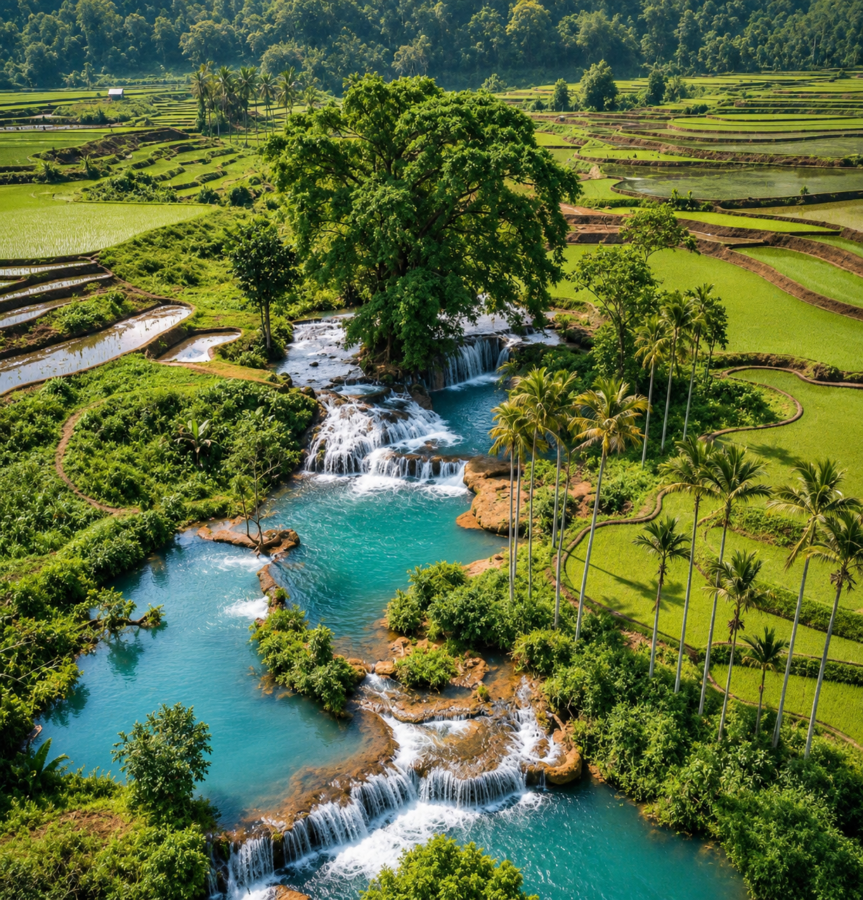
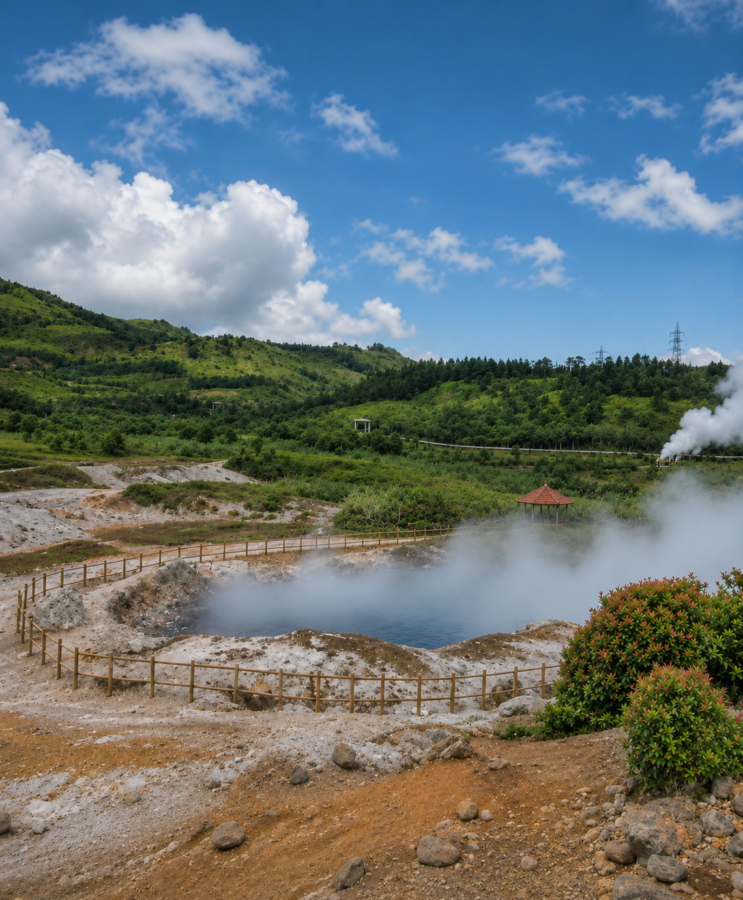
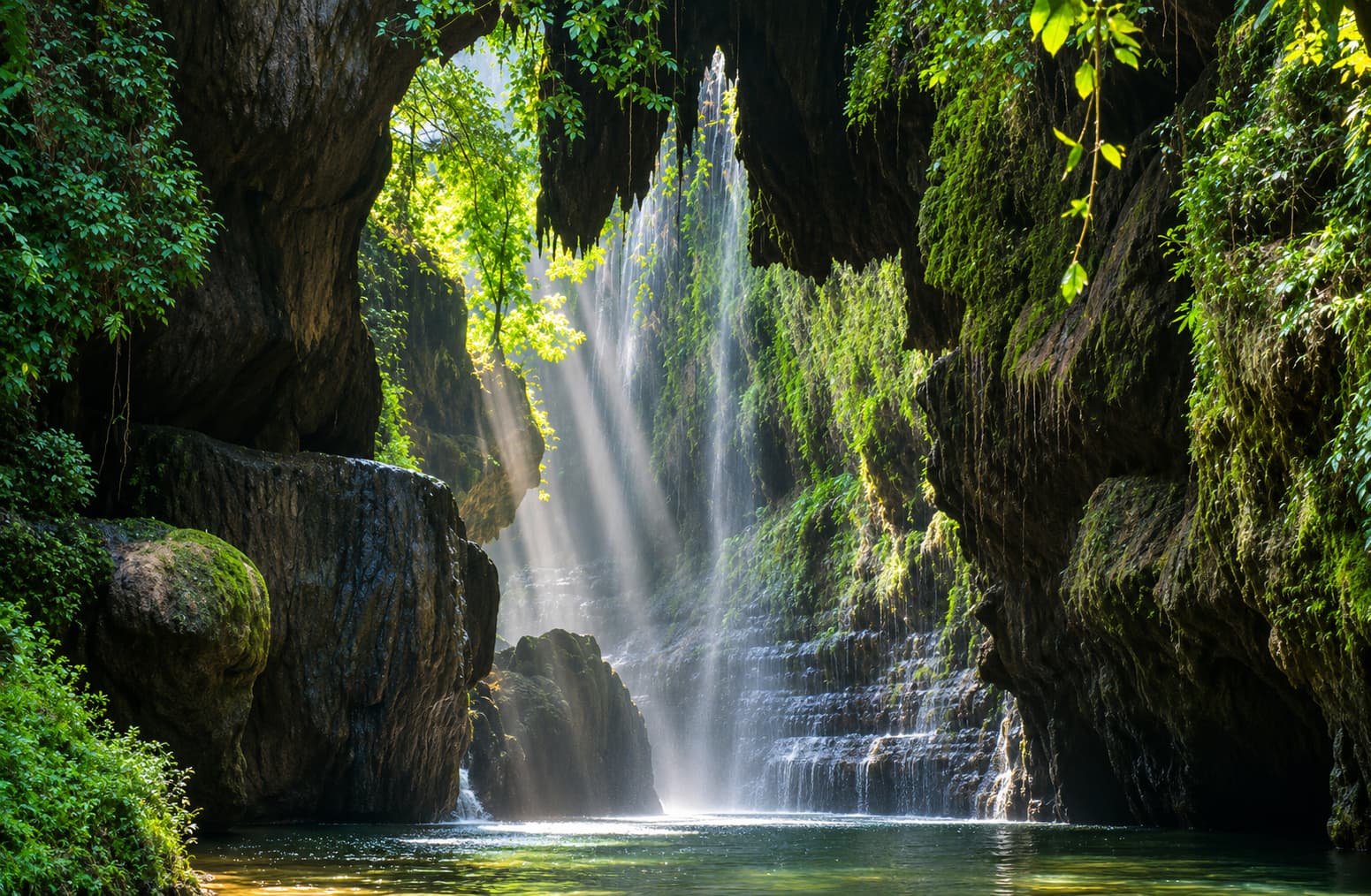
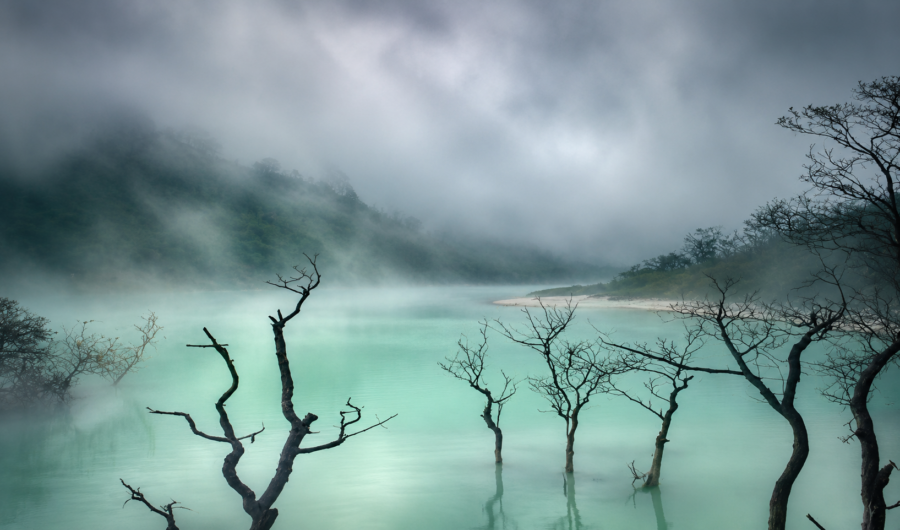
This itinerary would take us from Jakarta to Bandung on the Panoramic train. Marc could get his fill of history there, while I had a volcano nearby to keep me happy. A promising start. From Bandung, we’d head south for some beach time and a boat trip through a mysterious-sounding Green Canyon. Then it was on to the beautiful Dieng Plateau, before continuing to Yogyakarta for a connection to Lombok that wouldn’t take three days. I checked. Thoroughly. Big plus: this left time for a jeep tour to Merapi, one of Java’s most active volcanoes.
The Lombok part was straightforward enough: four nights in Senggigi, two in Senaru and three in Kuta Lombok. Then we’d fly back to Bali, connect with our flight to Singapore and, eventually, head home.
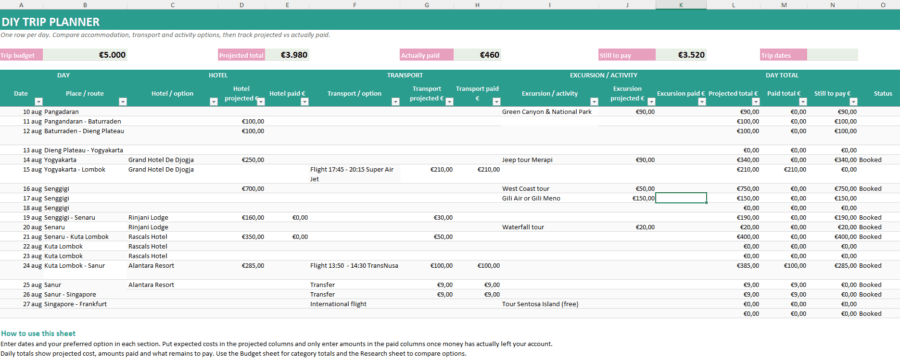
It all sounded perfectly manageable. I was convinced I could do it. But I would need to keep track of flights, trains, hotels, drivers, travel times and all the little details that make a complicated trip either work beautifully or fall apart spectacularly. Enter The Spreadsheet.
Of course, The Spreadsheet couldn’t actually book anything for me. That would have been far too easy. For flights and transfers, I used Traveloka. Hotels were a combination of Klook, Traveloka, Expedia and the resorts’ own websites, the train tickets came from the KAI app, and I used GetYourGuide for tours. For longer trips, I would need to hire a private driver.
That was the theory, anyway. In practice, there was a lot of comparing, checking connections, changing my mind and going back to the drawing board. Which is precisely why I needed The Spreadsheet in the first place. I had to keep track of what I’d found, what I’d booked, what it cost and, occasionally, which version of the itinerary I was currently working on.
How I planned our Indonesia trip independently
First things first: finding a private driver in Java
Once we’d settled on our itinerary, it was time to start prioritising. What had so many other moving parts depend on it that I needed to book it first? I decided to start with finding a private driver for the West Java part of our trip. If I couldn’t find someone reliable to take us around, that complicated week in Java was going to involve a lot of juggling, with plenty of opportunities for things to go wrong.
I contacted five local companies specialising in private tours and transfers. After three weeks, only one had bothered to reply. Luckily, that was Sama Sama Indonesia Tour, a company specialising in customised itineraries. I sent them a message outlining what I had in mind, and they got back to me the very next day. Their quote came in at about half what I’d expected! Even better, they suggested a few changes to our itinerary that would save us from spending eight hours in a car on two separate days. They also recommended hotels. Communication was quick, friendly and straightforward, so I didn’t waste any time making the booking.
Private driver for the trickiest part of Java: sorted!
Getting from one island to another: booking domestic flights in Indonesia
As soon as I’d decided when to fly into and out of Lombok, I tackled another important part of the itinerary: the domestic flights.
I used the Traveloka app to find and book them. The flight from Lombok to Bali was easy. There are several direct flights a day, and the journey takes just 40 minutes. I simply chose a departure time that didn’t require us to get up at the crack of dawn, selected a fare that included 20 kg of checked baggage (I will not pretend I travel light) and booked.
The flight from Yogyakarta to Lombok took a little more thought. There were plenty of options at convenient times, but they all involved at least one stop and took four hours or more. There is a direct flight, which takes just an hour and a half, but it leaves Yogyakarta at 17:45 and arrives in Lombok at 20:15. Lombok is one hour ahead of Java, so the flight time itself is actually 90 minutes. That meant a late arrival and a 90-minute drive from Lombok Airport to Senggigi, where we’d be staying first. Before ruling it out, I checked the latest check-in times at the hotels on my shortlist. They all offered either 24-hour check-in or check-in until 11 pm.
Good enough for me. I’d rather spend an extra hour in the car than waste half a day on a flight connection.
Domestic flights: arranged.
Getting around Lombok
For Lombok, I wasn’t quite sure what to do about transfers. On the one hand, it sounded convenient to book a private car and driver for the nine days we’d be there, agree on an itinerary with plenty of sightseeing and leave all the thinking to whoever would be driving us.
On the other hand, Lombok is where we plan to do quite a bit of lying around, drinking cocktails, enjoying a good book and finally sleeping past 7 am. After last year’s mad dash through Sumatra, Java and part of Bali, we wanted to build in a few more rest days.
A private car and driver would mean one of two things. Either we’d plan an itinerary with something to do every single day and repeat last year’s mad dash, with zero room for spontaneity, or we’d have a private driver hanging around doing nothing. That would be both awkward and a bit of a waste of money.
The alternative was to book transfers between hotels and one or two excursions we definitely wanted to do, leaving the rest open for whatever took our fancy, which will probably not be very much. I decided this was the way to go.
Time to book the hotels and transfers!
Hotels: the fun part. Mostly.
It was now time for the part of the trip I really wanted to do myself: booking accommodation. I started by making a list of must-haves, nice-to-haves and a budget. This was necessary to stop myself disappearing down the rabbit hole of booking sites and hotel websites and not resurfacing until it was time to board the plane. I enjoy researching hotels, but there is a limit.
My budget was an average of €100 per night. That’s not a lot in Europe, but it should get us something nice in Indonesia. Our hostel days are firmly in the past, and there they must remain. Some places would be at the lower end of the budget, others more expensive, and if I played my cards right, I might still have room for a splurge at a travel-brochure-worthy resort. With a private pool, obviously.
My first must-have was free cancellation. I was planning in October for a trip the following August. A lot can happen in ten months, and I didn’t want to pay for accommodation if I couldn’t go. Of course, I have travel insurance, but I’d rather not claim for costs I could have avoided in the first place.
The second must-have was a pool. I love swimming, and a hotel without one is only acceptable if it offers something truly spectacular in exchange. Like, say, a volcano.
Third: after last year’s experience of hanging out on the bed because there was nowhere else to sit, I wanted at least a few comfortable chairs or a couch.
Finally, in cities, I wanted to be close enough to the main attractions that getting to them wouldn’t take half a day.
As for the nice-to-haves? A private pool would be lovely, but not everywhere. Spa facilities and massages would be very pleasant, but we could live without them. Breakfast included was a preference but not a dealbreaker. I’d prefer to be within walking distance of at least a few nice restaurants and a cocktail bar, although I could compromise if the accommodation itself had excellent restaurant reviews. An outdoor shower? Nice to have. A private balcony or terrace? Nice to have. Laundry service? Nice to have. A floating breakfast? Hardly necessary, but why not? A beautiful historic building? Nice to have. And the review rating? At least a 9.
Armed with my list of requirements, I opened the first booking app, entered the name of our first destination and set my filters. First stop: Jakarta. I quickly found The Heritage Hotel. It looked spectacular, the reviews were generally positive, and nobody seemed to mention large arachnids in the rooms or mould in the bathrooms. Booked. They also offered an airport transfer, so I booked that too. This was easy!
On to Bandung. I booked the Crowne Plaza, closed my laptop and sat back, pleased with the day’s work. This was going to be a breeze!
The next day, it turned out things weren’t quite as easy as the first round of bookings had led me to believe.
For our West Java road trip, the company arranging our private driver had given me plenty of suggestions for places to stay. They all looked comfortable and pleasant. There was just one problem: none of them was available for our dates. They all claimed to be fully booked, even though our trip was still ten months away. I found that hard to believe. Much more likely, I thought, that their booking systems simply hadn’t opened up those dates yet. The alternatives in the same places looked less than ideal, and I wasn’t going to book somewhere I wasn’t happy with. At least, not while I still had time.
I added a reminder to my spreadsheet to check again in January and moved on to Yogyakarta, where I was spoilt for choice. I booked the Grand Hotel De Djokja: right in the town centre, beautiful, with great rooms and excellent reviews.
Another one down. Next: Lombok.
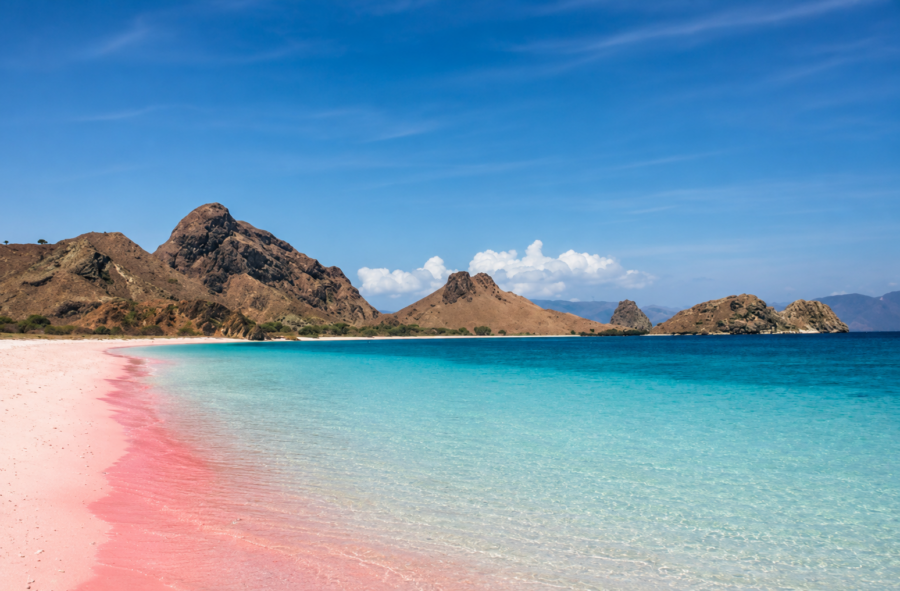
The search for the perfect splurge
When all the other hotels were either booked or entered in The Spreadsheet as a to-do, it was time for something I’d been looking forward to: finding the perfect splurge.
This was going to be in Lombok, where the pace of our itinerary finally slowed down. What I wanted was a resort near a beautiful beach, surrounded by lush tropical gardens, with an infinity pool, a private pool villa, an excursion desk for when we fancied leaving the resort, a spa, a cocktail bar and great food.
This, I felt, was not too much to ask, especially as I was looking at resorts in either Senggigi or Kuta. The Gili Islands were out: they were simply too far from the airport for our 20:15 arrival.
I thought I’d found the perfect place in Kuta: Alma Domes, a delightfully small resort with dome-shaped private villas, each with its own pool. They looked absolutely stunning in the photos. The reviews were outstanding, although there weren’t all that many of them. I loved the place, loved the price, and booked before someone else snapped it up.
Then I took a closer look and discovered two things that made me reconsider. The resort was hardly near the beach, at 1.5 km away, and the pools were more like large bathtubs than somewhere you could swim more than two strokes. I wasn’t expecting an Olympic-sized pool next to the villa, but this wasn’t what I was looking for either. Back to the search.
I found and compared countless resorts in Kuta and Selong Belanak, and grew increasingly frustrated. If the resort was lovely, people complained about noise from the neighbours. If the area was quiet, the sheets had stains. And that gorgeous beach in the photos? Completely unswimmable because of strong currents, broken coral and tons of plastic. Finding the perfect splurge was turning out to be considerably harder than I’d expected.
In the end, I decided the splurge wasn’t going to happen in Kuta. I booked a superior room at Rascals Hotel instead. No private pool, but the general pools looked amazing. It was a lovely hotel, and the pool villas were way beyond my budget anyway. No pool villa in Kuta. Let’s see what Senggigi had to offer.
Plenty, as it turned out. Resorts with swaying palm trees galore, infinity pools, yoga platforms, beach access, spas, cocktail bars and pool villas with floating breakfasts. Surely, finding the perfect one couldn’t be that hard?
You’d think so. But the pool villas at one resort were right next to a very busy road. Those at another were permanently in the shade. A third resort was described as rundown and “nothing like the photos”. And the only place I really loved, with nothing but rave reviews, was Jeeva Klui Resort, at a whopping €1,500 for four nights.
I wanted a splurge, not bankruptcy.
And then my luck turned. I took one final, longing look at Jeeva Klui’s official website and discovered that the exact same pool villa that cost €1,500 on all the booking platforms was available directly from the resort for less than €700. I couldn’t believe my luck and spent quite some time looking for the catch. Then I even double-checked that the amount in Indonesian rupiah really did work out at €700, not €7,000. There appeared to be no catch. I booked the villa. The booking was confirmed, and they even arranged the transfer from the airport and to our next hotel.
Splurge: done.
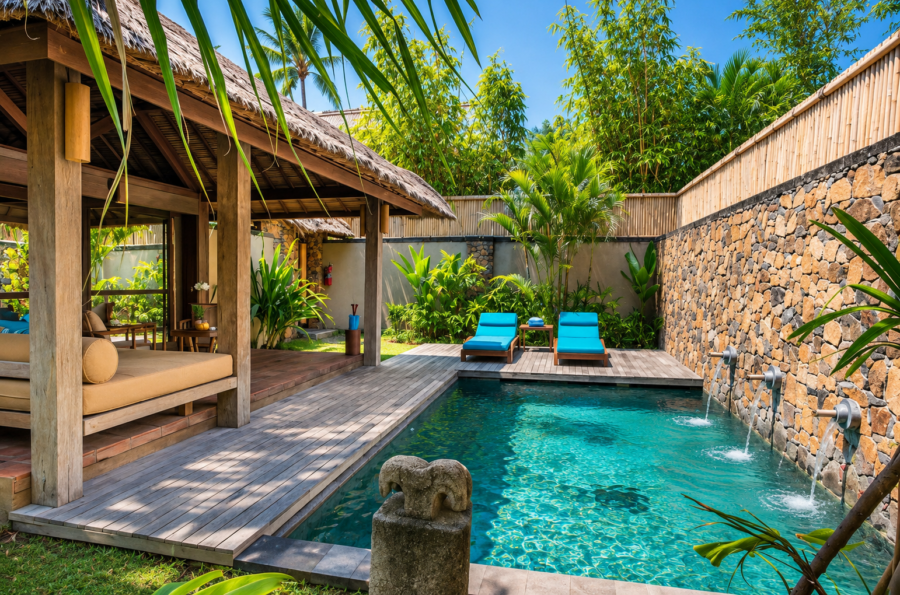
Tours: to pre-book or not to pre-book?
There were some tours I really, really wanted to do. A boat trip through the Green Canyon in Pangandaran. A jeep tour to the Merapi volcano. A boat trip to the Gili Islands, preferably without too many snorkelling stops. I love swimming, but my eyesight is so bad that a sea turtle could pass for a great white shark, and vice versa. Give me a nice beach, a coconut to drink from and some waves to play in, and I’m happy. Marc can do the snorkelling.
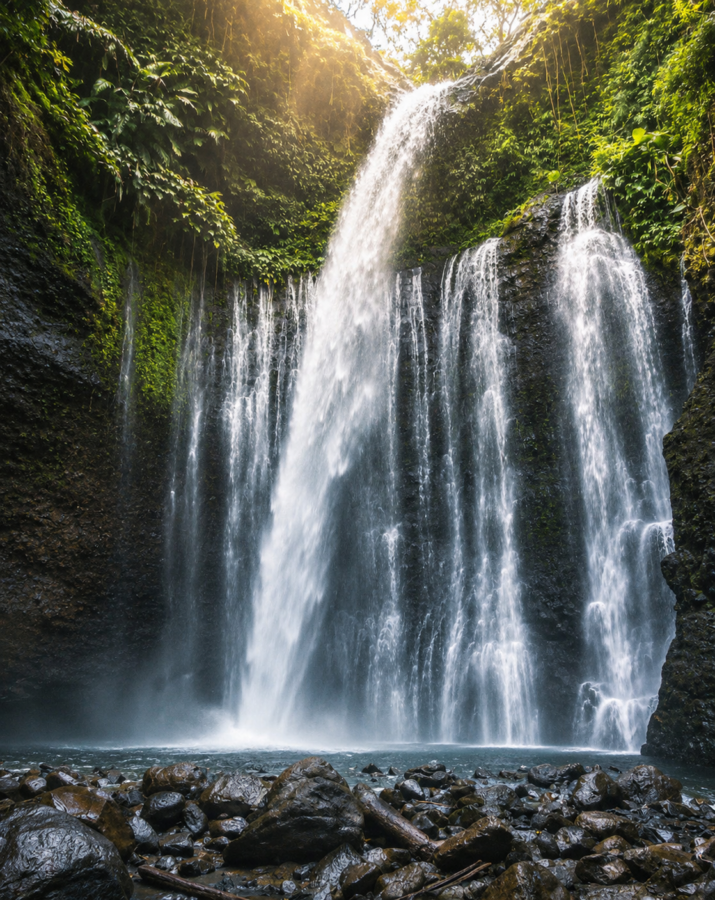
A waterfall tour around Senaru was also on the list. These were the experiences I wanted to book in advance because I didn’t want to risk missing out. I used GetYourGuide for the Green Canyon boat trip and the Merapi tour, our lodge in Senaru for the waterfall tour, and the excursion desk at Jeeva Klui for the trip to the Gilis.
Then there were the tours I didn’t bother booking in advance. There were so many similar options that finding one on the day shouldn’t be a problem. Think a walking tour of Jakarta, a guided tour of Bandung or a cooking workshop in Yogyakarta.
Finally, there were the tours I wasn’t even sure we’d want to do. Would we fancy a tour of the north coast near Senggigi, or would we rather stay at the resort and enjoy our private pool? Would we want to explore all the beaches around Kuta, or would the one within walking distance of our resort be enough? And after seeing so much already, would we even want to see more, or would we prefer a hammock, a book and a cocktail? Only time would tell. These were all excursions I expected the hotels could arrange easily, so I left five days completely free of activities. I wonder how long that will last once we’re there, but so far, so good.
The things I couldn’t book yet
By now, I was getting quite used to finding things I wanted to book, only to discover that it was too early to do so. The hotels in West Java were still on The Spreadsheet, waiting for their booking calendars to open. The train to Bandung was another one for the to-do list. I wanted to book the panoramic executive train, but Indonesian train tickets aren’t available that far in advance. No train ticket, no way of knowing exactly when we’d arrive, which meant I couldn’t book our transfers to and from the stations either.
And then there was our Singapore layover. We’d decided to take Singapore Airlines up on their offer of a free tour of Sentosa Island but that, too, would have to wait until I could get the timing sorted out.
None of this was particularly complicated. It just required patience, which isn’t necessarily my strongest quality when I’m in full trip-planning mode. So I added the outstanding bookings to The Spreadsheet, with reminders to check availability later. The hotels, the train, the transfers and the Sentosa tour would all have their turn eventually.
For now, there was nothing more I could do. Which, as any travel planner knows, is not quite the same as being finished.
So, what is this trip going to cost?
Throughout the planning process, The Spreadsheet had been keeping track of the costs, so I always knew where I stood against my budget. But you, dear reader, have had to take my word for it that I wasn’t spending a small fortune. Time to put some actual numbers on the table.
My budget was €6,000 for the 24-night trip, excluding our international flights, meals and other day-to-day expenses. I was aiming for a comfortable trip, with private transfers where they made sense, decent hotels, plenty of excursions and, of course, that one special resort with a private pool villa.
Already booked, so these costs are definitive: all the hotels in Bali and Lombok, all transfers (except the ones to and from the train stations in Jakarta and Bandung), all domestic flights, the hotels in Jakarta, Bandung and Yogyakarta, the jeep tour to Merapi, the Gili Islands tour and the waterfall tour in Senaru.
Still to book, so these costs are estimates: all the hotels along the route from Bandung to the Dieng Plateau, the train from Jakarta to Bandung and the transfers to and from the train stations. For these, I’ve taken the low-season prices for the hotels and trains I want to book and doubled them. That should give me a reasonably safe margin.
Then there are some things I haven’t included in the spreadsheet. First, international flights. Prices vary so much depending on where you’re travelling from that it wouldn’t be particularly useful for readers to know that I paid €2,400 for our return flights. Which I did.
I also haven’t included daily expenses for food, souvenirs, cocktails and all those other little things that somehow add up.
There will be some additional costs for visas, an eSIM and other travel paperwork. I haven’t included travel insurance either. We have an ongoing policy, which is a regular monthly expense rather than a cost specifically related to this trip. If you take out insurance specifically for your holiday, you should of course include that in your budget.
And then there’s tipping, which I haven’t included either because it depends very much on how you spend your time and how happy you are with service. Tipping isn’t mandatory in Indonesia, but it’s highly appreciated and often expected. Just to give you an idea, last time we were in Indonesia we tipped our drivers and guides around 100,000 rupiah per day, rounded up restaurant bills, gave the people carrying our luggage to our rooms around 10,000 rupiah per suitcase, left some 20,000 per night for housekeeping and tipped local guides at temples and other attractions about 30,000 rupiah for showing us around. We may have got all of this completely wrong, of course. We may even now be known as those stingy Dutchmen throughout Sumatra and Java.
So, how does this all add up?
Java, Lombok & Bali: The Travel Budget
A breakdown of our estimated costs for this Indonesian adventure, from hotels and transport to excursions and exploring.
Where does the money go?
| Expense | Estimated cost |
|---|---|
| Accommodation | €2,710 |
| Domestic flights | €310 |
| Train journeys | €50 |
| Private driver & transfers | €430 |
| Additional transfers e.g. Grab | €80 |
| Excursions & activities | €400 |
| TOTAL | €3,980 |
Estimated expenditure: €3,980
Remaining budget: €2,020
So, was it worth it?
Well, we’re looking at €3,980 for the trip arrangements, against a budget of €6,000. And that includes 24 nights of accommodation, domestic flights, trains, private transfers and excursions. All these figures are for two people sharing a room, so that’s just under €2,000 per person for the trip arrangements.
This was nowhere near the €12,000 the travel agency had quoted, but then again, they weren’t remotely the same trip. So I didn’t save almost €8,000 simply by organising everything myself. That said, I had also requested a quote from another travel agency for a trip more similar to the one we’d eventually put together. I wouldn’t have got much change from €6,000. So yes, all that time spent researching, comparing and moving things around in The Spreadsheet was definitely worth it.
Could we have done it cheaper? Almost certainly. We could have stayed in cheaper hotels, taken more public transport, skipped a few excursions or spent less time researching hotels with swimming pools. (I’m not entirely convinced that last one was ever going to happen.)
But that’s rather the point of organising a trip yourself. You get to decide where the money goes. We wanted comfortable hotels, a bit of luxury here and there, some memorable experiences and the freedom to travel at our own pace. We’re not backpackers, we’re not particularly interested in counting every last euro, and we’re definitely past the age of pretending that sleeping on an airport floor is an adventure.
There’s also something quite satisfying about putting together a trip like this yourself. Although, if I’m being completely honest, the number of hours spent comparing hotels, checking transport connections, researching excursions and moving little boxes around in my spreadsheet probably means I should add an hourly rate to the final bill. Let’s not do that. It would rather spoil the mood.
For now, I’m happy with the numbers. We’ve got the trip we wanted, we’re comfortably within our budget, and we have 24 nights of Indonesia to look forward to. Now all that’s left is to actually go there. And hopefully not discover that I’ve made a spectacular planning mistake somewhere along the way.
Tools and websites I used
- For domestic flights, some of the transfers and most of the hotels I used Traveloka, which works especially well for Indonesia.
- In case of some hotel bookings, Expedia was the option with better deals so I used that.
- For tours, I used GetYourGuide because I’ve booked with them before and am happy with their service and booking options.
- For an eSIM while travelling, my go-to option is always Airalo. Works like a charm.
- I booked Jeeva Klui directly on their own website because they had a much better deal. I only book direct when they offer free cancellation and their customer service or front desk is easy to reach and quick to reply.
- For private drivers in Java I used Sama Sama Indonesia Tour. Their communication and helpfulness during the booking process was excellent. I’ll be sure to do a full review after we return.
- For most of the airport transfers I used GetTransfer. Longer transfers in Lombok are being handled by the hotels.
- I booked our international flights directly on the Singapore Airlines website because I knew we were going to fly with them anyway.
The links to GetYourGuide, Traveloka, GetTransfer, Airalo and Expedia are affiliate links. This means I may earn a small commission if you make a booking through one of these links, at no extra cost to you. I don’t recommend anything I haven’t used myself or wouldn’t happily use on my own travels.
Want to plan your own adventure?
If you’re the sort of person who likes to have things organised before setting off (or, like me, can happily spend an entire evening comparing hotel swimming pools), I’ve got something for you.
Subscribe to Tales From The Road Ahead and you’ll get access to my complete Travel Planning Library. It includes practical spreadsheets, planning tools and resources to help you organise your own adventures, including the very spreadsheet I used to plan this trip and keep track of every euro.
Less guesswork, fewer forgotten details and, hopefully, fewer spreadsheet-induced headaches. And yes, you can have the spreadsheet. I’ve already done the overthinking for you!